
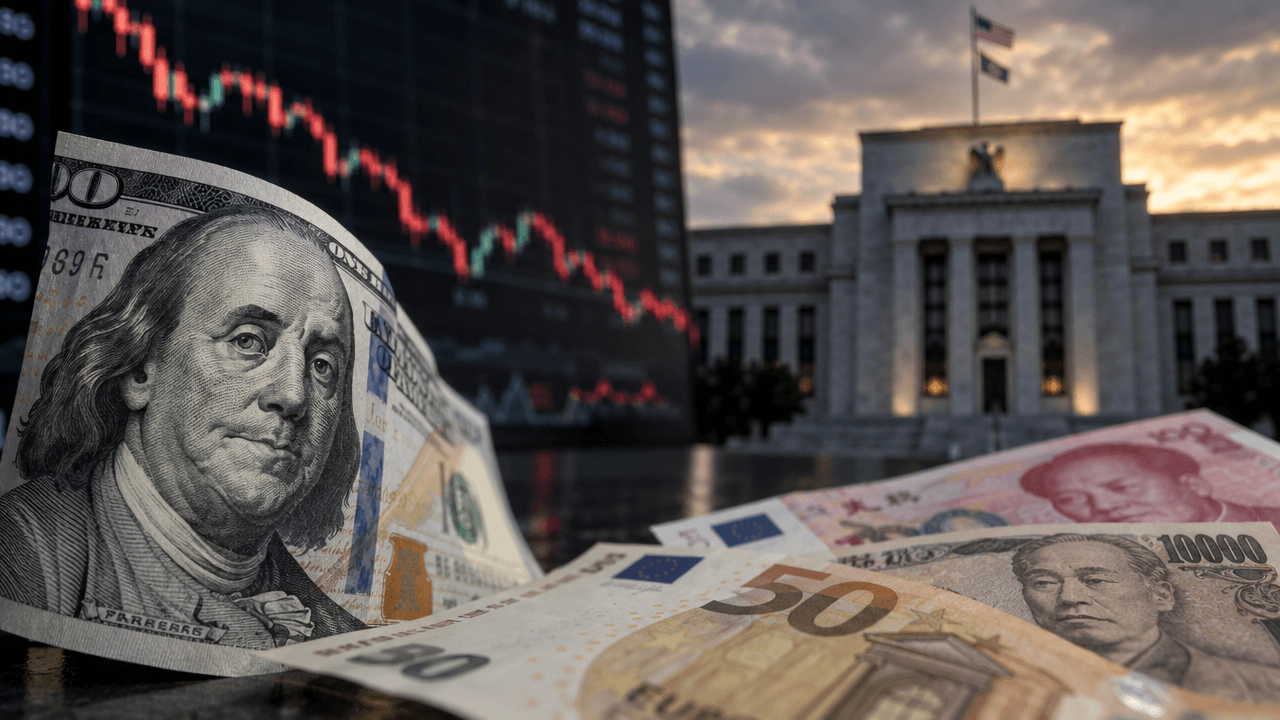
The US dollar is firming into the Federal Reserve meeting, and that strength is rippling through major FX pairs as traders reposition for a potentially volatile decision window[2][3][12]. With the Dollar Index grinding higher for a second straight day and rate expectations tilting hawkish, the next FOMC statement and press conference are set to be a key catalyst for global currency markets[3][7][11].
Macro Backdrop: Why The Dollar Is Firmer
The recent bid in the dollar is rooted in a familiar mix of macro drivers: sticky inflation, resilient US growth, and a Federal Reserve that is still unwilling to fully close the door on further tightening[3][6][11]. US producer price and inflation data have surprised to the upside in recent weeks, reinforcing the idea that policy may need to stay restrictive for longer[6][11].
Markets have responded by nudging up the implied probability of additional hikes or at least a prolonged “higher for longer” stance, helping the Dollar Index push above the 99 level and extend its latest run of gains[2][3]. Heading into the meeting, traders are now focused less on whether the Fed moves at this exact decision and more on the tone of the guidance around inflation, growth, and future rate paths[7][11].
For FX, that distinction matters. A steady policy rate combined with hawkish commentary can be just as supportive for the dollar as an outright hike, especially if other major central banks are already on or nearing an easing path[6][7]. That relative policy divergence is a core theme behind the dollar’s strength and the pressure currently seen across key crosses.
EUR/USD UNDER PRESSURE BELOW KEY LEVELS
EUR/USD has been one of the clearest victims of the latest dollar move, trading under pressure below important moving averages clustered just above the 1.15 area[9][13][15]. On many daily and short‑term technical dashboards, the pair now sits below its 15‑, 20‑, and 50‑day moving averages, with the broader structure tilting decisively into downtrend territory[9][13].
The break below the 200‑day exponential moving average earlier in the month already signaled a shift in intermediate‑term sentiment[15]. As long as spot remains below that zone and below the moving‑average “ceiling” around 1.1585–1.1560, rallies are more likely to be treated as opportunities to fade rather than the start of a sustained recovery[9][13].
From a fundamental angle, euro softness reflects both the stronger dollar and Europe’s own challenges, including sluggish growth and past energy‑price shocks that have weighed on industrial activity and confidence[9]. If the Fed leans hawkish while the ECB remains constrained by weaker data, policy divergence can deepen, reinforcing downside risks for EUR/USD and keeping the 1.15 region and below in play[6][11][15].
For traders in a SimFi environment, this setup is ideal for practicing scenario planning around central bank events: mapping out how EUR/USD might react under hawkish, neutral, or dovish Fed outcomes and testing different risk‑management rules against those paths.
USD/JPY AND THE PERSISTENT YEN WEAKNESS
USD/JPY has pushed back up toward the 155 handle, reflecting both dollar strength and the ongoing yield differential between the US and Japan[8]. With the Bank of Japan still moving cautiously away from ultra‑easy policy and Japanese yields capped, every repricing higher in US rates tends to feed directly into yen weakness[8].
Heading into the Fed meeting, markets are keenly aware of the risk of a knee‑jerk spike higher in USD/JPY if the dollar rallies on hawkish guidance or a surprise move[2][7]. Such surges can quickly trigger discussions about potential Japanese official concern, especially when levels venture into territory previously associated with heightened FX sensitivity.
For short‑term traders, USD/JPY around 155 underscores the need to respect volatility and event risk. Large, fast moves around the announcement can easily wipe out tight stops. Simulated trading offers a controlled way to rehearse managing slippage, wider spreads, and sudden price gaps that often accompany major central bank releases.
Asian Fx And Broader Em Currency Risk
Dollar resilience ahead of the Fed is not just a G10 story. Asian currencies are also feeling the strain as the market prices a higher or more persistent US policy rate path[2][8][12]. In such environments, capital often tilts toward US assets, while higher US yields raise the bar for carry trades funded in dollars, pressuring emerging‑market and regional FX.
If the Fed signals openness to additional tightening or pushes back hard against near‑term easing expectations, the dollar’s strength can extend, amplifying pressure on Asian FX with higher volatility and potential outflows from local bond markets[6][11][12]. Conversely, a more balanced or dovish communication could offer a relief rally, but the bar for a sustained trend reversal is high given the global growth and inflation backdrop[3][6].
For risk managers and portfolio builders, this means monitoring not just spot FX, but also the interplay between currency moves, local rates, and equity flows. Simulated portfolios can help illustrate how a stronger dollar can impact multi‑asset exposures, from export‑heavy Asian equities to EM sovereign debt.
Practical Takeaways For Traders
First, treat the Fed meeting as a volatility event rather than a simple data point. Price action in FX can be as much about shifts in forward guidance and market expectations as the rate decision itself[6][7][11].
Second, respect key technical structures. In EUR/USD, the cluster of moving averages above 1.15 and the broken 200‑day EMA are not just lines on a chart; they represent areas where positioning and sentiment often shift[9][13][15]. In USD/JPY, levels around 155 have psychological and policy relevance, increasing the odds of sharp moves when they are tested[8].
Third, build scenarios instead of single forecasts. Sketch out hawkish, neutral, and dovish Fed outcomes and map likely paths for DXY, EUR/USD, USD/JPY, and a basket of Asian currencies under each[2][3][8][12]. Then use simulated trading to stress‑test entries, exits, and position sizes across those paths before risking real capital.
Finally, keep your risk framework front and center. Event‑driven markets reward preparedness. Clear maximum loss thresholds, pre‑defined scaling rules, and contingencies for slippage can turn a high‑volatility period from a source of anxiety into an opportunity to apply and refine a disciplined process.
Conclusion
The dollar’s firm tone into the Fed meeting is a textbook example of how expectations, not just outcomes, drive FX markets[2][3][11]. With EUR/USD pinned below key moving averages, USD/JPY testing elevated levels, and Asian currencies vulnerable to further dollar strength, the upcoming decision window is poised to reshape short‑term trends across the major crosses[8][9][12][15].
Rather than trying to predict the exact wording of the statement, traders can focus on preparing for a range of plausible outcomes, grounding their strategies in clear technical levels, well‑defined scenarios, and robust risk management. In an environment where central bank communication can move currencies swiftly, the edge often lies not in superior prediction, but in superior preparation.