
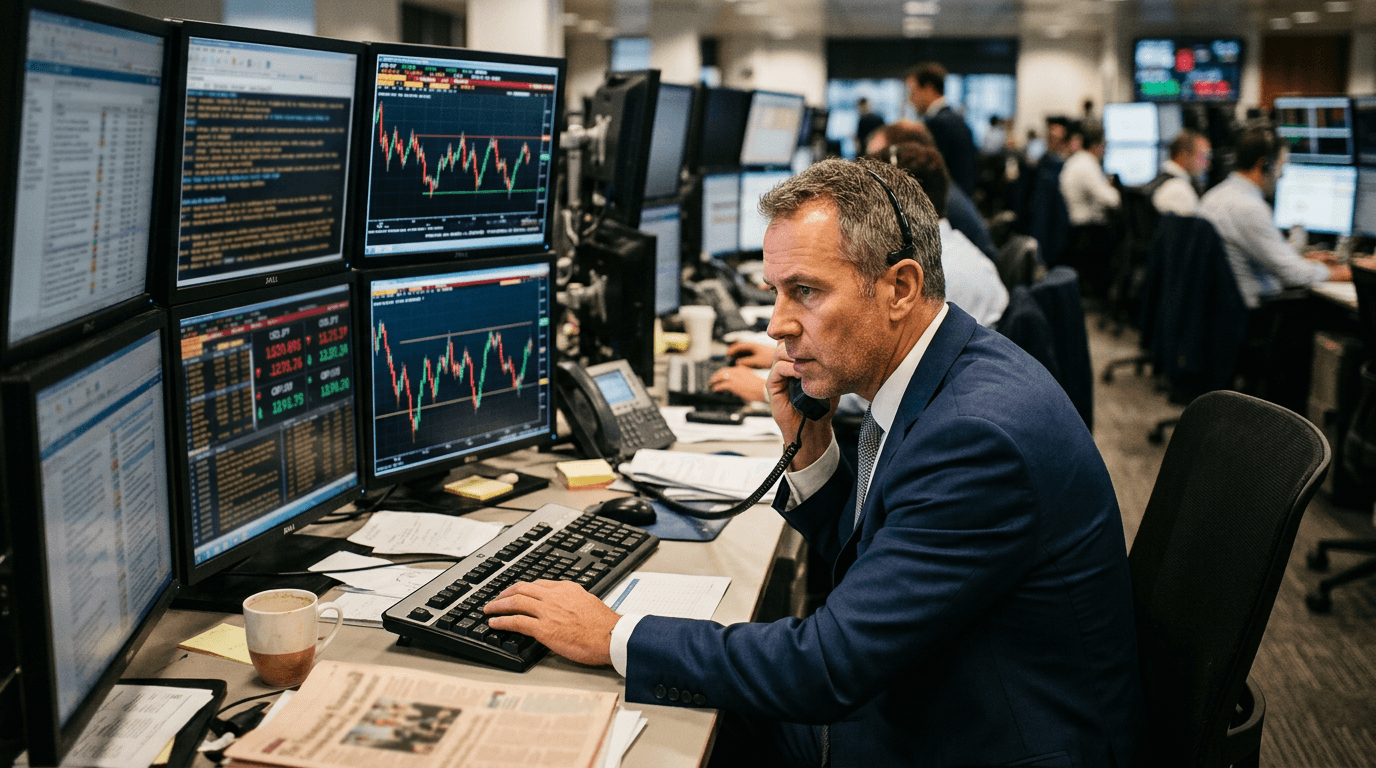
Dollar trading has entered a holding pattern, with the greenback barely higher as markets juggle U.S.-Iran escalation headlines and a run of mixed labor data from the world’s largest economy[5]. For traders, that combination is a classic recipe for indecision: geopolitical risk pulls flows toward safety, while uneven economic signals cloud the outlook for interest rates and growth[5][14]. Understanding how these cross-currents interact is essential for anyone trading forex—whether in live markets or through simulated finance platforms like E8 Markets.
Geopolitical Tension And Safe-haven Flows
In periods of heightened geopolitical stress, the U.S. dollar often benefits from its status as a global safe haven, drawing in capital from investors looking to reduce risk exposure[13][15]. Recent reports of intensifying U.S.-Iran tensions, including collapsed ceasefires and renewed military posturing, have supported the dollar index and kept risk appetite in check[13][15]. At one point, the dollar index was up around 0.3%, marking its best day in weeks as investors sought shelter from Middle East uncertainty[13].
However, the relationship between conflict headlines and the dollar is not one-directional or guaranteed. When there are signs of potential de-escalation—such as paused strikes or renewed negotiations—some of those safe-haven flows unwind and the greenback can quickly lose ground against peers[1][7][10][11]. One recent episode saw the dollar retreat as U.S. bombing paused and oil prices fell, improving risk sentiment and encouraging investors to move back into higher-yielding assets[1]. Another saw the dollar drop sharply after plans for renewed strikes were halted, with the currency index giving back prior gains and heading toward weekly losses[7].
The key takeaway is that traders should treat geopolitical risk as a dynamic driver rather than a static “dollar-positive” factor. The market reacts not just to the existence of conflict, but to whether tensions are seen as escalating, stabilizing, or moving toward resolution—and the dollar’s safe-haven premium adjusts accordingly[8][9][12][15].
Mixed Labor Data And Rate Expectations
At the same time, mixed labor readings have left traders uncertain about the Federal Reserve’s next moves, which helps explain why the dollar’s gains have been modest and short-lived[5][14]. Historically, uneven jobs reports—where headline payrolls look decent but underlying details or revisions disappoint—have tended to produce a flat or choppy dollar response[14]. In one well-known example, the dollar initially rallied after a jobs release, only to give back those gains as traders digested weaker prior revisions and a more nuanced picture of labor-market strength[14].
This pattern is playing out again. Stronger pockets of data, such as lower weekly jobless claims or robust regional business surveys, support the narrative of U.S. resilience and keep rate cut expectations in check[5]. Yet softer elements—slower hiring in certain sectors, downward revisions, or signs of cooling wage growth—introduce doubt about how long the Fed can maintain restrictive policy[14]. When markets cannot clearly decide whether labor data is “good enough” to sustain higher yields, the dollar often ends the day little changed, even if it ticked higher intraday[5][14].
For traders, the lesson is that labor releases rarely provide a single, simple signal. It is the combination of headlines, revisions, and forward-looking metrics that shapes rate expectations—and thus the path of the dollar.
What A Steady Dollar Signals To Traders
The latest reading on the U.S. dollar index shows the currency marginally higher but essentially flat, up about 0.03% around the 98.8 level as traders weigh both geopolitical and economic narratives[5]. That kind of “steady” tape is often a sign that the market is waiting for clearer confirmation—either a decisive shift in the conflict’s trajectory or a more unambiguous run of data pointing to a firm Fed stance[5][4].
In this environment, major currency pairs tend to trade within ranges rather than trend aggressively. The euro, yen, and commodity currencies can oscillate around recent levels as investors fade moves at the edges of those ranges instead of chasing breakouts[1][4][9]. Volatility can still spike around specific headlines or data prints, but absent a clear regime change, the dominant theme is mean reversion and short-term positioning rather than multi-week trend following[4][9].
For discretionary and systematic traders alike, a steady dollar suggests focusing less on big directional bets and more on tactical strategies: playing ranges, exploiting event-driven moves, and carefully managing exposure around key risk windows.
Practical Takeaways For Simulated Fx Traders
Simulated finance provides an ideal environment to practice trading this kind of “mixed signal” backdrop without capital at risk. On a platform like E8 Markets, traders can structure scenarios that reflect various combinations of geopolitical outcomes and labor data surprises. For example, one simulation might model an escalation scenario where tensions worsen, oil prices climb, and safe-haven flows into the dollar intensify, pushing the index higher and pressuring emerging-market currencies[13][15]. Another could test a de-escalation scenario in which risk appetite improves, commodity exporters benefit, and the dollar softens against higher-beta peers[1][7][10].
Layering labor data into those scenarios adds further realism. Traders can simulate a strong jobs beat that re-prices rate expectations and lifts U.S. yields, or a disappointing release that revives talk of earlier easing and weighs on the dollar[14]. By tracking how these hypothetical outcomes translate into moves across DXY, EUR/USD, USD/JPY, and oil-linked pairs, traders build intuition about cross-asset relationships and regime shifts[1][4][9].
Critically, practicing in SimFi allows traders to refine position-sizing, risk limits, and reaction plans before encountering similar conditions in live markets. When the real dollar is steady but “on edge,” experienced simulated traders are better prepared to respond if a headline or data print finally breaks the stalemate.
Conclusion: Navigating Cross-currents
The current steadiness of the U.S. dollar is not a sign that nothing is happening—it is a reflection of markets balancing opposing forces: escalating U.S.-Iran tensions that support safe-haven demand, and mixed labor data that muddies the path of U.S. interest rates[5][13][14]. History shows that this balance can shift quickly when either the geopolitical or economic narrative delivers a clear surprise, and the dollar’s calm can give way to decisive moves[1][4][7][9][12][15].
For traders, the priority is preparation rather than prediction. Understanding how conflict headlines, oil prices, labor releases, and Fed expectations interact equips you to navigate the next phase—whether that brings a stronger dollar, a reversal, or continued range-bound trade. Using simulated environments to rehearse these scenarios turns today’s steady tape into tomorrow’s learning opportunity, helping you stay ready for when the market finally chooses a direction.