
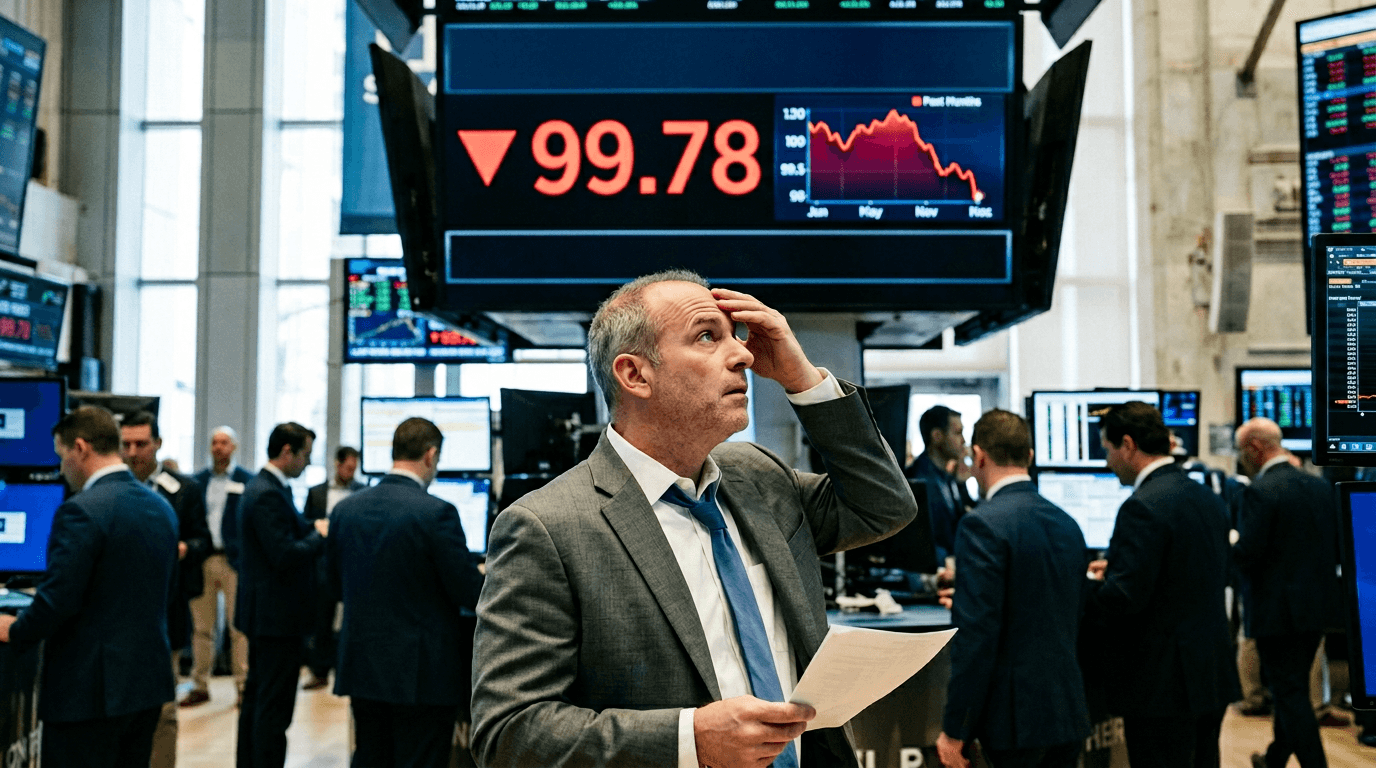
The US Dollar Index has recently crossed a critical line, falling below 100 for the first time since July 2023 and reaching a low of 99.74. This is not just a typical currency fluctuation; it signifies a substantial change in global market perceptions of the world’s reserve currency. From a peak of 110 in January 2026, the dollar has lost nearly 7 percent of its value in merely three months, contradicting earlier Wall Street predictions of sustained dollar strength under pro-business policies. For traders navigating today's volatile forex environment, understanding the catalysts driving this decline and its impact on various asset classes is crucial.
What Caused The Dollar's Decline
The dollar's drop below the 100 level results from a blend of macroeconomic forces rather than a single isolated event. At the heart of this shift is a change in Federal Reserve policy. For years, high US interest rates attracted global capital, bolstering the dollar’s strength. However, with the Fed now ceasing rate hikes and markets anticipating steady or declining rates throughout 2026, this essential support has significantly weakened. As yield differentials between US and foreign assets narrow, the attractiveness of dollar-denominated investments diminishes.
Adding to this monetary challenge are rising tariff tensions under the current administration. Contrary to initial expectations that protectionist policies would strengthen the dollar, these measures have instead fueled recession fears across markets. Investors now worry that aggressive tariffs could hinder economic growth and corporate profitability, potentially prompting the Federal Reserve to cut rates sooner than expected. This risk-averse mindset typically exerts downward pressure on the dollar.
Geopolitical developments further complicate the situation. Reports of ceasefire discussions between Iran, the US, and regional mediators have decreased demand for traditional safe-haven assets like the dollar. As capital shifts away from defensive positions toward riskier opportunities, the appeal of the greenback diminishes further.
Technical Analysis And Future Outlook
From a technical standpoint, breaking below 100 sends concerning signals for those bullish on the dollar. The 50-day moving average has dipped below the 200-day moving average, forming what is known as a "death cross"—a bearish pattern indicating sustained selling pressure ahead. This is not just algorithmic noise but a strategic reduction in dollar holdings by institutional investors. The pattern of lower highs and lower lows on daily charts strengthens this downtrend.
The next key support level is around 98.50, a level not tested since early 2023. A decisive fall below this point could push the dollar into uncharted territory, possibly triggering further institutional selling. Conversely, the 100.20 to 100.50 range now serves as notable resistance. If the dollar manages to stay above this zone, attempts at recovery toward 101.60 or even 103 remain feasible. However, given the current momentum and fundamental challenges, further decline seems likely in the near term.
Implications For Currency Markets And Safe-haven Currencies
The weakening of the dollar signifies a major shift in how investors perceive currency risk. Historically, the greenback has been the ultimate safe-haven asset, the go-to choice for capital seeking refuge from uncertainty. The current environment reveals a changing landscape. The Japanese Yen and Swiss Franc have emerged as alternative safe-haven currencies, attracting investors wary of US recession risks and tariff-induced economic slowdowns. This transition reflects genuine concern about the future of the American economy.
Analysts at leading investment firms now predict the dollar to remain structurally weak throughout 2026, while the Euro and Japanese Yen gain strength. The implications for international fund flows are significant. Capital that might have traditionally sought dollar-denominated assets now finds attractive alternatives elsewhere, adding further pressure on the greenback.
Strategic Insights For Traders
For forex traders, this environment demands increased vigilance across multiple areas. Economic data releases—particularly employment figures, inflation reports, and Federal Reserve communications—will be pivotal in determining whether the dollar stabilizes or continues its decline. Positive growth surprises could quickly reverse weakness, while indications of slowing activity or earlier-than-expected rate cuts would likely push the dollar lower.
The heightened volatility presents genuine opportunities for traders capable of interpreting both technical signals and fundamental drivers. The key question isn't whether the dollar might rebound temporarily—brief recoveries are certainly possible—but whether this breakdown signals a prolonged structural weakness or merely a pause before recovery.
Success in navigating these challenges depends on integrating three elements: understanding the Fed's policy path, assessing recession risks from tariff policies, and monitoring geopolitical developments. Traders who effectively synthesize these factors while respecting key technical levels will be best positioned to capitalize on the upcoming volatility.
The drop below 100 marks a defining moment for currency markets in 2026. The dollar's future trajectory hinges on whether the US economy delivers unexpected growth or whether slower expansion prompts the Federal Reserve to cut rates more aggressively than currently anticipated.