
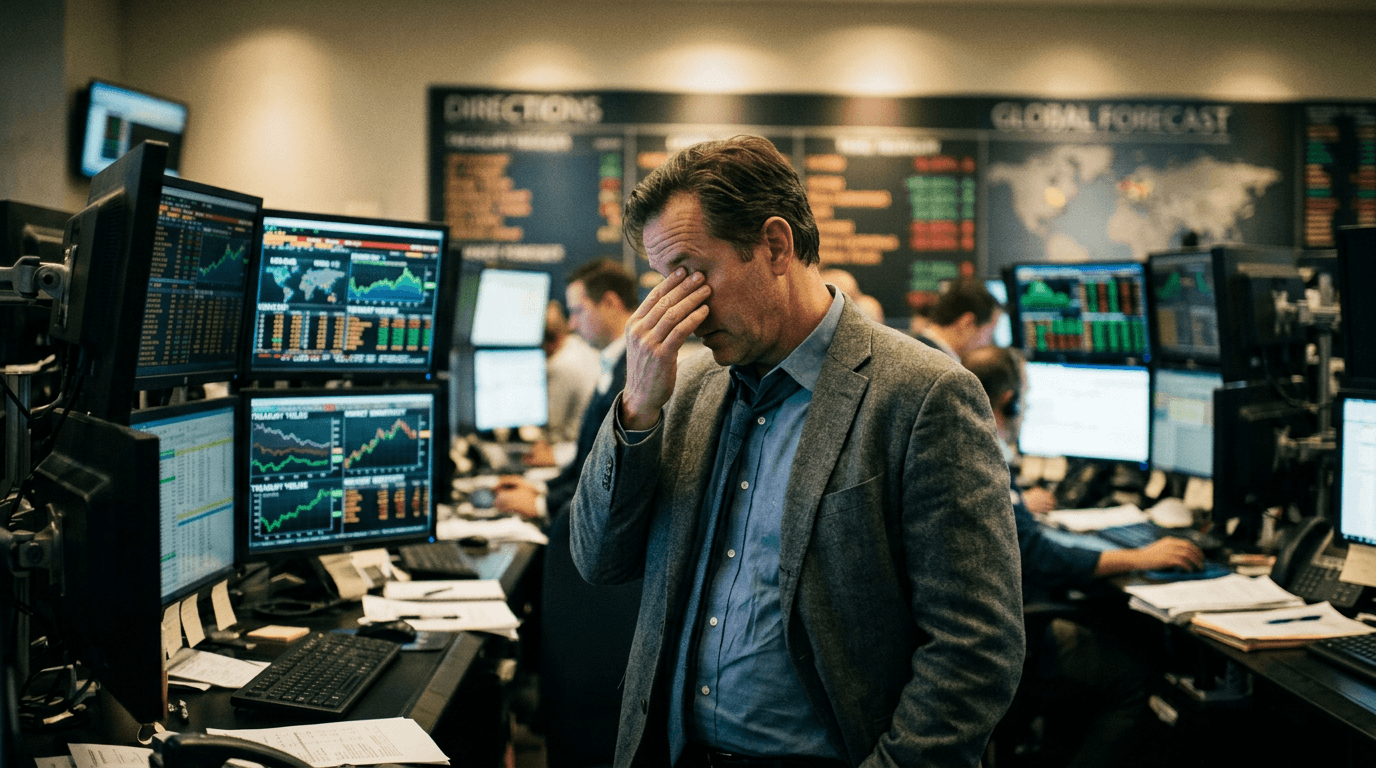
The US dollar index futures slipping below the key 100 level is more than a technical curiosity—it marks a potential turning point in the global macro narrative. A weaker‑than‑expected US labor report has dented expectations of further Federal Reserve rate hikes, triggering broad dollar selling and sharp moves across major currency pairs and bond markets.[1][2] As the dollar rally shows signs of exhaustion, traders are reassessing positioning, risk, and strategy in a world where “higher for longer” may no longer be the base case.
Market Move: Dollar Index Breaks 100
For the first time since mid‑2023, US dollar index futures have traded decisively below 100, extending a drop from the 110 region that had previously symbolized the strength of the post‑pandemic dollar bull run.[1][5] The break came after an opening gap lower in futures and accelerated as liquidity deepened through the trading day, confirming that this was not a fleeting tick but a genuine repricing.
The dollar index—tracking the USD versus a basket of major currencies dominated by the euro—has long been a barometer of global risk appetite and relative policy stances.[6][8] When it trades above 100, markets are typically pricing strong US growth, tighter Fed policy, and persistent demand for safe‑haven dollars. A sustained move below that threshold signals the opposite: investors are starting to believe that the Fed hiking cycle is over, and that capital can rotate out of the dollar into higher‑beta assets.
The reaction in FX has been immediate. Sterling, the euro, and several emerging‑market currencies have rallied as dollar selling broadened, with traders closing long‑USD positions and rotating into pairs where rate and growth dynamics now look more supportive outside the US.[1] This is classic “dollar down, rest-of-world up” behavior—and a reminder that levels like 100 on DXY matter because they anchor positioning and sentiment.
Why Weak Labor Data Matters So Much For The Fed
The catalyst for the break below 100 was weaker‑than‑expected US payroll data, which showed a clear slowdown in hiring relative to prior months.[2] In isolation, one data print does not make a trend. But in the context of earlier signs of cooling—slower job creation, softer wage growth, and pockets of rising unemployment—it carries outsized weight for rate expectations.
The Fed’s reaction function is heavily influenced by the labor market. Strong employment and rapid wage gains tend to support higher rates as the Fed leans against inflation; moderating jobs data reduces the urgency to tighten further and raises the probability of eventual cuts. The latest payroll report did exactly that: it dampened speculation that the Fed would hike again in the near term, nudging market‑implied probabilities toward a prolonged pause and a more dovish path.[2]
Bond markets responded quickly. Yields on US Treasuries slipped as traders priced in lower future policy rates, especially at the front end of the curve where expectations are most sensitive to incoming data. This drop in yields makes the dollar less attractive relative to currencies where central banks are either still tightening or perceived to have more room to stay restrictive.
For FX traders, the key takeaway is that macro catalysts like payrolls can flip the narrative in a single session. When rate expectations move, the dollar moves—and leveraged positions built on the assumption of continuing US outperformance can suddenly find themselves on the wrong side of a regime shift.
Cross-asset Ripple Effects: Fx, Bonds And Commodities
A weaker dollar rarely moves in isolation. As US dollar index futures broke below 100, cross‑asset correlations kicked in. Risk assets—including equities and higher‑beta FX—typically benefit from a softer dollar and lower yield expectations, and that pattern is emerging again.[1][5]
In FX, euro and sterling have been among the main beneficiaries, given their heavy weights in the dollar index and the perception that European and UK central banks may remain relatively restrictive for longer.[1][8] Emerging‑market currencies, which often suffer when the dollar is strong and US yields are high, have seen relief rallies as funding conditions appear less threatening.
Commodity markets also feel the impact. Many globally traded commodities are priced in dollars, so a weaker USD effectively lowers their price for non‑US buyers and can boost demand. Gold, in particular, tends to gain when real yields fall and the dollar softens, as investors hedge against policy uncertainty and potential future inflation.
Technically, the fact that the dollar index has broken below its 200‑day moving average alongside the 100 handle adds further significance.[5] Long‑term moving averages act as trend filters; when price trades below them, many systematic and trend‑following strategies switch bias from long to short. That can extend the move as mechanical sellers join discretionary traders in reducing dollar exposure.
What This Means For Traders And Simulated Finance
For SimFi traders, this dollar move is a live case study in how macro data can trigger regime change across markets.[1] Instead of viewing the break below 100 as a one‑off event, treat it as an opportunity to stress‑test your playbook.
Start by revisiting longer‑term charts of the dollar index and major USD pairs. Identify where the prior dollar bull trend is clearly breaking—zones where support has failed, momentum has flipped, or moving averages have crossed. This helps you distinguish between a normal correction and a possible transition into a new, weaker‑dollar environment.
Next, build simulated strategies that reflect different views on what happens next:
- A continuation scenario, where the dollar remains under pressure and non‑USD assets outperform. In this case, you might model being long EUR, GBP, gold, and selected emerging‑market FX against the dollar, with risk managed via volatility‑based position sizing.
- A mean‑reversion scenario, where the dollar’s break below 100 proves temporary and DXY snaps back as future data surprise positively or the Fed pushes back against dovish pricing. Here, you might simulate buying the dollar on dips versus weaker currencies, with tight stop losses below recent lows.[1]
Comparing these simulated strategies helps you quantify how sensitive your portfolio is to the dollar path and refine entry, exit, and risk rules before committing real capital.
Scenarios To Watch Next
The story does not end with the initial break below 100. Traders now need to map potential paths from here, anchored in upcoming data and central‑bank communication.
In a sustained‑weakness scenario, labor data continues to soften, inflation drifts lower, and the Fed leans more openly toward a pause and eventual cuts. The dollar would likely grind lower, supporting a broader risk‑on environment and ongoing strength in EUR, GBP and EM FX.
In a reversal scenario, one or more prints—jobs, inflation, or wages—come in hot, and the Fed signals that the door to further tightening is still very much open. Yields would back up, and the dollar could reclaim the 100 level, forcing short‑USD positions to cover.
For traders, the practical steps are clear:
- Track high‑impact US data releases—payrolls, CPI, PCE, and jobless claims—and monitor how rate‑futures markets reprice after each print.
- Watch the dollar index around the 100 zone and the 200‑day moving average as key technical reference points.[5]
- Use simulated environments to rehearse responses to both dovish and hawkish surprises, focusing on risk management rather than prediction.
Ultimately, the break below 100 is a reminder that markets are forward‑looking. Once the labor data convinced traders that the Fed’s hiking phase is likely done, the dollar had to adjust. The question now is not “what just happened?” but “how prepared are you for what happens next?”