
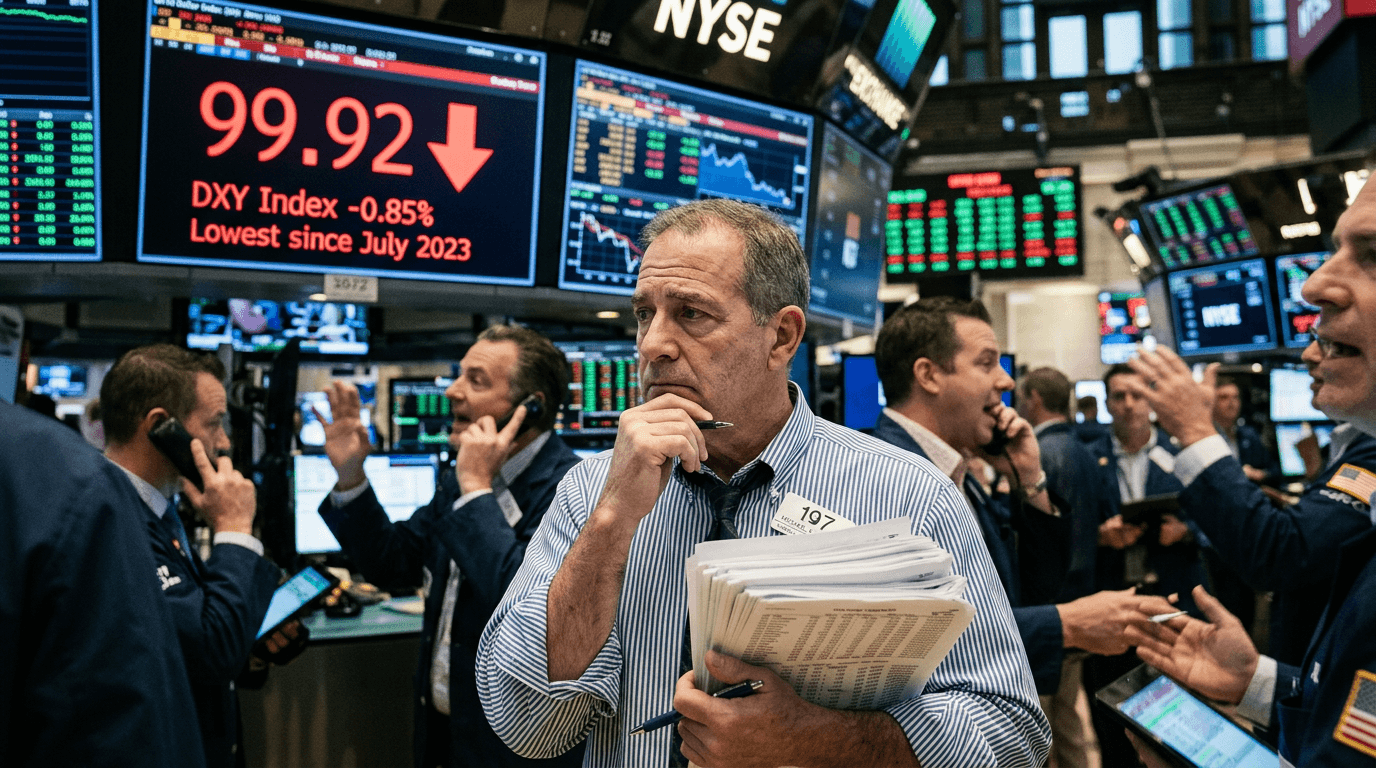
The US Dollar Index has just crossed a threshold that many traders thought would hold firm. For the first time since July 2023, the DXY has dipped below the 100 level, signaling a significant shift in currency markets that deserves your immediate attention. This isn't a minor technical correction—it represents a fundamental reassessment of US economic strength, monetary policy expectations, and global capital flows that will ripple across multiple asset classes.
The 100 Level: Why It Matters
The 100 mark on the US Dollar Index isn't arbitrary. Since the index's inception in 1973, this level has served as a critical psychological anchor for institutional investors, central banks, and multinational corporations. The DXY measures the dollar's strength against a basket of six major currencies: the Euro, Japanese Yen, British Pound, Canadian Dollar, Swedish Krona, and Swiss Franc. Trading above 100 traditionally indicates dollar strength relative to its long-term average. A sustained break below this level suggests something fundamental has shifted in how global markets view the dollar.
For over a decade, the 100 threshold has functioned as a formidable support and resistance zone. The fact that it's been decisively breached isn't just a routine technical move—it signals traders are losing confidence in the traditional dollar strength narrative. When institutional money starts moving away from the dollar this decisively, the implications extend far beyond currency markets.
Technical Breakdown: Reading The Charts
The technical picture has turned decidedly bearish. The most telling signal is the death cross pattern—the 50-day moving average has crossed below the 200-day moving average, a classic indicator traditionally associated with sustained downward momentum. This isn't a weak decline driven by thin liquidity either. Trading volume surged significantly during the breakdown, confirming that institutional investors are actively unwinding dollar positions rather than engaging in casual profit-taking.
The charts reveal a pattern of lower highs and lower lows, indicating structured selling pressure. Key support levels now require close monitoring. The immediate support sits at 99.70, with a more critical floor at 98.50—a zone not tested since early 2023. If the DXY breaches 98.50, further losses could accelerate. A break below 97.50 would signal a clearer, longer-term reversal with potentially major implications for capital flows across asset classes.
On the upside, resistance exists at 100.20 to 100.50, with further resistance stretching toward 101.60 and 103. The 200-day moving average remains the focal point for traders watching whether this weakness represents temporary volatility or a sustained trend change.
What's Driving The Weakness
Multiple fundamental factors are converging to pressure the dollar. First, the Federal Reserve's signal of potential interest rate cuts has reduced the carry advantage that typically benefits the dollar. When US rates are higher, foreign investors have incentive to hold dollars. That advantage diminishes when rate cuts are expected.
Second, persistent inflation concerns are creating uncertainty about the timing and magnitude of any Fed accommodation. The ISM Services PMI price index recently surged, reminding markets that the inflation story isn't over. This has caused some investors to position for a Fed hold rather than aggressive cuts, creating conflicting signals.
Third, tariff policy is weighing heavily on sentiment. The high tariffs on China, particularly the 145% rate, are creating recession concerns in the US. When investors fear slower US economic growth, they naturally reduce dollar holdings in favor of safer alternatives. Concerns about tariffs have also raised questions about central bank independence, particularly following political commentary about Federal Reserve leadership.
Meanwhile, strong wage growth in Japan has lifted the likelihood of additional Bank of Japan rate hikes, providing support for the yen and creating headwinds for the dollar.
Implications Across Asset Classes
The weakening dollar is reshaping multiple markets simultaneously. Currency pairs like EUR/USD have rebounded to higher levels as the euro strengthens relative to the softening dollar. GBP/USD is experiencing similar dynamics as safe-haven flows diversify away from dollar-denominated assets.
Commodity traders should note that many commodities are priced in dollars, making dollar weakness typically supportive for commodity prices. Weaker dollars mean cheaper commodities for international buyers, which tends to support prices and boost demand.
What Traders Should Do Now
The key question facing traders is whether this breakdown leads to a sustained trend or a temporary pullback. Upcoming economic data and Federal Reserve signals will prove decisive. If data suggests slower economic growth or confirms early rate cuts, the dollar could weaken further. Conversely, any inflation surprises or strong employment figures could quickly reverse the move and propel the dollar back above 100.
For position traders, the current environment suggests watching support levels closely while monitoring central bank communications. For swing traders, the technical breakdown combined with increased volatility presents opportunities, but the conflicting fundamental signals mean careful risk management remains essential.
The dollar's break below 100 marks a pivot point. Whether it represents a temporary correction or the beginning of a prolonged downtrend will depend on economic data, Fed policy clarity, and tariff developments in the coming weeks.