
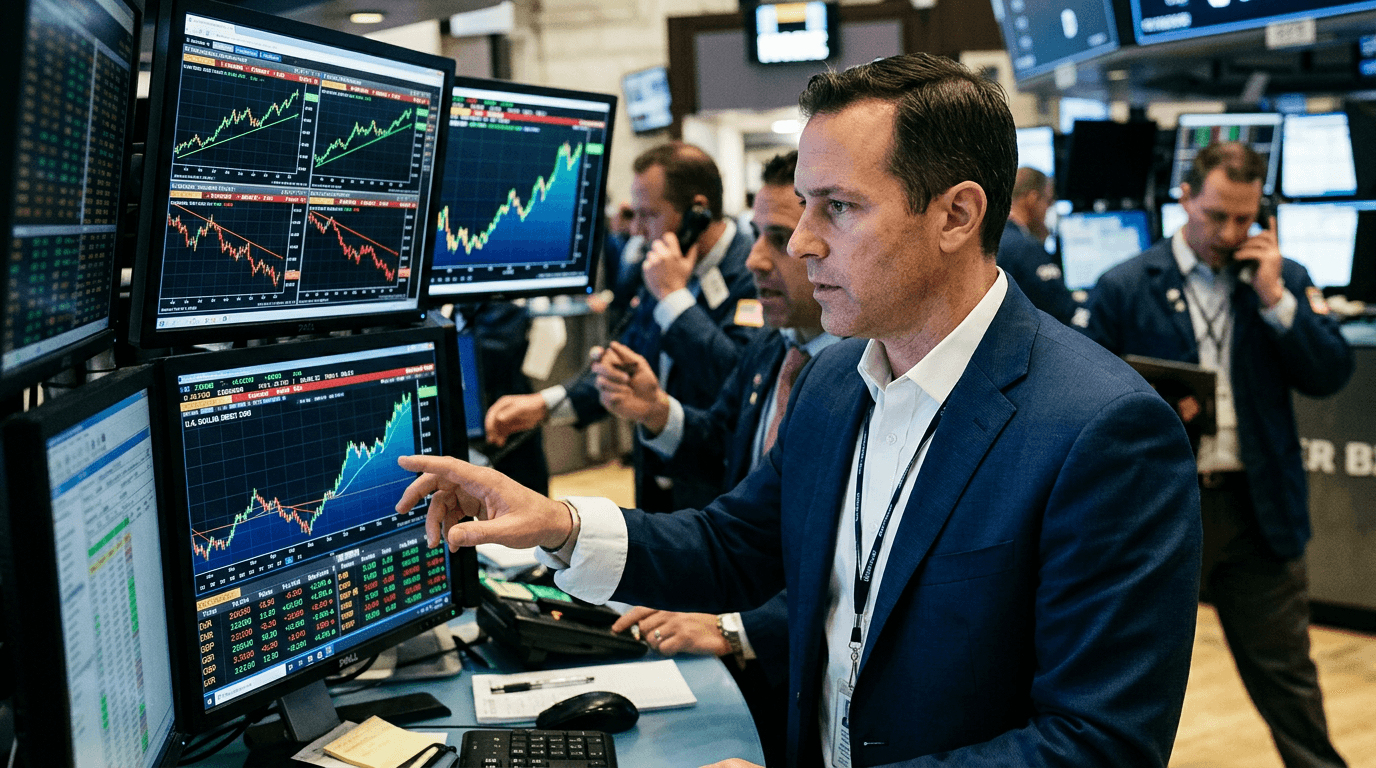
A run of stronger-than-expected U.S. economic data has pushed the dollar index higher, lifting FX futures activity and putting fresh pressure on major currencies like the euro and the pound.[4][5] For traders, this kind of move is more than a headline—it reshapes rate expectations, volatility profiles, and the risk-reward balance across the currency spectrum.[4][6]
What The Dollar Index Is Telling Us
The U.S. Dollar Index (DXY) tracks the value of the dollar against a basket of major currencies, including the euro, yen, pound and others.[9][11] When the index rises, it signals that the dollar is gaining strength relative to this basket.[9]
Recent sessions have seen the DXY advance around 0.27% on one day and extend those gains as more robust U.S. data crossed the wires, reinforcing the narrative of a resilient U.S. economy and pushing Treasury yields higher.[4][5] Moves of this magnitude may look modest, but in FX terms they are meaningful—especially when they come on the heels of a broader upward trend in the index.[4][5]
Behind the headline, the dollar’s strength reflects a combination of:
- Stronger retail sales and other consumption data, pointing to solid demand.[4][5][12]
- Upward revisions to GDP growth, reinforcing confidence in U.S. momentum.[5][12]
- Better-than-expected figures in areas like jobless claims and durable goods orders, which reduce fears of an imminent slowdown.[3][8][12]
Together, these releases have pushed traders to reassess how quickly the Federal Reserve might cut interest rates, with many now expecting rates to stay higher for longer.[4][5][6]
WHY STRONGER U.S. DATA BOOSTS THE DOLLAR
Economic data is one of the primary drivers of the DXY because it directly influences expectations for Fed policy.[12] Strong growth and firm consumer spending make it harder for the Fed to justify rapid rate cuts, especially if inflation remains above target.[4][5][6]
When markets conclude that rates will stay elevated
- U.S. Treasury yields typically rise, as seen in recent sessions where the 10-year and longer maturities moved sharply higher.[4][5]
- Higher yields increase the relative appeal of dollar-denominated assets, attracting global capital into U.S. bonds and money markets.[4][6]
- As demand for dollar assets grows, demand for the dollar itself increases, supporting the DXY.[4][5][6]
This is the classic “higher-for-longer” dynamic: strong data → higher yields → stronger dollar. For FX traders, the critical point is that the move is policy-driven, not random. As long as data continues to surprise on the upside and rate-cut expectations are pushed out, the dollar tends to stay bid.[5][6][12]
Impact On Major Currencies: Euro, Pound And Beyond
A rising dollar index almost always means pressure on major non‑U.S. currencies, since the dollar’s strength is measured relative to them.[9] Recent trading has seen:
- The euro slipping against the dollar, reflecting the divergence between stronger U.S. data and more mixed signals from the Eurozone.[4][8]
- The British pound under pressure as traders use dollar strength and shifting Fed expectations to reposition in near-dated FX contracts and September pound futures.[4]
- Other majors, such as the Canadian dollar and yen, adjusting as rate differentials and risk sentiment reprice in real time.[3][4][8]
For spot traders, this environment tends to favor trend-following strategies in pairs like EUR/USD and GBP/USD, where the path of least resistance can be lower as long as the DXY remains elevated.[4][5] For options traders, rising dollar strength and policy uncertainty often translate into richer implied volatility, especially around key data releases and central bank meetings.[6][12]
Why Fx Futures Are Seeing Heightened Opportunity
FX futures prices embed expectations about future interest rate differentials, forward points and the relative strength of currencies at specific expiry dates. When U.S. data pushes the market toward a “higher-for-longer” Fed stance, futures curves for dollar pairs adjust quickly.[4][5][6]
Key dynamics traders are watching
- Repricing of near-term contracts: September British pound futures and other short-dated contracts are particularly sensitive to shifts in Fed expectations, because they sit in the window where rate decisions and data surprises are highly uncertain.[4][6]
- Basis and carry considerations: As U.S. yields rise, holding dollar exposure via futures can become more attractive relative to lower-yielding currencies, changing the economics of carry trades and hedging strategies.[4][5][6]
- Liquidity and volatility “clusters”: Strong data releases often trigger bursts of volume and volatility in the nearest FX futures contracts, creating short-term opportunities for active traders who can manage risk efficiently.[4][6][12]
For traders operating in simulated environments—such as SimFi platforms that model futures and spot markets—these conditions offer a rich testing ground. Traders can experiment with:
- Long USD vs. majors in futures as a directional bet on continued data strength
- Calendar spreads between near and far contracts to express views on the timing of Fed cuts
- Options strategies on FX futures to capture or hedge volatility around key economic releases
Practical Takeaways For Traders
The latest dollar index advance is more than just an incremental move; it reflects a broader regime where U.S. data is consistently beating expectations and forcing markets to rethink the pace of policy easing.[4][5][6]
Practical points to keep in mind
1. Anchor your FX view in data and policy Monitor high-impact U.S. releases—GDP, retail sales, labor market and inflation—as they directly shape DXY trends and Fed expectations.[4][5][12] Strong upside surprises typically support the dollar.
2. Watch rate differentials, not just price charts Changes in Treasury yields are often the bridge between economic data and FX moves.[4][5] A sustained rise in yields without a corresponding move in other economies usually favors the dollar.
3. Use FX futures to express structured views Futures allow precise exposure to specific time periods (e.g., September contracts), which is valuable when your thesis is tied to central bank meeting calendars or upcoming data clusters.[4][6]
4. Manage risk around event-driven volatility Strong data can trigger fast, one-directional moves. Setting clear stop levels, using options for protection, and sizing positions conservatively are essential in both live and simulated trading environments.[6][12]
Looking Ahead
As long as U.S. data continues to surprise to the upside and markets believe the Fed will keep rates elevated, the dollar index is likely to remain supported, with periodic corrections driven by technical factors and profit‑taking.[5][6] For majors like the euro and pound, that backdrop implies a tougher environment and potentially extended periods of downside pressure.[4][5]
For traders, the key is not to chase headlines but to understand the mechanism: data drives yields, yields drive the dollar, and the dollar reshapes FX futures pricing and spot trends. In that framework, every new economic release is an opportunity to reassess positioning, refine strategy, and use both real and simulated markets to stay on the right side of the next move.