
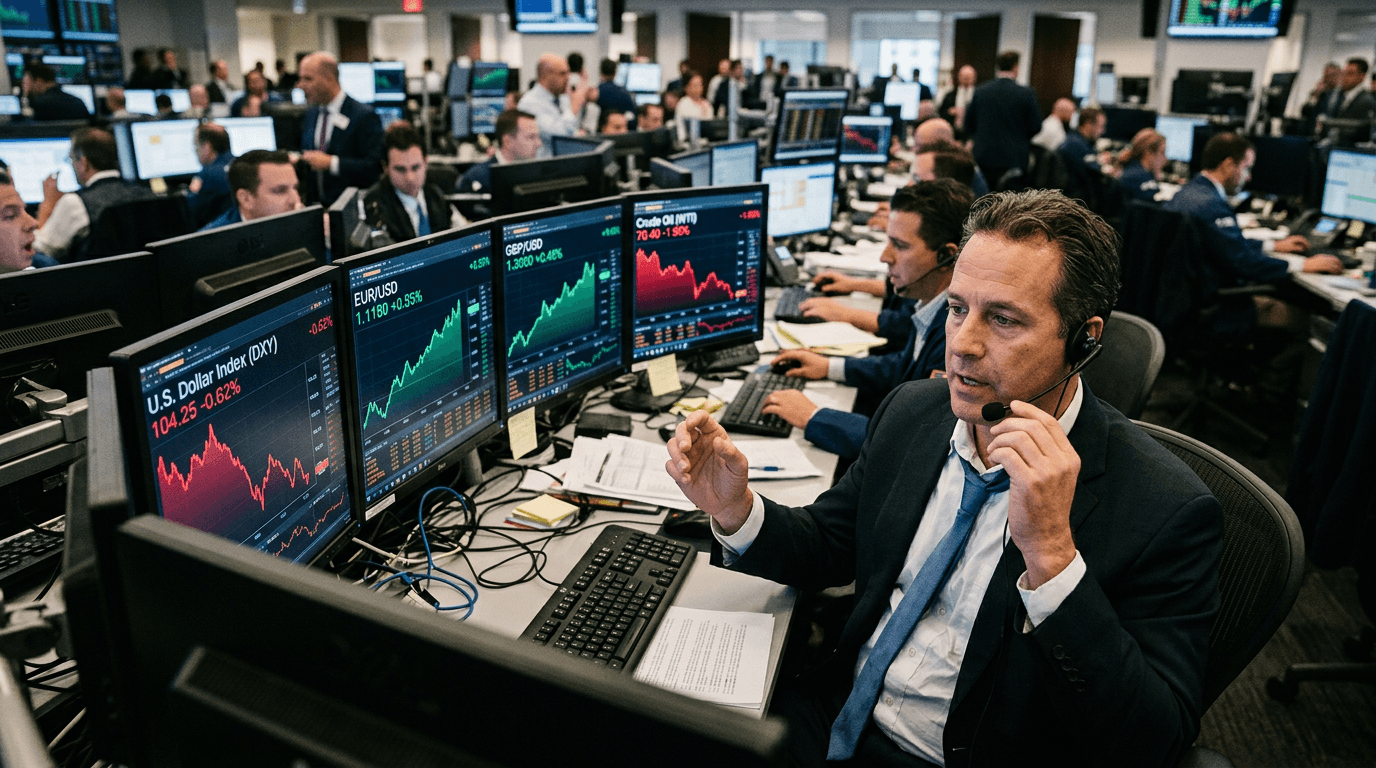
A surprisingly swift shift in geopolitical risk has taken some of the wind out of the U.S. dollar’s sails. As reports point to progress on a U.S.–Iran agreement to extend a ceasefire and ease shipping restrictions through the Strait of Hormuz, the Dollar Index has slipped off recent highs, while the euro and pound firm and oil prices retreat. The move is a textbook example of how changing perceptions of risk can rapidly reprice safe-haven currencies and ripple across global markets.[4][5][8][9]
Markets React To Easing Geopolitical Risk
For weeks, tensions in the Middle East and threats to critical energy infrastructure supported the dollar, as investors flocked to the world’s reserve currency for safety.[9] Announcements of a two-week ceasefire, commitments to reopen the Strait of Hormuz, and indications that negotiations are progressing have now reversed that dynamic, easing demand for the greenback and encouraging a shift back into risk assets such as equities and higher‑beta currencies.[4][5][8]
Recent moves in the Dollar Index highlight this shift. The index, which measures the dollar against a basket of major peers, has retreated toward the high‑90s after touching multi‑week highs earlier on conflict fears.[4][7][11] As ceasefire prospects improved, it fell roughly 0.4–2% from recent peaks, erasing a portion of the safe‑haven gains built up during the height of uncertainty.[4][5][8][9] That pullback is widely seen by analysts as a logical correction of an earlier risk‑premium overshoot.[9]
Why Safe-haven Flows Matter For The Dollar
To understand this move, it helps to unpack what “safe‑haven flows” really mean. In periods of elevated geopolitical or market stress, investors typically reduce exposure to risky assets and rotate into perceived stores of value. Historically, that list has included the U.S. dollar, U.S. Treasuries, the Japanese yen, and gold. The recent Middle East tensions had created a classic risk‑off backdrop, lifting the dollar as investors hedged against worst‑case scenarios on energy supplies and regional escalation.[3][8][9]
Once the narrative shifted toward a credible ceasefire, those worst‑case scenarios became less likely. Oil shipments through the Strait of Hormuz look more secure, tail risks around sudden supply disruptions have eased, and market volatility has fallen.[4][8] As the immediate need for protection diminished, investors began unwinding defensive dollar positions and rebalancing toward risk assets—sending the Dollar Index lower and risk‑sensitive currencies higher.[5][8][9]
Crucially, this does not mean the dollar is suddenly weak across the board. Geopolitical risk is just one component of the currency’s pricing. Interest‑rate differentials, inflation expectations, and relative growth prospects remain supportive. Analysts have emphasized that while the conflict risk premium is receding, elevated U.S. inflation and a still‑hawkish Federal Reserve stance are preventing a full turn to a “dovish dollar” environment.[9][11]
Impact Across Major Currencies And Commodities
The first beneficiaries of the dollar’s slip have been its largest counterparts. As safe‑haven demand cooled, the euro and sterling extended gains against the greenback, with EUR/USD and GBP/USD rising around 0.3% in recent sessions.[5][13] Those moves are modest in absolute terms but significant as they reflect a broader rotation away from defensive dollar positioning and back toward diversified FX exposure.
Risk‑sensitive currencies have also responded. The Australian dollar, often seen as a proxy for global growth and commodity demand, rallied more than 1% on the ceasefire news in earlier episodes, reinforcing the theme of returning risk appetite.[8] Meanwhile, the Japanese yen—a competing safe haven—has been mixed, as unwinding dollar strength is partly offset by continued carry‑trade dynamics and expectations that Japanese rates will remain low.[5][12]
On the commodities side, the impact has been even more pronounced. Oil prices, which had spiked on fears of disrupted shipping routes and heightened regional conflict, have retreated as ceasefire prospects improved and assurances on Strait of Hormuz traffic emerged.[4][6][8] Lower oil prices reduce one of the key channels through which Middle East tensions were feeding into global inflation expectations. That, in turn, has implications for central banks, including the Federal Reserve, as they assess whether geopolitical risk continues to justify a more cautious stance on rate cuts.[9][13]
For traders, the key takeaway is that Middle East headlines are no longer just a “risk story” for energy—they are now directly influencing FX, rates, and equity markets through the safe‑haven channel.
What Traders Should Watch Next
Although the ceasefire narrative is now pressuring the dollar, markets remain acutely aware that geopolitical agreements can unravel. Reports describe the current deal as tentative and time‑bound, with negotiators still working through issues such as Iran’s nuclear program and longer‑term security guarantees.[4][5][8] Any sign that talks are breaking down, or that shipping through the Strait of Hormuz is once again at risk, could quickly re‑ignite safe‑haven flows and push the dollar and oil higher.
Beyond the ceasefire itself, traders should keep an eye on three key drivers:
First, U.S. economic data and Federal Reserve communication. Strong data that reinforces the case for higher rates for longer can offset or even outweigh the impact of easing geopolitical risk, supporting the dollar despite softer safe‑haven demand.[3][9][11]
Second, inflation and energy prices. If the retreat in oil proves durable, it may ease global inflation pressures and open the door for more accommodative policy from major central banks over time—another factor that can reshape FX trends.[6][8][13]
Third, broader risk appetite. Equity performance, credit spreads, and volatility indices all feed into how aggressively investors rotate between safe havens and risk assets. The recent relief rally in stocks following ceasefire headlines shows how quickly sentiment can swing.[6][8]
Practical Lessons For Simulated And Real-world Traders
The current episode offers several practical lessons that are highly relevant both in live markets and in simulated finance environments.
One, geopolitical catalysts move markets in stages. Initial headlines often trigger abrupt risk‑off or risk‑on shifts, but pricing then evolves as details emerge and the probability of different scenarios is refined. Practicing how to trade around those stages—reaction, digestion, reassessment—can improve decision‑making under uncertainty.[4][5][8][9]
Two, the Dollar Index is a useful barometer, but not the whole story. A fall in the index on easing safe‑haven demand doesn’t mean every dollar pair behaves identically. Cross‑currents from local data, central bank policy, and positioning can produce divergent moves across EUR/USD, GBP/USD, USD/JPY, and commodity‑linked currencies. Scenario‑based backtesting can help traders explore these nuances.
Three, risk management matters more than the headline. Traders who chased the dollar higher purely on conflict fears without clear exit criteria are now facing a drawdown as the risk premium unwinds. In contrast, those who defined in advance how they would respond if a ceasefire emerged—whether by tightening stops, taking partial profits, or rotating into other assets—are better positioned.
Ultimately, the latest slip in the Dollar Index is a reminder that safe‑haven trades are not one‑way bets. They are contingent on evolving narratives, and when those narratives change—like they have with improving Middle East ceasefire prospects—markets can pivot quickly. For active traders, the goal is not to predict every twist in geopolitics, but to build robust strategies that can adapt as risk ebbs and flows across currencies, commodities, and global assets.[4][5][8][9]