
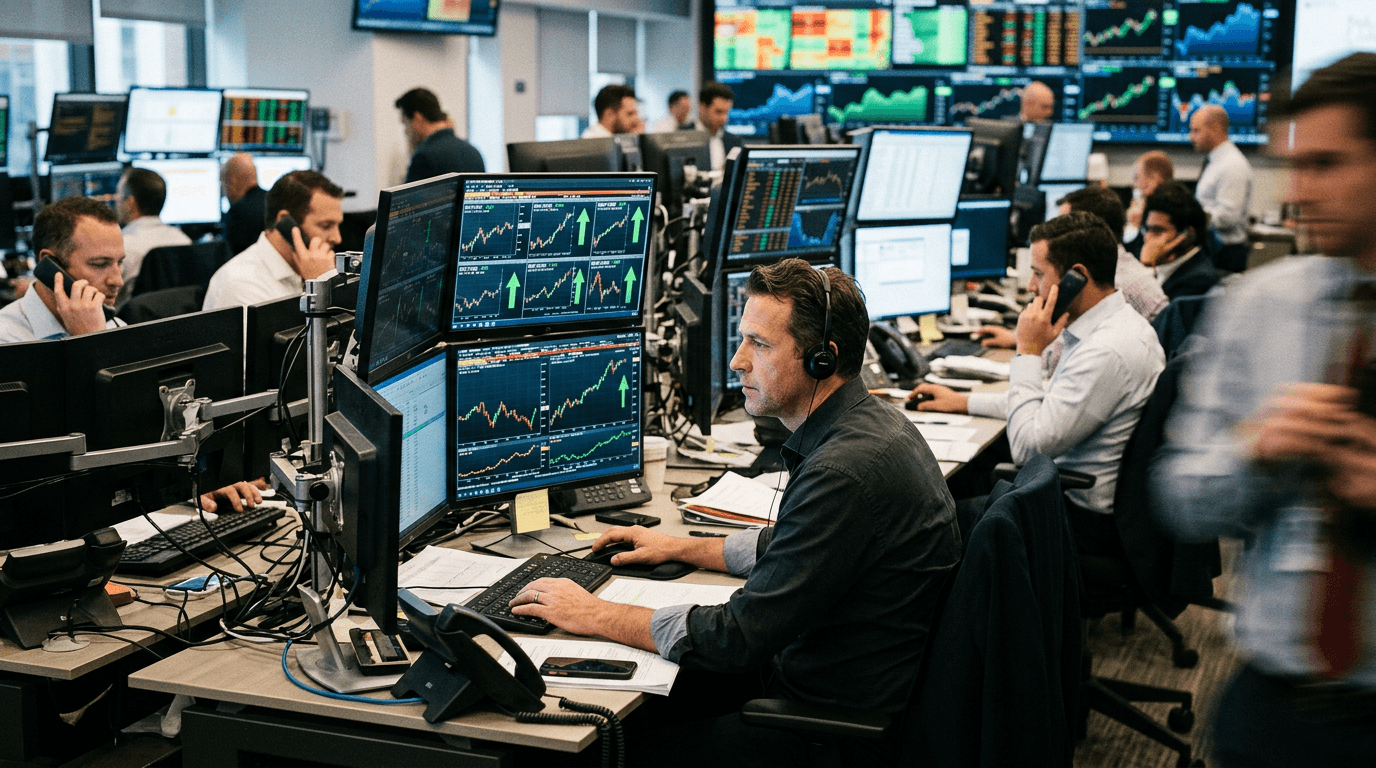
The U.S. dollar’s latest slide in New York trading is a classic example of what happens when the market shifts out of “fear mode” and back into “risk-on” thinking. As equities stabilized and investors grew more comfortable taking on risk, demand for the dollar’s safe-haven qualities faded, sending it lower against major currencies and lifting assets that typically benefit from a weaker greenback, including EUR/USD, GBP/USD, USD/JPY, emerging‑market FX, gold, and equity index futures.
WHAT’S DRIVING THE DOLLAR LOWER?
To understand the move, it helps to remember why the dollar often rallies in the first place. In periods of stress, global investors flock to highly liquid, perceived safe assets—U.S. Treasuries and, by extension, the U.S. dollar. When that anxiety subsides, those same investors unwind defensive positions and rotate back into risk assets, reducing the need to hold dollars.
This “safe-haven unwind” dynamic has repeatedly driven broad dollar sell-offs in the past. For instance, when investors’ worries about U.S. policy risk increased, the greenback fell sharply against a basket of currencies, with the euro and sterling hitting multi‑year highs as traders sold dollars to buy higher‑yielding or rebounding markets.[1][2] The current move mirrors that pattern: softer demand for safety plus firmer risk assets equals a weaker dollar.
Beyond short-term sentiment, there are broader structural themes that often sit in the background. Research has highlighted factors such as narrowing growth and interest rate differentials between the U.S. and the rest of the world, as well as concerns about U.S. fiscal deficits, as reasons the dollar can face medium‑term downward pressure.[4] When a risk‑on session hits, those underlying worries can amplify intraday dollar declines.
How Major Fx Pairs Are Responding
The immediate impact of a weaker dollar is easiest to see in the headline pairs: EUR/USD, GBP/USD, and USD/JPY.
When the dollar falls broadly, EUR/USD and GBP/USD typically push higher because the euro and pound are on the left side of the quote. In earlier episodes of dollar weakness, the euro and sterling rose 1–1.5% in a single session as traders rotated into European and UK assets while selling the greenback.[1][2] A similar mechanism is at work now: improved risk appetite, plus any signs of relative resilience in the eurozone or UK outlook, tend to support these currencies against the dollar.
USD/JPY behaves a bit differently. The yen is itself a traditional safe-haven currency, often strengthening when risk sentiment deteriorates. In prior bouts of dollar weakness accompanied by shifting rate expectations and policy uncertainty, the yen has rallied sharply, sending USD/JPY lower as markets reassessed relative risks and potential intervention.[1] In a risk‑on session, the yen’s safe‑haven role may matter slightly less than the interest rate spread between U.S. and Japanese yields—but if traders also start questioning how high U.S. yields can go, USD/JPY can fall quickly as the dollar leg weakens.
For traders, the key lesson is that not all dollar pairs move for the same reasons. EUR/USD and GBP/USD are often more sensitive to relative growth stories and risk appetite, while USD/JPY can swing on a mix of risk sentiment, yield differentials, and central bank policy expectations.
RIPPLE EFFECTS: EMERGING‑MARKET FX, GOLD, AND INDEX FUTURES
A softer dollar rarely stops at G10 FX. It tends to ripple across emerging‑market currencies, commodities, and equity futures.
Emerging‑market FX usually benefits when the dollar weakens and risk appetite improves. Lower perceived U.S. policy risk and more benign global conditions have previously encouraged investors to rotate out of dollars and into emerging‑market assets, especially when local yields offered attractive carry.[2][4] In a session like the latest one, that can mean EM currencies firming, local bonds rallying, and EM equity futures grinding higher as global investors seek diversification and return.
Gold is another obvious beneficiary. Because gold is priced in dollars, a weaker greenback typically makes it cheaper in non‑U.S. currencies and can support demand. In past periods of dollar decline tied to policy uncertainty, investors bought gold as both a hedge against currency debasement and a portfolio diversifier.[2][3] Even when the safe‑haven motive in FX is fading, some of that hedging demand can persist, helping gold futures hold or extend gains.
Equity index futures, especially in the U.S. and Europe, often rise alongside a weaker dollar. Historically, broad dollar sell-offs have coincided with firmer equity markets as improved global growth expectations and easier financial conditions buoy risk assets.[1][2] A softer dollar can also be a tailwind for U.S. multinationals, since overseas earnings translate into more dollars. As Wall Street has noted in previous episodes, a somewhat weaker dollar can be a “silver lining” for exporters and global companies by making U.S. goods more competitive abroad.[3]
Practical Takeaways For Active And Simulated Traders
For traders—whether in live markets or on a SimFi platform—the dollar’s slide offers several practical lessons.
First, always connect FX moves to the broader risk backdrop. A falling dollar on a day when equities are rallying, credit spreads are tightening, and volatility indices are dropping is usually a risk‑on story, not a sign of systemic stress. That context should shape how you trade pairs like EUR/USD and USD/JPY, or whether you look for opportunities in EM FX and equity indices.
Second, watch cross‑asset correlations. In previous dollar sell‑offs, the most compelling trades were not just directional FX bets, but also relative value ideas—such as going long assets that historically benefit from dollar weakness (export‑heavy equity indices, selected EM currencies, or gold) while hedging via assets that might lag.[1][2][3] Simulated environments are ideal for testing these relationships without capital at risk.
Third, think in scenarios, not headlines. Today’s move might be driven mainly by a safe‑haven unwind, but the same price action could look very different if, for example, the catalyst were an unexpected central bank pivot or major policy announcement. Forward‑looking traders build playbooks: “If the dollar keeps weakening and risk stays firm, which markets look most attractive? If the dollar snaps back on renewed risk aversion, where is my exposure?”
Key Lessons To Carry Forward
The dollar’s slide in New York trade as the safe‑haven bid fades underscores how quickly market narratives can shift—and how interconnected FX, commodities, and equity futures really are.
For active traders, the edge lies in reading those narrative shifts early, aligning positions with the underlying risk regime, and respecting the role of cross‑asset flows. For simulated traders, this environment is a valuable laboratory: it allows you to practice evaluating dollar moves in context, building correlation‑aware strategies, and stress‑testing your ideas across different risk scenarios.
When the dollar weakens on better risk sentiment, the opportunity is not just in chasing the immediate move, but in understanding the global rebalancing behind it—and positioning your trading approach, real or simulated, to make the most of that rotation.