
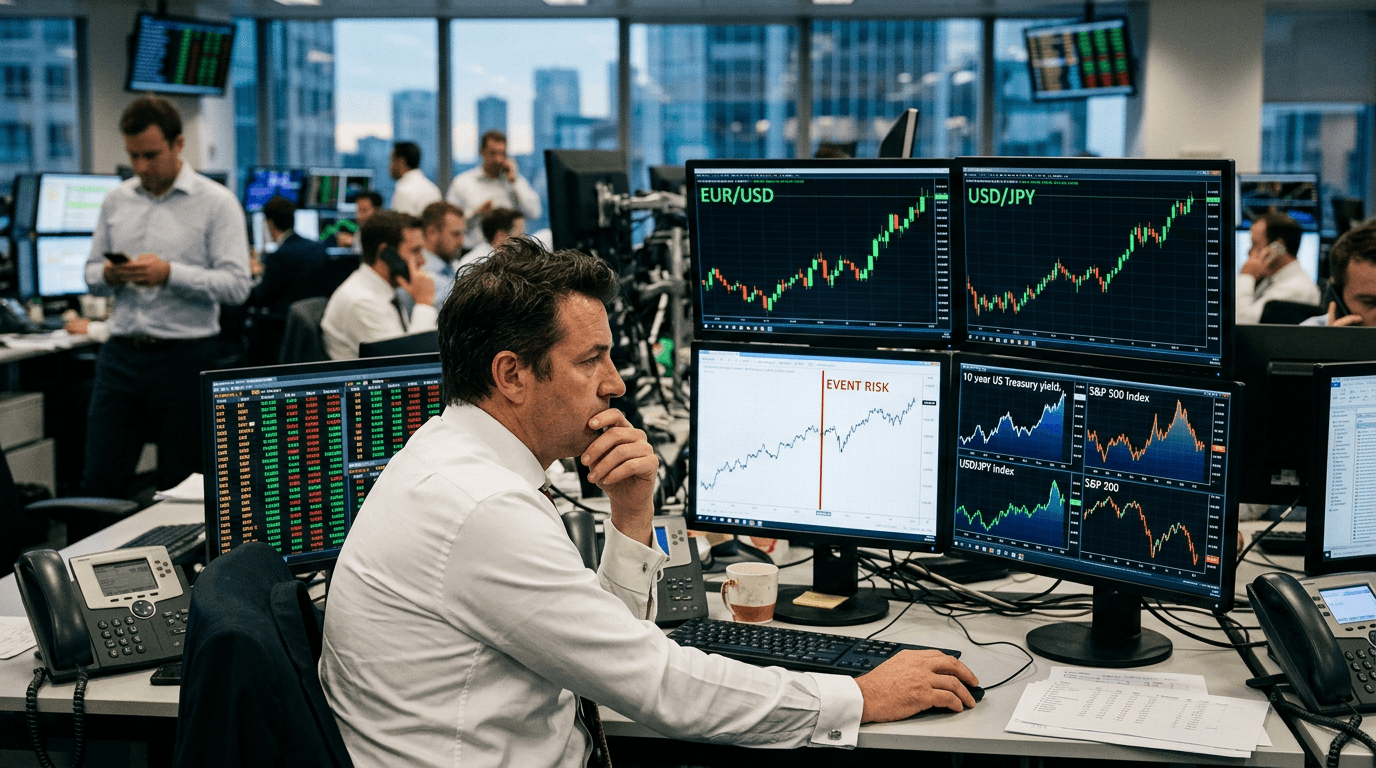
The US dollar’s firmer tone on Wednesday is a classic tell that global markets are bracing for new signals from the Federal Reserve and the Jackson Hole economic symposium. A modest bid for the greenback, alongside softer euro and yen, suggests traders are tightening risk exposure and fine‑tuning rate expectations rather than making bold directional bets.
Dollar Steadies As Event Risk Looms
Ahead of high‑profile policy events, the dollar often serves as a barometer of global risk appetite, reflecting how investors weigh US yield differentials, growth prospects, and central bank credibility. When uncertainty rises, portfolio managers frequently rotate toward the dollar and US assets, especially if real yields are elevated and the Fed is perceived as more hawkish than its peers.
Today’s firmer dollar and softer euro and yen line up with that pattern, signaling a cautious stance rather than outright fear. Traders are not just watching the Fed’s near‑term rate path; they are also assessing how Chair Kevin Warsh will frame inflation, growth, and financial stability risks in his debut Jackson Hole address, which has been flagged as a moment to clarify the recent jump in bond yields and his stance on independence from the administration[15].
Why Jackson Hole Matters For Fx And Risk Assets
Jackson Hole has grown from an academic conference into a global macro set piece where even subtle shifts in language can move currencies, bonds, equities, and commodities. This year, the stakes are higher because markets are searching for answers on whether the latest surge in yields marks a durable regime change or a temporary dislocation tied to repositioning and fiscal concerns[15].
Bank of America FX strategists recently described the dollar as “on edge” heading into Jackson Hole, arguing that the currency could be vulnerable to an extended sell‑off if Warsh leans more dovish or fails to validate fears of a sustained rise in yields[12]. That framing captures the two‑way risk: a hawkish tone could extend the dollar’s support and pressure risk assets, while a more balanced or dovish message might unlock a relief rally across equities, bonds, and higher‑beta currencies.
For traders, Jackson Hole is less about a specific rate decision and more about the narrative. Clear guidance that rate hikes are likely to continue tends to push yields and the dollar higher, tightening financial conditions. Conversely, hints of forthcoming cuts or tolerance for higher inflation usually pull yields and the dollar lower, easing conditions and favoring risk assets like stocks, credit, and commodities[1][2][3][8][13][14].
Lessons From Past Jackson Hole Reactions
Historical Jackson Hole episodes illustrate how quickly cross‑asset sentiment can flip when the Fed surprises the market. In 2025, a speech interpreted as opening the door to a September rate cut triggered a broad rally in US equities, a drop in Treasury yields, and a weaker dollar as traders priced in easier policy ahead[1][2][3][6][8][9][13][14]. The S&P 500 and Nasdaq both climbed sharply, while two‑year and ten‑year yields fell and the dollar retreated against major currencies[2][3][8][13][14]. Even bitcoin joined the move, surging several thousand dollars as investors embraced the prospect of looser financial conditions[10].
By contrast, the 2022 Jackson Hole speech delivered a forceful message on fighting inflation, stressing that rates might need to stay higher for longer even at the cost of slower growth[7][11]. US equities sold off sharply in the following sessions, with major indices dropping more than 3% as traders recalibrated for a more aggressive tightening path[5][7][11]. A senior Fed official later said he was “happy” with the market reaction, seeing the decline as evidence that investors understood the Fed’s determination to curb inflation[11]. That episode highlighted how a hawkish surprise can tighten financial conditions via lower stock prices, wider credit spreads, and a stronger dollar.
For forex traders, these case studies underscore that Jackson Hole is a volatility event, not just a speech. When the Fed leans dovish, the dollar often weakens, carry trades can outperform, and risk assets rally. When the Fed leans hawkish, the opposite tends to occur: the dollar strengthens, funding currencies like the yen can see bursts of volatility, and risk assets face pressure[1][2][3][5][7][8][11][13][14].
What A Firmer Dollar Signals Right Now
Today’s incremental dollar strength suggests markets are leaning slightly toward the risk that Warsh emphasizes inflation control and validates higher yields, even if he avoids explicit guidance on the next meeting. That cautious bias is consistent with elevated bond‑market anxiety and the demand for reassurance about the Fed’s independence and commitment to price stability[12][15].
A stronger dollar can have ripple effects beyond forex. Commodities priced in dollars, such as gold and oil, may face headwinds because a more expensive dollar raises the local‑currency cost for non‑US buyers. Emerging‑market assets can also feel pressure as financing conditions tighten and investors reconsider exposure to markets with external funding needs. Equities tied to global growth and trade, especially in Europe and Asia, are sensitive to both currency moves and shifts in US rate expectations.
At the same time, the magnitude of the move matters. A gradual, controlled firming of the dollar typically reflects disciplined positioning rather than panic, giving traders space to plan scenarios around the upcoming Fed communication. Sharp, disorderly spikes in the dollar, by contrast, often signal stress in funding markets or sudden changes in perceived policy credibility.
Practical Playbook For Simulated Traders
For traders using a SimFi environment like E8 Markets, Jackson Hole and similar events are ideal laboratories for testing macro and FX strategies under controlled risk. Simulated accounts allow traders to observe how the dollar, yields, and risk assets co‑move around policy speeches and to practice managing positions through volatile headline flows without real capital at risk.
A structured approach can help
1. Map scenarios: Outline hawkish, neutral, and dovish outcomes, and sketch expected reactions in the dollar, euro, yen, equities, and Treasuries based on past Jackson Hole examples[1][2][3][5][7][8][11][13][14].
2. Define trigger levels: Identify key support and resistance zones in major FX pairs and indexes, noting where price action in prior Fed events has accelerated. Use these levels as decision points for scaling in or out of simulated positions.
3. Focus on correlations: Track how the dollar index moves relative to S&P 500 futures, Treasury yields, and gold. When correlations strengthen—for example, dollar up, yields up, stocks down—it often signals a clear macro theme.
4. Manage event risk: Practice reducing leverage into the speech, widening stops to account for intraday swings, and re‑entering after the initial volatility spike once the market’s interpretation becomes clearer.
By replaying historical Jackson Hole reactions in a simulated environment, traders can build intuition about how narratives like “dovish pivot” or “higher for longer” propagate across asset classes. This preparation makes it easier to respond decisively when the next real‑time policy surprise hits.
Conclusion
The US dollar’s firmer footing as markets head into Jackson Hole is a reminder that FX is often the first arena where shifting central bank narratives show up. With bond yields elevated and investors keen for clarity from Warsh, even modest changes in tone on inflation, growth, or independence can cascade through currencies, rates, equities, and commodities[12][15]. For traders—especially those honing their edge in SimFi platforms—the key is not predicting the precise words, but preparing robust scenarios, respecting event risk, and understanding how the dollar’s reaction can set the tone for broader market sentiment in the days that follow.