
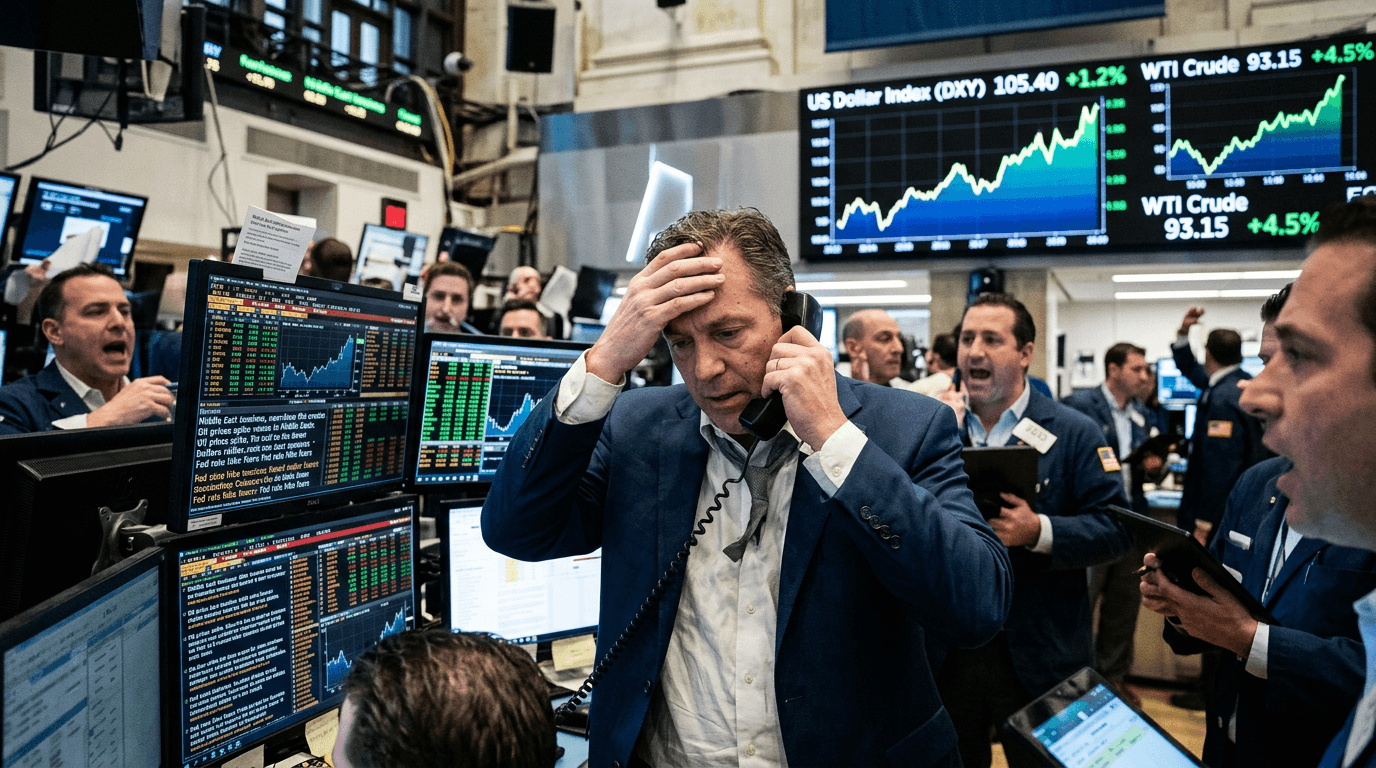
The U.S. dollar is extending a powerful safe-haven rally as renewed tensions in the Middle East and a sharp spike in oil prices push traders back into the world’s reserve currency. Investors are scrambling to hedge geopolitical and inflation risk, and in doing so they are driving the dollar index toward recent multi‑week highs while keeping expectations for further Federal Reserve tightening—or at least a longer “higher for longer” stance—firmly on the table.[1][6][8][13] For active traders, this is a live example of how geopolitics, commodities, and central bank expectations can align to reshape the macro landscape in a matter of hours.[6][8][13]
Safe-haven Flows Back Into The Dollar
Whenever global anxiety spikes, investors tend to rush into assets perceived as safe and liquid. The U.S. dollar, supported by the depth of U.S. money and Treasury markets, remains one of the primary destinations for that capital.[7] Recent Middle East escalations, including attacks involving Iran and Israel, have once again triggered this classic “flight to safety,” lifting the greenback against the euro, sterling and yen and pushing key dollar indices toward multi‑month peaks.[4][6][8]
Recent price action shows the dollar gaining roughly 1–1.5% over a matter of days, one of its strongest weekly performances since late 2024, as conflict headlines have rattled risk assets.[5][8] That strength has come even as some traditional havens like gold and longer-dated Treasuries also attract flows, underlining the dollar’s continued role as the global crisis currency.[7][10]
Key takeaway: In episodes of geopolitical stress, the dollar’s safe-haven status often overrides other narratives, and FX traders need to assume a “stronger USD by default” baseline unless the news clearly de‑escalates.[4][7]
Oil Shocks, Inflation Fears And Fed Rate Expectations
The current move is not just about fear—it is about inflation risk. Middle East turmoil has sent crude prices sharply higher, with recent episodes seeing intraday gains of up to double digits as traders price in potential supply disruptions.[10][13] Higher oil tends to feed directly into headline inflation and eventually into inflation expectations, especially if the move is sustained rather than a one‑day spike.[1][4][10]
Because U.S. inflation has been a central driver of Fed policy, energy shocks complicate the rate path. Markets are now questioning how quickly the Fed can pivot to cuts and are even entertaining the risk of another hike if inflation re‑accelerates.[1][4] Derivatives pricing has shown traders marking down the odds of imminent rate cuts and shifting toward a longer period of restrictive policy as conflict headlines and energy prices push inflation risk higher.[2][6]
In earlier flare‑ups, similar dynamics played out: as Middle East conflict intensified, oil rose, the dollar firmed, and the market priced fewer near‑term Fed cuts.[2][8][13] The pattern is familiar: higher oil → higher inflation risk → higher expected policy rates → stronger dollar, particularly against low-yielding or dovish‑central‑bank currencies.
Key takeaway: When oil spikes on geopolitical risk, think in terms of inflation and the Fed. If markets believe energy-driven inflation will keep policy tighter for longer, the dollar typically finds support against most peers.[1][4][10]
Impact On Major Fx Pairs, Oil And Risk Sentiment
The fallout from this latest dollar surge is visible across major FX pairs and broader markets. EUR/USD has been pushed lower as rate expectations between the Fed and the European Central Bank diverge in favor of the U.S., with the euro slipping as investors rotate into dollar assets.[1][2][8] At the same time, JPY crosses remain highly sensitive: the yen still carries a safe‑haven reputation, but ultra‑low Japanese yields make it vulnerable against a stronger, higher‑yielding dollar.[3][6][11]
USD/JPY has repeatedly spiked as U.S. yields rise and traders re‑price the Fed’s path, even when Japanese officials signal gradual normalization by the Bank of Japan.[6] This leaves yen pairs particularly volatile: in pure risk‑off episodes JPY can strengthen, but when the story is “U.S. yields up and oil up,” USD/JPY often trades higher as carry and rate differentials dominate.[3][6]
Beyond FX, the same forces are roiling other asset classes. Higher crude prices have propelled oil benchmarks upward, boosting energy stocks but weighing on fuel‑sensitive sectors and risk sentiment more broadly.[8][10][13] Safe‑haven demand has spilled over into gold and short‑term U.S. Treasuries, while global equities and high‑beta currencies have lagged.[5][10] Emerging‑market FX, in particular, tends to struggle when the dollar rallies on both risk aversion and higher rate expectations.
Key takeaway: In this regime, expect pressure on EUR/USD and many high‑beta and EM currencies, mixed behavior in JPY pairs depending on whether yields or pure risk sentiment is in the driver’s seat, and elevated volatility in oil and equity indices.[2][3][6][8]
How Traders Can Navigate A Dollar Safe-haven Rally
For traders, the challenge is not only recognizing that the dollar is rallying, but understanding the “why”—and how long that narrative can last. When the story is geopolitics plus oil plus Fed repricing, several practical steps can help structure your approach:
First, map the narrative to instruments. The core themes—safe‑haven flows, higher oil, and stickier inflation—tend to favor long‑USD setups versus currencies backed by more dovish central banks or weaker fundamentals, as well as selective long‑oil or energy‑equity trades.[1][4][8][13] Conversely, high‑beta FX and indices that depend on lower yields and stable growth are more vulnerable.
Second, focus on catalysts. Headlines from the Middle East, surprise moves in crude, and key U.S. data (especially inflation prints and Fed communication) can all flip the narrative quickly.[1][2][6] A ceasefire, unexpected supply response, or dovish Fed shift can all unwind the dollar’s haven premium just as fast as it built up.
Third, manage risk for gap‑risk environments. Geopolitical markets can move outside normal volatility bands, with wider spreads and slippage around headlines. That argues for smaller position sizes, wider—but well‑defined—stops, and a willingness to step aside during major announcements. Using scenario planning (“What if oil gaps another 5% higher overnight?”, “What if a surprise de‑escalation headline hits?”) can prevent emotional decision‑making in the moment.
Key takeaway: Align your trade ideas with the dominant macro narrative, but stay nimble. In headline‑driven markets, adapting quickly to changing information is more important than nailing the first move.[1][2][6][8]
Using Simulated Trading To Practice Geopolitical Shocks
Because these environments are rare but highly consequential, many traders struggle the first time they experience a genuine geopolitical shock. Simulated trading offers a way to rehearse your playbook—testing how you respond to safe‑haven flows, oil spikes, and shifting rate expectations without putting real capital at risk.[13]
In a SimFi environment, you can build and refine routines such as:
- Tracking the interaction between DXY, USD/JPY, EUR/USD, and front‑month oil futures during headline bursts.[6][8][13]
- Stress‑testing your strategy across different scenarios: prolonged conflict with persistently high oil, versus a rapid de‑escalation and oil reversal.
- Practicing risk‑management rules for high‑volatility sessions, including when to cut risk, when to reduce leverage, and when to stay flat.
By reviewing how your simulated P&L reacts to each decision, you gain the experience needed to respond with discipline when similar conditions arise in live markets—whether the driver is Middle East tensions, another regional conflict, or a different commodity shock altogether.[7][10][13]
Key takeaway: Treat this dollar safe‑haven episode as a case study. Use simulated trading to test, refine, and document your geopolitical and macro shock playbook so you are prepared the next time markets shift this violently.[7][10][13]