
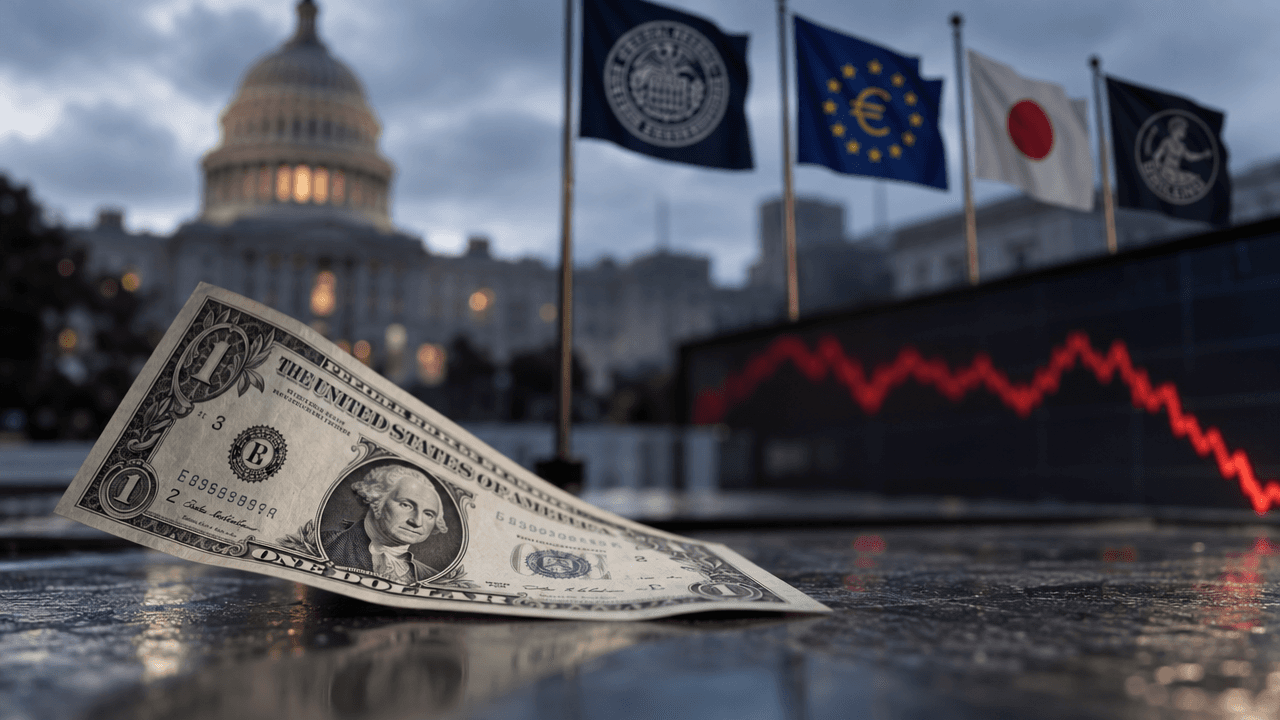
The U.S. dollar began the week under pressure, slipping to a one-month low as traders prepared for two major sources of uncertainty: the U.S. midterm elections and a busy calendar of central-bank decisions. The dollar index fell roughly 0.5% to about 101.45, while the euro strengthened toward $1.12. [1]
The move reflects more than a single change in currency sentiment. Investors are reassessing the outlook for U.S. interest rates, government spending, economic growth and global monetary policy. With several major central banks expected to adjust or reinforce their policy settings this week, foreign-exchange markets are entering a period where political headlines and interest-rate expectations may produce rapid price swings.
Why The Dollar Is Losing Momentum
The U.S. midterm elections are adding a fresh layer of uncertainty to currency markets. Voters are set to determine whether Democrats can take control of Congress from President Donald Trump’s Republican Party. The result could influence the government’s ability to pass legislation, approve spending measures and shape the direction of fiscal policy. [1]
Markets often dislike political uncertainty, particularly when an election could change the balance of power in Washington. A divided government may limit the scope of new policies, while a decisive result could allow investors to price in a clearer fiscal and regulatory outlook. Until the outcome is known, traders may reduce dollar exposure or favor currencies that appear less sensitive to U.S. political developments.
The dollar’s decline also reflects positioning. The currency had benefited from expectations surrounding U.S. economic resilience and interest-rate policy, but traders are now taking profits and waiting for additional confirmation from economic data and the Federal Reserve. When markets are heavily focused on upcoming events, even modest adjustments in expectations can generate noticeable currency moves.
The dollar index measures the U.S. currency against a basket of major peers, including the euro, yen, pound, Canadian dollar, Swedish krona and Swiss franc. A move toward 101.45 represents a meaningful retreat from recent levels, although it does not by itself confirm a lasting bearish trend.
A Week Of Central-bank Signals
Central-bank decisions could determine whether the dollar’s decline continues or reverses. The Reserve Bank of Australia is scheduled to announce its decision on November 3, followed by Sweden’s Riksbank on November 4 and both Norges Bank and the Bank of England on November 5. [3]
Markets widely expect the RBA to raise its cash rate to 4.85% from 4.60%, which would represent its fifth increase of 2026. Expectations have been supported by stronger inflation data and comments from Governor Michele Bullock. [11]
A rate increase can support a currency because higher yields may attract international capital. However, the Australian dollar’s reaction will depend on how the RBA describes future policy. If the bank signals that the hike may be the last for some time, the initial rise in the Australian dollar could fade. If policymakers emphasize persistent inflation risks, traders may price in additional tightening.
The Riksbank is also expected to attract attention, with markets pricing a strong probability of a 25-basis-point increase. Norway’s Norges Bank is generally expected to hold its policy rate at 4.50% after raising rates in September, while analysts will examine whether it signals that borrowing costs will remain elevated. [9]
The Bank of England is expected to raise rates by 25 basis points to 4.0%, potentially marking its first increase of 2026. [9] That decision could provide an important test for sterling and the broader dollar trend. A hawkish message from the Bank of England may strengthen the pound, placing additional downward pressure on the dollar index because the euro and pound represent significant components of the index.
Why Rate Differentials Matter
Currency markets are heavily influenced by interest-rate differentials. Traders compare the expected return on assets in one country with those available elsewhere. If U.S. rates are expected to remain higher for longer, the dollar can attract demand. If other central banks become more aggressive while the Federal Reserve turns more cautious, that advantage can narrow.
The current market setup creates several possible outcomes. If the RBA, Bank of England and Riksbank deliver expected hikes but provide cautious guidance, currency reactions may be limited. If they signal that more increases are likely, their currencies could gain as traders revise yield expectations.
The opposite is also possible. A surprisingly dovish decision, weaker economic guidance or a shift toward future rate cuts could push a currency lower. For the dollar, that might provide temporary relief if traders interpret foreign central banks as less willing to tighten. This is why the headline decision matters less than the statement, voting split, forecasts and press conference.
Practical Takeaways For Traders
First, avoid treating a one-month low as automatic proof that the dollar will continue falling. Support and resistance levels can help identify where momentum is changing, but political and monetary events can quickly invalidate technical patterns.
Second, watch the sequence of events rather than viewing each decision in isolation. The RBA decision arrives before the U.S. election result is fully absorbed, while the European and British announcements follow soon afterward. A trade that appears attractive before one announcement may carry very different risk after it.
Third, distinguish between an expected decision and a surprise. Markets often price in widely anticipated rate hikes before the announcement. The larger move may occur when policymakers discuss the next meeting, inflation risks or the likely terminal rate.
Finally, manage exposure around major releases. Wider spreads, fast price movements and sudden reversals are common during elections and rate decisions. Smaller position sizes, predefined exit levels and reduced leverage can help traders avoid allowing one headline to determine an entire week’s performance.
What Comes Next For The Dollar
The dollar’s immediate direction will likely depend on whether election uncertainty remains the dominant theme or whether interest-rate expectations regain control. A clear U.S. election result could reduce the political risk premium and stabilize the currency. A contested or unexpectedly close outcome could extend volatility.
At the same time, stronger-than-expected foreign central-bank tightening would reinforce demand for the euro, pound, Australian dollar and Scandinavian currencies. If those banks sound cautious, the dollar could recover even without a major change in U.S. fundamentals.
The broader lesson is that currency prices respond to relative expectations, not simply to whether one central bank raises rates. This week combines political uncertainty, monetary-policy divergence and significant event risk. For traders, patience and scenario planning may be more valuable than trying to predict every headline.
The dollar’s retreat toward 101.45 is therefore an important market signal, but not yet a final verdict on its long-term trend. The election outcome, central-bank guidance and incoming economic data will determine whether this is a temporary pullback or the beginning of a more sustained shift in global currency positioning.