
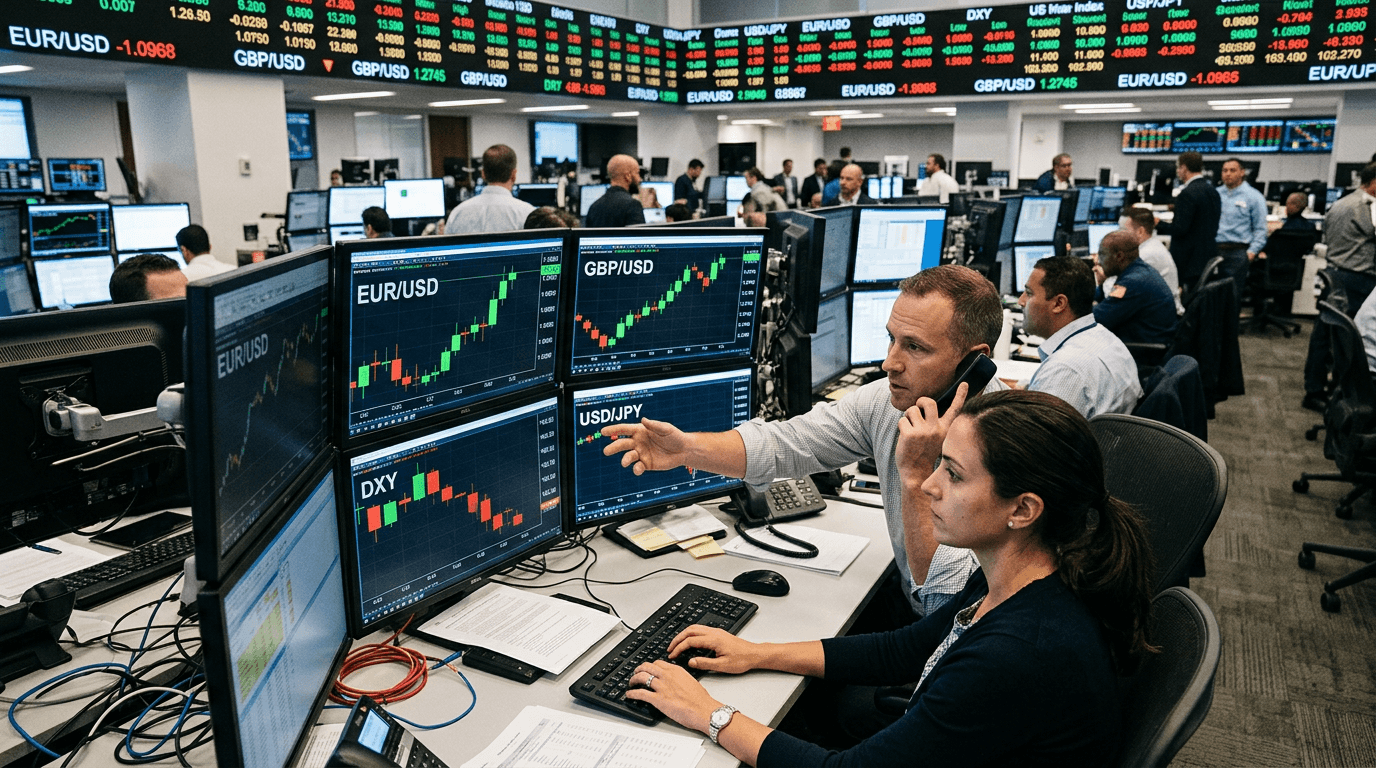
The dollar’s latest pullback is a textbook reminder that in FX, expectations can move markets as much as actual decisions. After weeks of strength driven by rising bets on further Federal Reserve tightening, the greenback slipped when the latest Fed minutes signaled less urgency to hike again, allowing the euro and pound to edge higher and improving broader risk sentiment.[3][6][8] For traders, this “less hawkish than feared” outcome is exactly the kind of nuance that can reprice interest-rate expectations, rotate positioning, and create opportunity across major currency pairs.[2][6][8]
What The Fed Minutes Actually Said
The key message from the minutes was not that the Fed is done fighting inflation, but that policymakers are in no rush to commit to a pre-set path of rate hikes.[3][6] Officials reiterated that decisions will be made on a meeting-by-meeting basis, guided by incoming data rather than a fixed tightening schedule.[6][11] While some members still see a case for keeping rates “higher for longer” and even leaving the door open to further hikes if inflation re-accelerates, others emphasized the need to weigh softer growth indicators and signs of cooling in the labor market.[3][11]
In other words, the minutes reinforced a cautious, data-dependent stance rather than a clear push for aggressive new hikes. This is crucial: markets had been bracing for a more forceful hawkish signal, especially after earlier Fed communications and robust U.S. data encouraged traders to price in more tightening and pushed the dollar toward one-year highs.[7][14] When that decisive hawkish tone failed to appear, those expectations needed to be adjusted.
WHY “LESS HAWKISH THAN FEARED” HITS THE DOLLAR
Before the minutes, futures markets and the dollar had been leaning toward scenarios where the Fed might deliver additional rate hikes or maintain very restrictive policy for an extended period.[8][14] The dollar index (DXY) had climbed to its highest levels in over a year as traders increased the implied probability of near-term rate moves.[7][14] That backdrop set the stage for a classic expectations reversal.
Once the minutes showed officials more divided over the need for further hikes and emphasized flexibility rather than commitment, traders dialed back those hawkish bets.[3][6][8] The dollar index eased modestly from recent peaks, slipping around 0.1–0.3% on the day in typical reactions to similar minutes releases.[3][4][6] The move was not dramatic, but in FX, even “modest” repricing of rate expectations can be enough to trigger rotation out of crowded positions—particularly long-dollar trades built on an assumption of sustained hawkishness.[8]
Mechanically, lower perceived odds of future rate hikes reduce the expected yield advantage of holding dollars versus other currencies. When traders see reduced upside in U.S. rates, they are more willing to unwind dollar longs and seek opportunities in other majors or risk assets. That process can start from a single line in the minutes that sounds less hawkish than anticipated.
Impact On Euro, Pound, Yen And Risk Sentiment
The immediate beneficiaries of the softer dollar were the euro and the pound. As the dollar index slipped, EUR/USD and GBP/USD edged higher, helped by short covering and new flows from investors reassessing relative central bank trajectories.[3][6][8] In similar episodes, the euro has often gained around 0.2% against the dollar on the day of minutes releases perceived as less hawkish, reflecting how sensitive the pair is to shifts in Fed expectations.[6]
For the yen, a weaker dollar eased some pressure, even if the broader narrative remains dominated by Japan’s ultra-loose stance and intervention risks.[4][8] When safe-haven demand for the dollar linked to geopolitical tensions or risk-off sentiment is offset by more cautious Fed messaging, USD/JPY can drift lower or at least pause its climb.[4] That interplay between risk flows and rate expectations is critical: in recent sessions, escalating tensions in the Middle East and higher oil prices have supported the case for keeping U.S. rates elevated, but the minutes’ tone tempered the urgency of that argument.[3][5][11]
Broader risk sentiment also improved as traders interpreted the minutes as a sign that the Fed is unlikely to “over-tighten” aggressively from here. Equity markets have previously seen mild relief rallies on days when the Fed signals patience, and lower dollar strength often supports emerging-market FX and commodity currencies by easing funding pressures.[5][11] For portfolio managers, this kind of shift can justify a tilt back toward risk assets, even if the overarching environment remains one of elevated rates and geopolitical uncertainty.
How Traders Can Navigate Fed-minutes-driven Moves
For active FX traders—whether live or simulated—the latest reaction is a practical case study in trading central bank expectations rather than headlines. The Fed did not cut rates, and it did not declare victory over inflation. Yet the dollar moved because the narrative turned from “potentially more aggressive hikes” to “cautious and data-dependent.”[6][8][11] That change in tone is exactly what markets trade.
A few practical approaches stand out
- Pre-positioning: Traders often enter the minutes release with a view on how hawkish or dovish the text will be versus current market pricing. When pricing looks too hawkish relative to the Fed’s recent communication, it can make sense to reduce dollar longs or build tactical exposure in currencies like the euro and pound that would benefit from a disappointment in hawkish expectations.[2][8]
- Reaction trading: If the minutes clearly underdeliver on hawkish tone, initial dollar weakness and rising EUR/USD or GBP/USD can offer short-term momentum opportunities, especially when positioning had been skewed toward a strong dollar.[3][6][8]
- Volatility management: Fed minutes often increase intraday volatility as algos and discretionary traders react to key phrases. Using simulated environments to practice execution around these events can help refine risk management—position sizing, stop placement, and scenario planning—before committing real capital.
Key Takeaways For Simfi And Live Markets
For SimFi traders using platforms like E8 Markets, events like Fed minutes are ideal training grounds. They combine scheduled uncertainty, rich narrative detail, and measurable market reactions, all without the binary shock of rate decisions or major data releases.[8][9] Practicing in a simulated environment allows traders to:
- Test how different assumptions about Fed tone affect FX pairs and indices
- Explore strategies for trading expectation shifts rather than surprises
- Develop a disciplined process for parsing minutes quickly and systematically
The core lesson is that central bank communication is a continuous process, not a series of isolated announcements. Statements, press conferences, and minutes all feed into the evolving market narrative about the path of rates. The dollar’s latest slip shows how even a “hawkish hold” can translate into currency weakness if traders were positioned for something stronger.[8][11][13]
Conclusion
The move in the dollar following the Fed minutes underscores a simple but powerful reality: in modern markets, relative surprises matter more than absolute stances. The Fed remains vigilant on inflation and open to keeping policy restrictive, yet the minutes’ emphasis on flexibility and data dependence was enough to cool hawkish bets and nudge the dollar lower, supporting gains in the euro and pound.[3][6][8][11] For traders, the opportunity lies not in predicting every Fed decision, but in understanding how expectations are priced—and how quickly they can change when the narrative shifts from “more hikes ahead” to “wait and see.”