
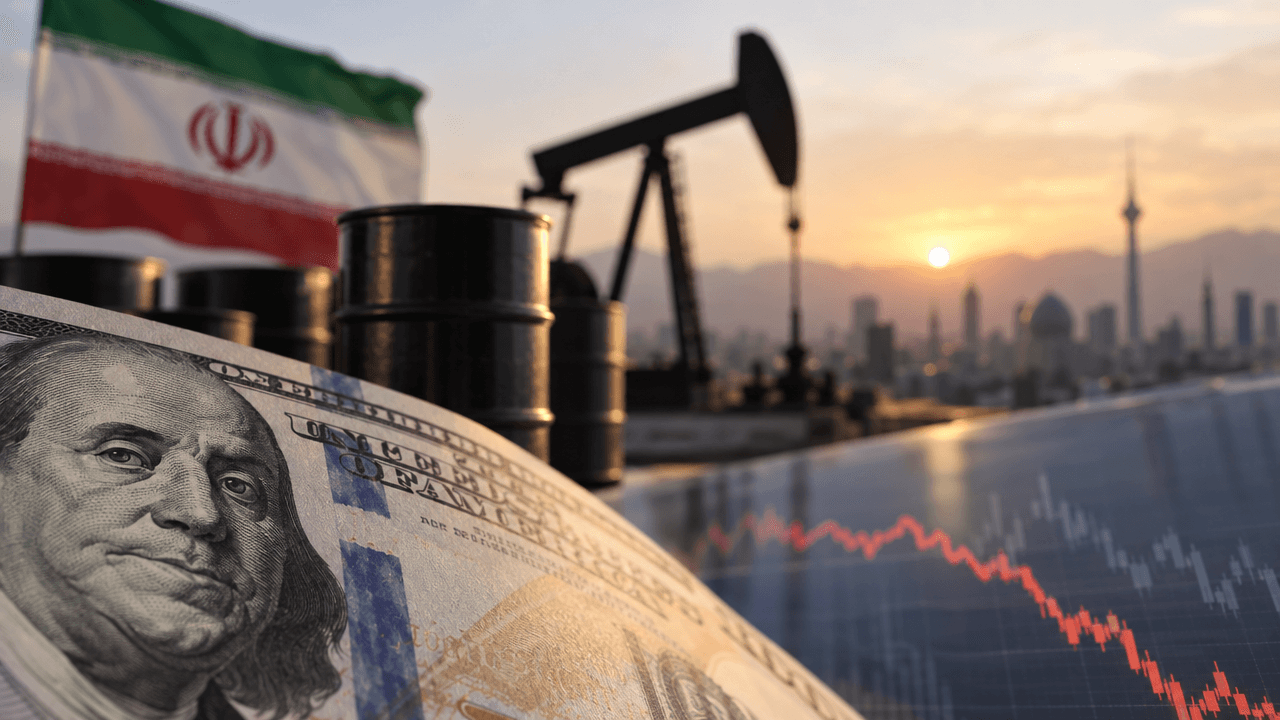
The dollar softened as signs of de-escalation between the United States and Iran encouraged investors to reduce defensive positions and return to risk-sensitive assets. The move illustrates how quickly foreign-exchange markets can respond when geopolitical risk, energy prices, inflation expectations, and central-bank policy become linked.
The U.S. Dollar Index fell approximately 0.6% on Monday, while Brent crude declined sharply as traders assessed the possibility that a stronger agreement could reduce the likelihood of major strikes against Iran. [2] The dollar also weakened against major currencies such as the euro and yen as investors rotated away from safe-haven assets following an improvement in broader market sentiment. [1]
For traders, the key lesson is that the dollar’s direction is not determined by interest rates alone. During periods of geopolitical stress, capital flows can temporarily overwhelm traditional economic signals.
Geopolitical Relief Reduces Safe-haven Demand
The dollar, U.S. Treasury securities, and other highly liquid assets often benefit when investors fear war, financial instability, or a sharp market selloff. Portfolio managers may increase dollar exposure because it provides liquidity and helps protect against losses in riskier assets.
When those fears begin to ease, the opposite flow can occur. Investors may sell part of their dollar holdings and redirect capital toward equities, emerging-market currencies, commodities, and other assets that tend to perform better when confidence improves.
That appears to be the dynamic behind the latest move. Reports that the risk of renewed escalation had diminished encouraged investors to reassess the need for defensive positions. The improved mood also followed a difficult period for artificial intelligence-linked stocks, making the return of risk appetite particularly important for currency markets. [9]
This does not mean geopolitical risk has disappeared. Rather, markets are adjusting the probability assigned to different outcomes. Even a modest shift toward diplomacy can produce a meaningful move in currencies when traders had previously priced in a high risk of disruption.
Oil Prices Connect Energy And Currency Markets
Falling oil prices added another layer to the dollar’s decline. Brent crude fell 3.4% to $94.99 in one recent session, while another market report recorded a decline of nearly 6% to settle at $92.57 a barrel. [1][9] The exact daily move depends on the contract and closing time, but the broader message is consistent: traders are pricing in a lower risk of prolonged supply disruption.
Oil matters to foreign exchange because energy prices influence inflation, economic growth, trade balances, and monetary policy. Higher oil prices can raise transportation and production costs, increasing headline inflation. They can also weaken oil-importing economies by forcing them to spend more on energy.
Lower oil prices may have the opposite effect. They can reduce inflation pressure for households and businesses, improve consumer purchasing power, and ease concerns about an energy-driven slowdown. For countries that import substantial amounts of crude, cheaper energy can also improve external balances.
The relationship is not always straightforward. The United States is both a major energy producer and consumer, and currency markets respond to relative changes between economies rather than to oil prices in isolation. Still, a decline in crude prices can reduce one reason for investors to seek dollar protection: the fear that an energy shock will trigger persistent inflation and market instability.
Why Lower Inflation Expectations Matter
The oil decline has also influenced expectations for central-bank policy. If energy prices stabilize or fall, headline inflation may cool, reducing pressure on central banks to maintain restrictive interest rates.
Market reports noted that lower oil prices eased inflation concerns and contributed to lower longer-term U.S. Treasury yields. [12] Falling yields can make dollar assets less attractive relative to foreign alternatives, particularly when investors expect other central banks to maintain comparatively firm policies.
This is an important distinction for traders. A weaker dollar does not necessarily mean the U.S. economy has deteriorated. It may instead reflect a reduction in the interest-rate premium investors expect from holding dollar-denominated assets.
Upcoming inflation data could therefore become a major test of the current move. Markets were watching the October Consumer Price Index report, with expectations that both headline and core inflation would ease as energy prices stabilized. [14] A softer-than-expected reading could reinforce expectations for less restrictive policy and place additional pressure on the dollar. A hotter report could revive Treasury yields and restore some support for the currency.
What Traders Should Watch Next
The immediate focus should be on whether the geopolitical improvement becomes durable. Currency markets can reverse quickly if negotiations fail, military activity resumes, or officials issue statements that raise doubts about a settlement.
Oil prices are another critical indicator. A continued decline would suggest that traders are becoming more confident about energy supply and inflation. A sudden rebound, especially caused by renewed conflict, could restore demand for the dollar and push yields higher.
Traders should also monitor the relationship between the dollar and equities. If stocks continue recovering from the recent technology-related selloff, the dollar may face further pressure as capital moves into riskier assets. If equity volatility returns, safe-haven demand could quickly offset the effects of lower oil prices.
For SimFi traders, the practical takeaway is to avoid treating one headline as a complete market thesis. Instead, track several connected signals: the Dollar Index, crude oil, Treasury yields, equity volatility, and major currency pairs such as EUR/USD and USD/JPY. Confirmation across these markets is generally more informative than a single currency move.
Conclusion
The dollar’s latest decline reflects a broad shift in market psychology. Reduced fears of renewed Iran escalation weakened demand for safe-haven assets, while falling oil prices eased concerns about inflation and future interest-rate pressure.
The move remains sensitive to new information. Diplomacy, energy prices, inflation data, and Treasury yields will determine whether the dollar’s weakness develops into a broader trend or proves temporary. Traders who understand those connections can respond more effectively than those who focus only on the headline exchange-rate change.
In the current environment, the most valuable skill is not predicting every market move. It is recognizing which forces are driving capital flows and waiting for evidence that those forces are working together.