
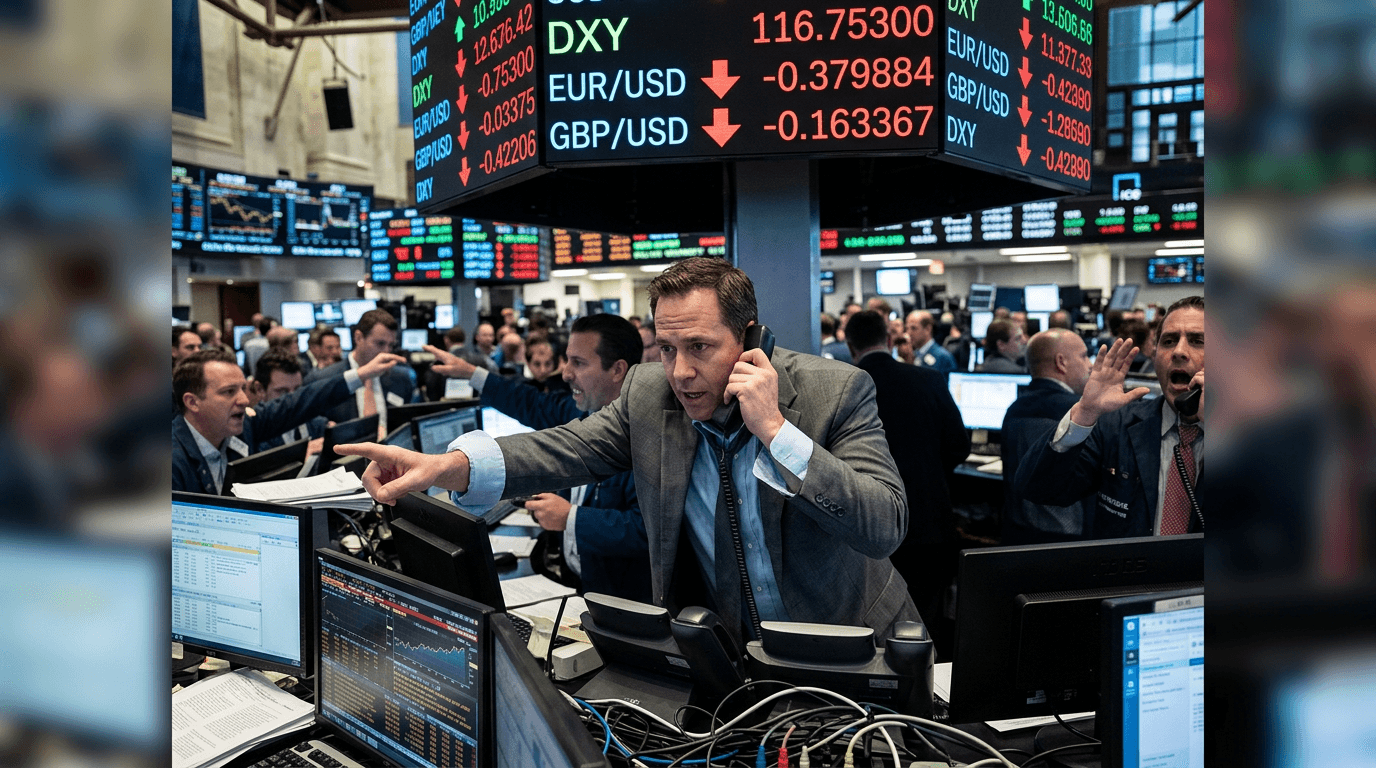
The U.S. dollar has slipped to its lowest level since May as traders quickly pivot from betting on more Federal Reserve rate hikes to anticipating the first cuts of the cycle.[7][17] That shift in expectations is reshaping currency markets, supporting major FX pairs against the greenback and breathing new life into risk-sensitive trades that had been constrained by higher U.S. yields.[7][16] For active traders and SimFi participants, this is a textbook example of how monetary policy expectations can move markets even before any official decision is made.
Shift In Fed Expectations
The catalyst for the dollar’s latest slide has been a run of softer U.S. data that casts doubt on the need for further tightening.[7][16][17] Weaker labor-market figures and moderating inflation have led traders to reassess the Fed’s reaction function, with many now viewing additional hikes as unlikely and beginning to price in the timing and size of future cuts.[7][17] As a result, the dollar index is on track for its biggest weekly drop in months, a clear sign that sentiment around U.S. policy has turned.[17]
In practice, markets do not wait for the Fed to move; they trade on expectations. Federal funds futures and tools such as CME FedWatch translate incoming data into implied probabilities for hikes or cuts, and those probabilities feed directly into bond yields and FX pricing.[16] Over recent weeks, the odds of near-term rate increases have been steadily trimmed, while curves further out have begun to tilt toward easing. That repricing reduces the dollar’s yield advantage, undermines previous “higher-for-longer” narratives, and encourages investors to rebalance away from U.S. assets.
Impact On Major Currencies
As the dollar softens, major currencies have seized the opportunity to recover ground. The euro, yen, and pound are all finding support as U.S. rate-hike bets fade, reversing some of the pressure they faced when the greenback was riding a wave of hawkish expectations.[7][17] In particular, the yen — long weighed down by the gap between ultra-low Japanese yields and higher U.S. rates — has benefited from the narrowing of that differential.[17] A weaker dollar effectively reduces the “carry” cost of holding these currencies, making them more attractive on a relative basis.
The same dynamic extends to risk-sensitive currencies, including the Australian and New Zealand dollars and selected emerging-market FX. When U.S. yields fall and the dollar declines, investors often rotate toward higher-yielding or more growth-linked currencies, especially if local fundamentals are stable.[12][19] This can create a supportive backdrop for carry trades and cross-currency strategies that had been less appealing in a strong-dollar environment. For traders, the key is understanding that it is not just the level of rates that matters, but the direction of expectations: a move from “possible hikes” to “probable cuts” shifts the entire risk-reward profile across FX.
Ripple Effects Across Markets
Dollar moves tied to Fed expectations rarely stay confined to foreign exchange. Lower perceived peak rates and rising odds of cuts tend to push Treasury yields down, reinforcing dollar weakness and encouraging investors to reprice equities, credit, and commodities.[2][16] Growth-sensitive sectors and regions may gain support as funding costs appear likely to ease, while more defensive, rate-sensitive trades can lose some of their appeal.
Gold is a classic beneficiary of this environment. As the dollar softens and real yields decline, the opportunity cost of holding non-yielding assets falls, often driving renewed interest in precious metals.[15][19] In parallel, equity markets may read easing expectations as supportive for future earnings, although the reason behind the shift – slower growth or softer data – can limit the upside. The net effect is a more complex risk backdrop in which “bad news” for the economy can sometimes be “good news” for risk assets, at least in the short term.
What Traders And Simfi Participants Should Watch
For active traders and SimFi users, the current episode underscores three practical lessons. First, monitor the data that drives the Fed’s decisions: labor-market releases, inflation prints, and leading indicators of growth.[16][17] These reports often trigger sudden repricing of rate expectations, leading to intraday volatility in the dollar, yields, and equity indices. Being aware of the calendar and understanding consensus expectations versus actual outcomes is essential for managing risk around event-driven moves.
Second, track the market’s implied probabilities for hikes and cuts, not just the Fed’s official guidance. Tools that show how futures markets price upcoming FOMC meetings provide real-time insight into investor sentiment and can help explain why the dollar is strengthening or weakening even when the policy rate is unchanged.[16] For example, a move from a 60% to a 40% probability of a hike can be enough to push the dollar lower, while a sudden jump in odds of a cut can accelerate the move.
Third, use simulation to test how your strategies behave under different rate scenarios. In a SimFi environment, traders can build and stress-test FX and multi-asset portfolios against paths where the Fed cuts quickly, delays action, or even surprises with renewed hawkishness. Running these scenarios helps identify where positions are most sensitive to changes in rate expectations, highlight potential concentration risks, and refine entry and exit plans ahead of real-world events.
Conclusion And Key Takeaways
The dollar’s slide to its lowest level since May is not just a headline; it is a live illustration of how quickly markets can pivot when the narrative around central-bank policy changes.[7][17] A move from rate-hike bets to rate-cut expectations compresses yield differentials, supports major and risk-sensitive currencies, and ripples through bonds, equities, and commodities.[2][16][19] Traders who understand this chain — data to expectations, expectations to yields, yields to FX and broader assets — are better positioned to interpret price action and respond with discipline rather than emotion.
For both live and simulated traders, the takeaway is clear: watch the Fed’s data, watch the market’s expectations, and make sure your strategies can adapt when the consensus shifts. Monetary policy remains one of the most powerful drivers in global markets, and the current weakening of the dollar is a reminder that sometimes the biggest moves start long before the central bank makes its official announcement.