
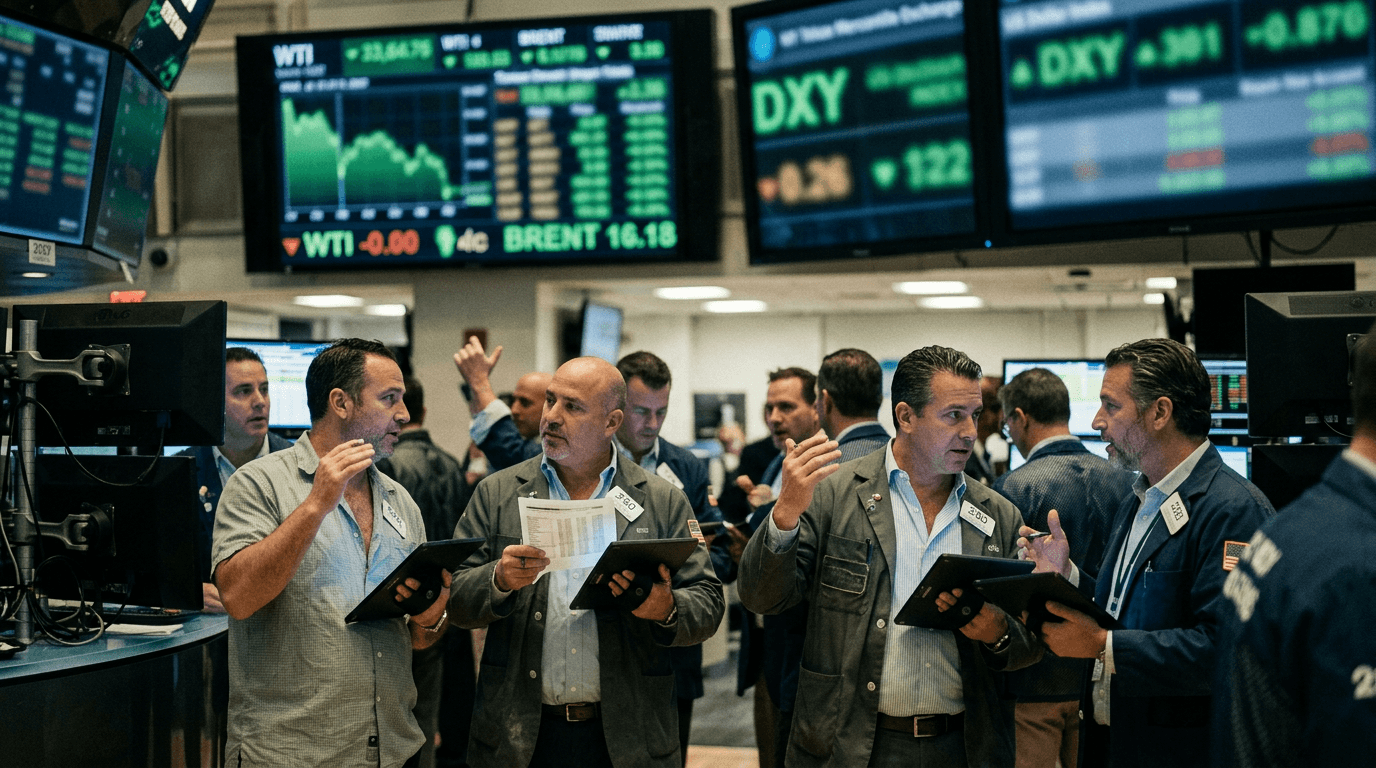
The U.S. dollar slipped against major currencies after reports that Washington and Tehran are moving toward extending their ceasefire and easing shipping restrictions through the Strait of Hormuz, taking some of the “geopolitical safety bid” out of global markets.[4] As oil prices cooled and immediate war fears moderated, traders rotated out of defensive dollar positions and back into higher‑yielding and cyclical assets, reshaping flows across FX, energy, and rates markets.[4]
Market Reaction: Dollar And Oil Move In Tandem
For months, the U.S.–Iran conflict and intermittent ceasefires have injected a significant risk premium into oil and broader asset prices, with the closure or restriction of the Strait of Hormuz acting as a key pressure point for energy markets.[5][8][11] The strait is one of the world’s most critical shipping chokepoints for crude and refined products, so any threat to its openness tends to push oil higher and increase volatility.[8][11]
Recent reports that the United States and Iran have agreed on a framework to extend the ceasefire and reopen the Strait for commercial traffic immediately changed that narrative.[2][6][8] As expectations solidified around a 60‑day extension and a demining and reopening of Hormuz, energy traders began to price out the worst‑case supply disruption scenarios.[2][4][8] The result: spot and futures oil prices pulled back, and with them, the urgency of holding dollars as a hedge against further escalation diminished.[4]
In FX, this showed up as a weaker dollar against the euro and the pound, with pairs like EUR/USD and GBP/USD moving higher as safe‑haven demand ebbed.[4] The dollar index (DXY) typically benefits when geopolitical stress pushes investors into U.S. assets for safety; the reverse happens when those fears abate, and that is exactly the dynamic driving this latest retreat.
Why Safe-haven Flows Reversed
To understand why the ceasefire extension matters so much for the dollar, it helps to unpack how safe‑haven flows work. When war risk or political shocks rise, investors often rush into assets seen as more stable or liquid: U.S. Treasuries, the dollar, the Swiss franc, and sometimes gold. The earlier phases of the U.S.–Iran conflict, including the initial strikes and subsequent brinkmanship around Hormuz, triggered precisely this kind of behavior.[5][8][11]
The new reports of a memorandum of understanding to prolong the ceasefire for 60 days and reopen shipping channels reduce the probability of near‑term military escalation and supply disruption.[2][6][8] Markets respond to changes in probabilities, not just outcomes. Even before a formal deal is signed, credible signals from officials and mediators can change positioning quickly, especially in headline‑sensitive markets like FX and oil.
With hostilities paused and negotiations focused on nuclear enrichment, sanctions, and asset releases, investors reassess how much “insurance” they need in the form of defensive dollar exposure.[2][5][8] As that perceived need falls, capital can flow back into:
- Higher‑yielding currencies such as the pound
- Pro‑growth currencies like the euro
- Risk assets including equities and credit
For traders, this is a reminder that the dollar’s role as a safe haven is cyclical and heavily dependent on news flow. The same currency that rallies sharply on missile headlines can weaken just as quickly when ceasefire extensions and diplomatic frameworks dominate the tape.
Geopolitical Risk Premia In Energy And Rates
The impact is not confined to FX. Geopolitical risk premia—the extra pricing built into assets to compensate for war and disruption—are being recalibrated across energy and rates markets as well.
In oil, the earlier conflict and blockade threats had driven prices higher by limiting actual and expected flows through Hormuz, reinforcing fears of shortages and feeding into higher inflation globally.[5][8] A credible path to sustained access through the strait lowers the embedded risk premium in crude and refined products, pressuring prices and volatility downward.[4][8] This, in turn, eases some of the inflation concerns that had been weighing on central banks and fixed‑income markets.[5]
Rates markets also react to changes in geopolitical risk. When war fears are high, investors tend to buy long‑dated government bonds as a safe haven, pushing yields lower. As conflict risks recede and energy prices cool, some of that bid can fade, leaving yields to respond more to domestic data than to external shocks. Reduced inflation expectations from lower oil can also affect the curve, particularly at the front end where monetary policy expectations are concentrated.
For SimFi users and futures traders, these dynamics highlight how a single geopolitical development can ripple across:
- Crude and refined product futures
- FX contracts tied to the dollar, euro, and pound
- Interest rate futures and swaps sensitive to inflation expectations
Impact On Major Fx Pairs And Related Futures
On the FX side, the clearest moves have been in the core dollar pairs. As ceasefire extension reports gained traction, EUR/USD and GBP/USD climbed, driven by dollar selling rather than aggressive euro or pound buying.[4] This pattern suggests a position adjustment story: traders closing defensive USD longs rather than building major new euro or sterling themes.
In related futures markets, this typically shows up as:
- Reduced open interest in dollar‑bullish contracts
- Increased activity in euro and pound futures as traders reposition
- Narrower implied volatility in major FX pairs as headline risk moderates
Importantly, the move is not only about geopolitics: lower oil prices can be mildly supportive for energy‑importing economies like the euro area and the UK, reinforcing the directional shift against the dollar.[4][5] Cheaper energy improves trade balances and can offer some relief to consumers and businesses, in contrast to the inflationary shock seen earlier in the conflict.[5][8]
How Traders And Simfi Users Can Respond
For active traders and SimFi participants, this episode offers several practical lessons:
First, headline risk remains a primary driver in geopolitically exposed markets. Positions built on conflict scenarios need clear exit criteria for when diplomacy unexpectedly gains traction. The dollar retreat shows how quickly safe‑haven trades can unwind when probabilities change.
Second, correlations matter. The easing of war risk is simultaneously affecting FX, oil, and rates. Viewing these moves in isolation can lead to missed opportunities or under‑hedged exposures. Scenario testing—such as modeling “extended ceasefire with open Hormuz” versus “ceasefire breakdown and renewed blockade”—can help stress‑test portfolios more effectively.
Third, traders should differentiate between temporary relief rallies and more durable trend changes. A 60‑day ceasefire extension and reopening of shipping lanes is significant, but it does not guarantee a permanent peace or full normalization of sanctions and nuclear tensions.[2][5][6][8] The news may justify a partial unwinding of risk premia, but not necessarily a complete reversal of all conflict‑related positioning.
In simulated environments, this kind of news is ideal for practicing:
- Rapid re‑evaluation of macro narratives
- Adjusting FX and commodity exposure as correlations shift
- Managing position size and leverage around event risk
Conclusion
The dollar’s retreat on reports of a U.S.–Iran ceasefire extension and easing of Strait of Hormuz restrictions underscores how tightly global currencies are bound to geopolitical risk and energy markets.[2][4][8][11] As oil prices fall and immediate war fears recede, safe‑haven demand for the dollar can diminish quickly, boosting the euro, pound, and broader risk assets.[4]
For traders, the key is not just understanding the headline, but recognizing the chain reaction it triggers across FX, commodities, and rates. By tracking how risk premia expand and contract with each diplomatic development—and by using tools like SimFi to rehearse those scenarios—market participants can be better prepared for the next shift in the geopolitical landscape, whether it brings renewed tension or a more lasting peace.