
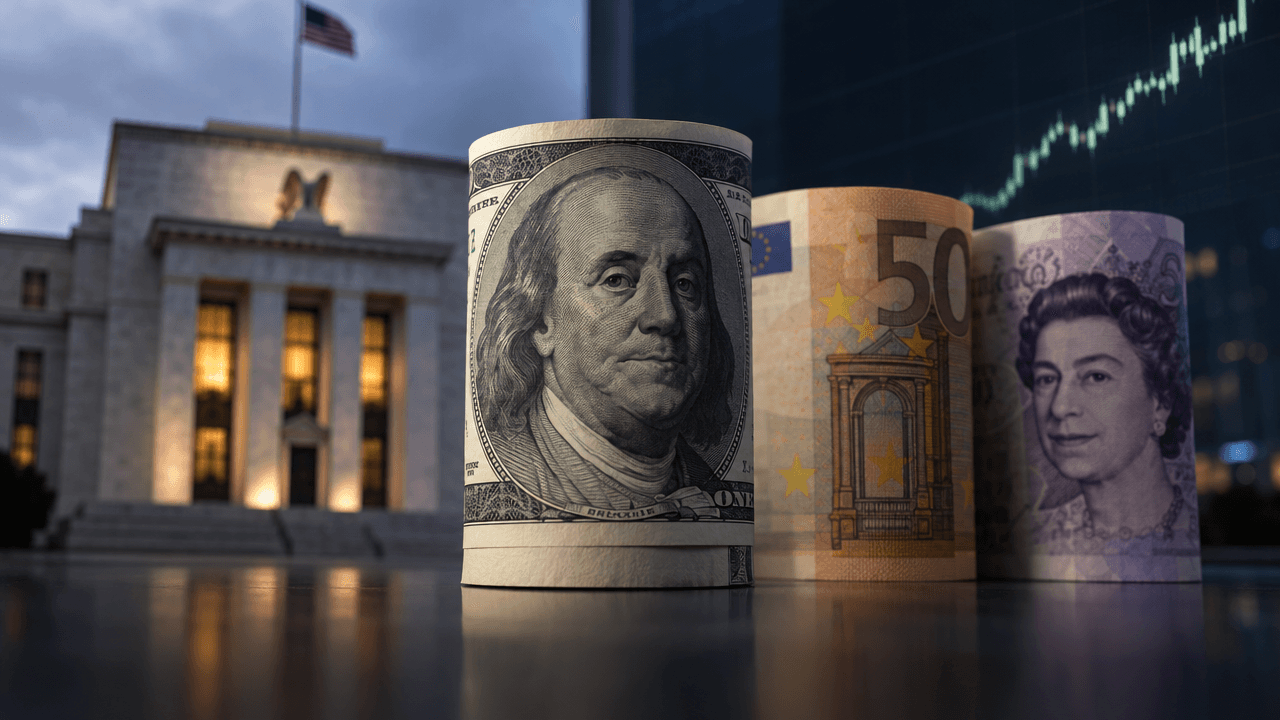
The U.S. dollar has regained momentum as traders increasingly expect the Federal Reserve to raise interest rates again in December. Stronger-than-anticipated inflation data, elevated producer-price pressures and rising Treasury yields have combined to improve the appeal of dollar-denominated assets. Market pricing has placed the probability of a 25-basis-point December increase near 90%, with some estimates reaching approximately 90.8%. [12]
The move reflects a major shift in expectations. Just a month ago, traders placed considerably less confidence in another rate increase. As inflation has remained persistent and Federal Reserve officials have adopted a firmer tone, investors have adjusted both their interest-rate forecasts and currency positions.
Why The Dollar Is Strengthening
Currencies respond not only to current interest rates but also to expectations about where rates are heading. When markets anticipate that the Federal Reserve will keep policy tighter for longer, U.S. yields often rise. Higher yields can attract international capital into Treasury securities and other dollar-based investments, increasing demand for the greenback.
Recent trading has followed that pattern. The dollar has climbed to roughly a 19-month high, while the two-year Treasury yield, which is especially sensitive to expectations for Federal Reserve policy, moved sharply higher. The 10-year Treasury yield also traded above 5% in recent sessions. [6][9]
The latest inflation signals have reinforced this repricing. Consumer prices rose more than expected in October for a third consecutive month, while producer-price data remained an important test of whether businesses are facing renewed cost pressures. A firm producer-price reading could make it more difficult for policymakers to argue that inflation is moving smoothly toward the Fed’s target.
For currency traders, the message is straightforward: stronger inflation combined with a hawkish central bank can create a favorable environment for the dollar.
Euro And Pound Face Pressure
The dollar’s advance has weighed on both the euro and the British pound. The euro has moved toward an 18-month low against the greenback as traders evaluate the widening difference between U.S. and eurozone economic prospects. The pound has also weakened, with recent market data showing it trading near $1.33. [12]
Interest-rate differentials are central to this relationship. If the Fed appears ready to raise rates while concerns about eurozone growth limit the European Central Bank’s ability to tighten policy, the dollar can gain a relative advantage. Even if the ECB raises rates in the future, investors may still favor the dollar if they believe U.S. yields will remain higher for longer.
The pound faces a similar challenge. A currency can weaken when its central bank is perceived as being closer to the end of its tightening cycle, particularly if economic growth is slowing. Political developments, fiscal concerns and domestic inflation trends can add further volatility, but the global strength of the dollar remains an important influence.
What Treasury Yields Are Signaling
Treasury yields provide one of the clearest windows into current market expectations. The two-year yield generally tracks anticipated changes in the federal funds rate, while the 10-year yield reflects a broader combination of inflation expectations, economic growth and long-term borrowing conditions.
The recent increase in both yields indicates that investors are demanding more compensation to hold U.S. government debt. In the short term, that supports the dollar because global investors may seek higher returns in U.S. fixed-income markets. However, rapidly rising yields can also create risks for stocks, housing and highly leveraged companies.
This is why the dollar rally should not be viewed in isolation. A stronger currency may signal confidence in U.S. economic resilience, but it can also tighten global financial conditions. Emerging-market borrowers with dollar-denominated debt may face higher repayment costs, while American exporters can become less competitive when their products are priced in a more expensive currency.
What Traders Should Watch Next
The December rate decision is now heavily anticipated, which means the eventual announcement may produce less volatility than the data and commentary leading up to it. When an outcome is already widely priced into markets, traders often focus on what comes next: the Fed’s updated projections, its statement and Chair Jerome Powell’s guidance.
Several developments could challenge the dollar’s current strength. Softer producer inflation, weaker employment data or a decline in consumer-price pressures could reduce expectations for additional rate increases. A more cautious Fed statement could also pull Treasury yields lower and weaken the dollar.
Conversely, another upside inflation surprise or continued strength in wages could revive speculation about a larger move or a longer period of restrictive policy. Recent commentary from Fed Governor Christopher Waller has kept that possibility in view, including the prospect of a half-point increase if inflation proves especially persistent. [8]
For SimFi traders, the practical lesson is to avoid treating a high-probability forecast as a guaranteed outcome. Monitor the dollar index, Treasury yields, EUR/USD and GBP/USD together rather than relying on a single chart. Pay particular attention to whether currency moves are confirmed by bond-market activity. A dollar rally accompanied by rising yields is generally more consistent with changing rate expectations than a move driven solely by short-term technical trading.
Conclusion
The dollar’s recovery reflects a broad market repricing around inflation and Federal Reserve policy. With traders assigning roughly nine chances in ten to a December hike, the greenback has benefited from higher yields and the prospect of continued U.S. monetary tightening.
The next phase may be more difficult for dollar bulls. Much of the expected hike is already reflected in prices, so fresh upside could require stronger inflation data, more hawkish Fed guidance or evidence that U.S. growth remains unusually resilient. Traders who combine economic data, central-bank communication and Treasury-market signals will be better positioned to distinguish a durable trend from a temporary reaction.