
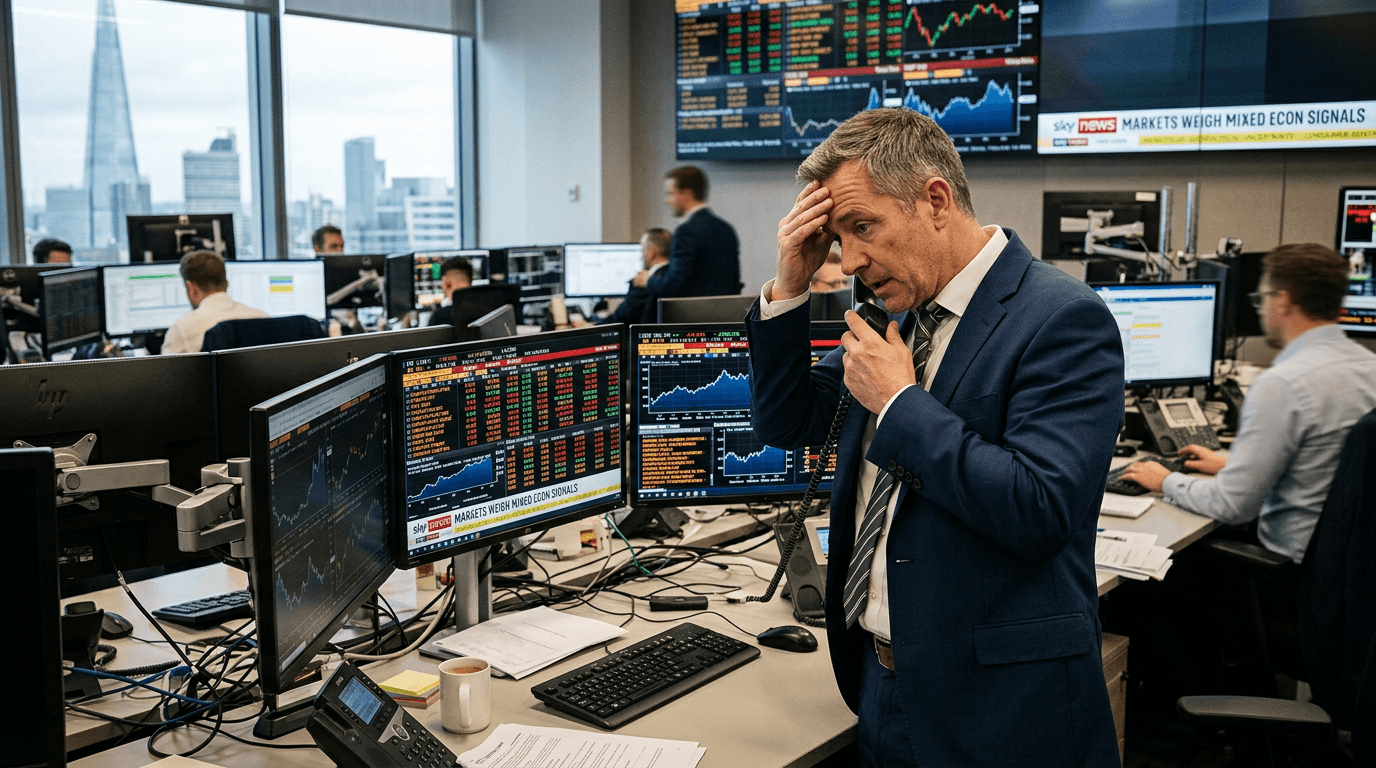
The Dow Jones Industrial Average managed a modest rally on Friday, May 9, buoyed by stronger-than-expected employment data, but the optimism was tempered by lingering concerns over geopolitical tensions in the Middle East. As markets digest conflicting signals from both robust labor market performance and rising international uncertainty, traders are facing a delicate balancing act between embracing economic strength and hedging against external risks.
Nonfarm Payrolls Beat Expectations
The employment data that sparked Friday's rally delivered a meaningful surprise to the upside. April's nonfarm payroll additions came in at 115,000 jobs, significantly exceeding the 62,000 consensus forecast and providing a sharp contrast to earlier recession concerns that had been mounting through Thursday's selloff. This beat provided enough momentum to push the Dow Jones higher and help stabilize broader market indices after a challenging trading session the previous day.
The unemployment rate held steady at 4.3%, matching forecaster expectations and suggesting labor market stability. However, the wage picture told a more nuanced story. Average hourly earnings rose just 0.2% month-over-month against a 0.3% consensus forecast, and year-over-year wage growth came in at 3.6% versus the expected 3.8%. Additionally, labor force participation dipped to 61.8% from 61.9%, raising questions about sustainability in the employment recovery.
This particular mix of data is arguably Federal Reserve-friendly. The hiring strength pushes back against hard-landing recession fears without stoking the wage-driven inflation pressures that could force the Fed to maintain higher interest rates longer than markets might prefer. Yet this nuance was largely overshadowed by the headline beat, which was enough to trigger buying across growth-sensitive sectors including industrials and financials.
Geopolitical Headwinds Cap Gains
Despite the positive employment surprise, the Dow's advance remained constrained by escalating geopolitical tensions. Investors remained cautious and monitoring closely for any potential response from Iran following recent military developments in the region. This uncertainty created a ceiling on bullish enthusiasm and kept many traders reluctant to commit significant fresh capital to equity positions.
The impact was visible in asset allocation flows. Safe-haven assets including gold and U.S. Treasury securities saw demand as risk-averse investors hedged their exposure. This is a classic market behavior pattern when geopolitical risk rises—equities become less attractive relative to assets perceived as more defensive. The fact that Treasury yields weren't spiraling higher despite the employment beat speaks to this flight to safety dynamics at work.
Such geopolitical premiums are particularly impactful for markets already struggling with other headwinds. While the employment data provided temporary relief, the reality is that external shocks can move quickly and reshape market direction without much warning. Traders pricing in this risk were right to maintain cautious positioning heading into the weekend.
A Contradictory Economic Picture
One of the most telling aspects of Friday's trading was the conflicting signals embedded in the broader economic narrative. While the employment beat suggested resilience, other indicators painted a different picture. The University of Michigan Consumer Sentiment index plunged to 48.2 in its May preliminary reading, reaching recession-era levels even as inflation expectations cooled.
This disconnect is crucial for traders to understand. Strong job creation doesn't automatically translate to strong economic growth if consumers lack confidence in their financial prospects. The combination of solid hiring alongside collapsing consumer sentiment creates what many analysts describe as a stagflationary backdrop—an environment where growth remains modest while price pressures persist. This mixture is notoriously difficult to navigate and can produce volatile market swings as traders struggle to determine which signal matters more.
The cooling inflation expectations do provide some relief to the Fed's policy calculus, marginally reducing immediate pressure for aggressive rate action. Yet these expectations have been volatile themselves, and they do little to address the consumer-side anxiety that's clearly weighing on sentiment measures.
What Comes Next For Traders
The employment data provided a welcome relief to recession fears that had been building momentum. However, the larger market context remains decidedly uncertain. The Russell 2000 small-cap index declined more than 1.5% on Friday despite the headline Dow strength, underscoring the continued concentration in large-cap names that has characterized the post-April rebound.
Looking ahead, Tuesday's release of April Consumer Price Index data looms as the dominant catalyst for the week. Markets are bracing for headline CPI to rise to 2.5% year-over-year from 2.3%, with core CPI ticking up to 2.9% from 2.8%. This data will show how much the Trump administration's tariff moves from April are beginning to filter into actual prices, and the result could materially shift both Fed expectations and equity valuations.
Practical Takeaways
Traders should remain alert to both economic data releases and geopolitical headlines. The balance between a resilient labor market and external risks will likely define market direction in the near term. Positioning defensively or using options strategies to hedge geopolitical exposure remains prudent given current conditions. Most importantly, don't ignore the consumer sentiment weakness—strong employment alone isn't enough if confidence continues deteriorating.
---