
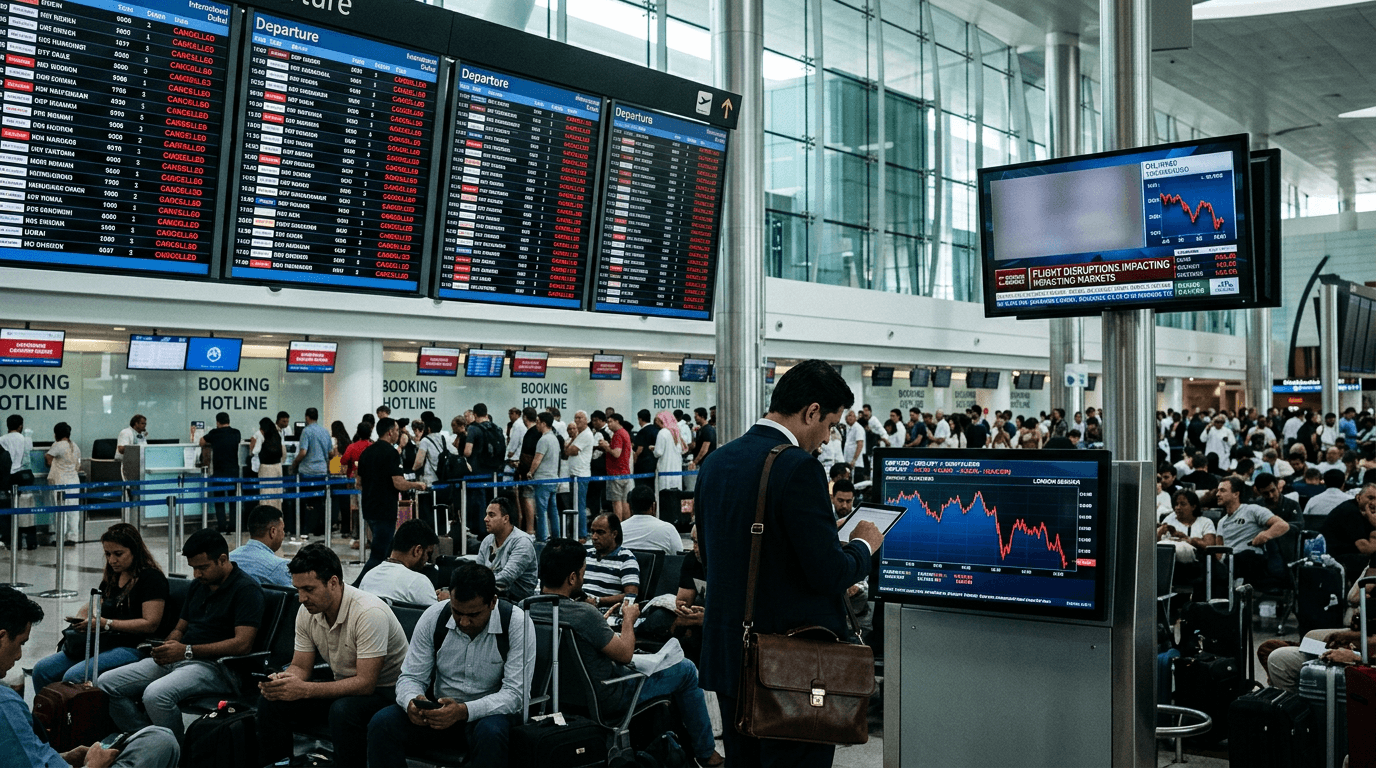
The aviation crisis unfolding across the Middle East is sending shockwaves far beyond airport terminals. On March 4, 2026, as traders gathered for the London Forex open, news of massive flight cancellations to and from Dubai created a ripple effect through financial markets, adding another layer of uncertainty to an already volatile trading environment. With over 21,000 flights cancelled across major regional hubs and tens of thousands of passengers stranded, market participants are reassessing risk exposure amid geopolitical tensions that show no signs of abating.[3][4]
The disruption represents one of the most severe aviation shutdowns since the COVID-19 pandemic. Dubai, home to the world's busiest international airport, has faced days of closure and severe restrictions, forcing airlines including Emirates, FlyDubai, and Etihad to suspend most operations or resume service only for emergency repatriations.[3][4] Philippine carriers such as Cebu Pacific and Philippine Airlines have cancelled flights connecting Manila to Dubai and Riyadh through March 8-9, offering rebooking options and travel fund conversions to affected passengers.[1][2] Indian airlines alone have cancelled more than 1,000 flights as of March 4, with authorities planning emergency repatriation flights to bring citizens home.[3][4]
What Triggered The Aviation Crisis
The escalating conflict between Iran and Israel ignited this transportation nightmare over the weekend when the United States and Israel conducted coordinated airstrikes on Iranian military sites. In retaliation, Tehran launched drone and missile assaults against Israel and US military installations, prompting widespread airspace closures across the region.[2] These actions transformed Dubai, Doha, and Abu Dhabi from bustling travel hubs into virtual no-fly zones, forcing airlines to reroute or suspend operations entirely. The uncertainty surrounding when airspace will reopen has left both passengers and market participants in a state of limbo.
Forex Market Implications During London Session
For forex traders, the timing could not be worse. The London Forex session on March 4, 2026, opened amid headlines of mass flight cancellations and geopolitical escalation. This type of headline-driven volatility typically pressures risk-sensitive currency pairs while benefiting safe-haven assets. Traders were closely monitoring support levels around 5162-5181, attempting to gauge where the market would find equilibrium as uncertainty priced into the open. The combination of aviation disruption and military conflict creates a perfect storm for elevated volatility and wider bid-ask spreads, conditions that can turn profitable positions into significant losses if proper risk management protocols are not in place.
Geopolitical events of this magnitude typically trigger flight-to-safety trading patterns. Forex pairs tied to regional economies face downward pressure as investors withdraw capital from areas viewed as higher-risk. Simultaneously, traditional safe havens like the Swiss franc and Japanese yen tend to strengthen as traders reduce exposure to more volatile asset classes. The aviation crisis amplifies these effects by creating real economic consequences beyond headline risk, forcing businesses to adjust logistics, supply chains, and travel plans.
The Broader Economic Fallout
Beyond passenger inconvenience, the cargo industry is absorbing massive losses, with experts projecting damages in the billions of dollars.[3][4] This disruption to global supply chains creates additional pressure points for forex traders monitoring commodity prices and cross-border trade dynamics. Companies that depend on Middle Eastern logistics hubs for inventory management face significant delays, potentially impacting earnings guidance and currency valuations for affected sectors.
Cebu Pacific and other carriers have provided flexibility to passengers with complimentary rebooking and travel fund conversions, but such measures do little to restore normal operations. The airline companies continue monitoring developments in the region, but no timeline for full operations resumption has been announced. This extended uncertainty is precisely what currency markets hate, as traders struggle to price in outcomes when information flow remains opaque.
Risk Management Takeaways For Traders
For SimFi traders and forex participants, several lessons emerge from this crisis. First, geopolitical risk premiums are not constant and can widen dramatically when events escalate beyond market expectations. Positions taken before the conflict intensified may now be underwater, requiring immediate reassessment of risk-reward ratios. Second, volatile trading sessions present both opportunities and dangers. Wider spreads during the London open offer potential for range trading profits but increase slippage risk for limit orders. Third, diversification across uncorrelated currency pairs becomes critical when regional crises threaten traditional market correlations.
Successful traders use geopolitical events as learning opportunities, studying how specific conflicts impact currency valuations, which pairs exhibit flight-to-safety behavior, and which timeframes best capture crisis-driven volatility. The Dubai flight cancellations serve as a real-time case study in how physical disruption translates into financial market impact.
Looking Ahead
As the situation in West Asia continues evolving, the aviation industry faces prolonged uncertainty. Airlines are implementing emergency protocols while governments arrange special repatriation flights. For traders, the key is maintaining discipline during high-volatility sessions, respecting predetermined stop losses, and avoiding the temptation to over-leverage during periods of extreme uncertainty. The support levels around 5162-5181 will likely become focal points as markets search for stability amid ongoing developments.
The Dubai flight crisis reminds market participants that trading extends far beyond charts and technical indicators. Real-world events create real financial consequences, and those prepared with solid risk management strategies emerge from crises stronger than those caught unprepared.