
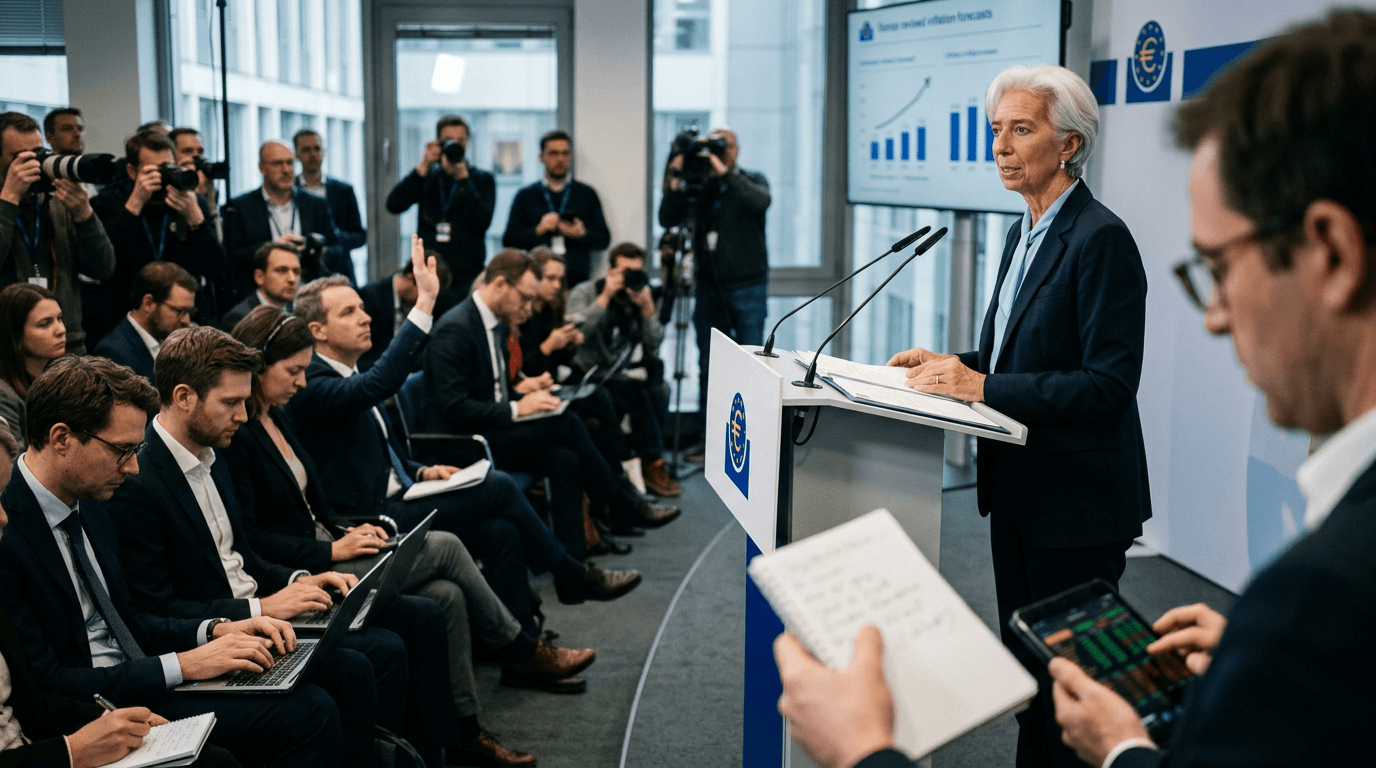
ECB's March 2026 Hawkish Shift: Rates Held Steady Amid Rising Inflation Forecasts
In March 2026, the European Central Bank (ECB) opted to keep interest rates unchanged, signaling a hawkish shift that caught the attention of market participants. The main refinancing rate remains at 2.15%, the deposit facility at 2.0%, and the marginal lending rate at 2.4%. This decision underscores the ECB's focus on tackling persistent inflation pressures, even as growth concerns persist across the eurozone.
This rate hold marks a notable departure from previous expectations of further cuts, prompted by disinflationary trends seen throughout 2025 and into early 2026. However, a revision of inflation projections for 2026 shifted the ECB's strategy, suggesting that price pressures are more entrenched than anticipated, thus necessitating a cautious approach to monetary easing.
Deciphering the Hawkish Stance
The hawkish nature of this decision lies not only in the pause of rate cuts but in the rationale behind it. The ECB's revised inflation forecast for 2026 reveals that underlying price dynamics are still elevated, challenging earlier expectations of a smooth decline toward the 2% target. This reflects factors like sustained wage growth in tight labor markets, supply-side constraints, and potential global energy disruptions due to geopolitical tensions in the Middle East.
By maintaining higher real interest rates, the ECB aims to prevent a resurgence of inflation expectations, anchoring them to avoid repeating past policy missteps. This prioritizes price stability over short-term growth, aligning with the ECB's mandate to keep inflation near its 2% medium-term target.
What the Inflation Forecast Revision Indicates
The upward revision of 2026 inflation forecasts has significant implications for both market participants and policymakers. Instead of moving toward the 2% target as initially expected, inflation is poised to remain elevated for a longer period. This suggests that the anticipated disinflationary phase in 2026 may be delayed or less pronounced.
Several factors contribute to this revised outlook. Services sector inflation remains sticky despite broader cooling measures. Wage growth supports underlying price pressures, showcasing labor market resilience in major eurozone economies. Moreover, energy price volatility linked to Middle East geopolitical risks adds uncertainty to inflation trajectories, with potential oil price spikes affecting broader price levels.
Market Implications and Euro Strength
The ECB's hawkish stance and upward inflation revision have tangible effects on currency markets and asset valuations. The commitment to maintaining higher interest rates bolsters the euro, which tends to strengthen when the ECB resists aggressive easing. This appreciation reflects market acknowledgment that the ECB prioritizes inflation containment, making euro-denominated assets more appealing to yield-focused investors.
For traders, this environment presents both challenges and opportunities. Equity markets may face headwinds as higher rates decrease valuations and raise corporate financing costs. However, fixed income markets might see a shift toward higher-yielding eurozone bonds, as their yield advantage becomes more attractive compared to other investments. Currency traders should anticipate continued euro strength, especially against currencies where central banks adopt more accommodative policies.
Future Rate Path Considerations
While March's decision holds rates steady, the upward inflation revision raises questions about future policy moves. The ECB's data-dependent approach suggests that subsequent decisions will hinge on whether inflation readings confirm or contradict these projections. If inflation proves resilient, further rate cuts may be delayed or scaled back. Conversely, if inflation declines faster than the revised forecast suggests, the ECB may resume easing.
The central bank's commitment to meeting-by-meeting assessment allows policymakers to retain flexibility in responding to incoming data. This flexibility is crucial given the uncertainty surrounding geopolitical developments and their potential impact on energy prices. Market participants should closely monitor upcoming inflation releases, wage data, and ECB communications for signals about future policy adjustments.
Key Takeaways for Traders and Investors
The ECB's March 2026 decision marks a critical turning point in eurozone monetary policy. The combination of paused rate cuts and upward inflation revisions creates an environment where the euro strengthens while growth-sensitive assets face pressure. Recognizing that the ECB is focused on inflation stability rather than growth accommodation helps shape portfolio positioning and trading strategies. For SimFi traders, this environment rewards careful analysis of inflation dynamics, currency positioning, and fixed income strategies that benefit from higher interest rates and a robust euro.
News Impact Score: 7