
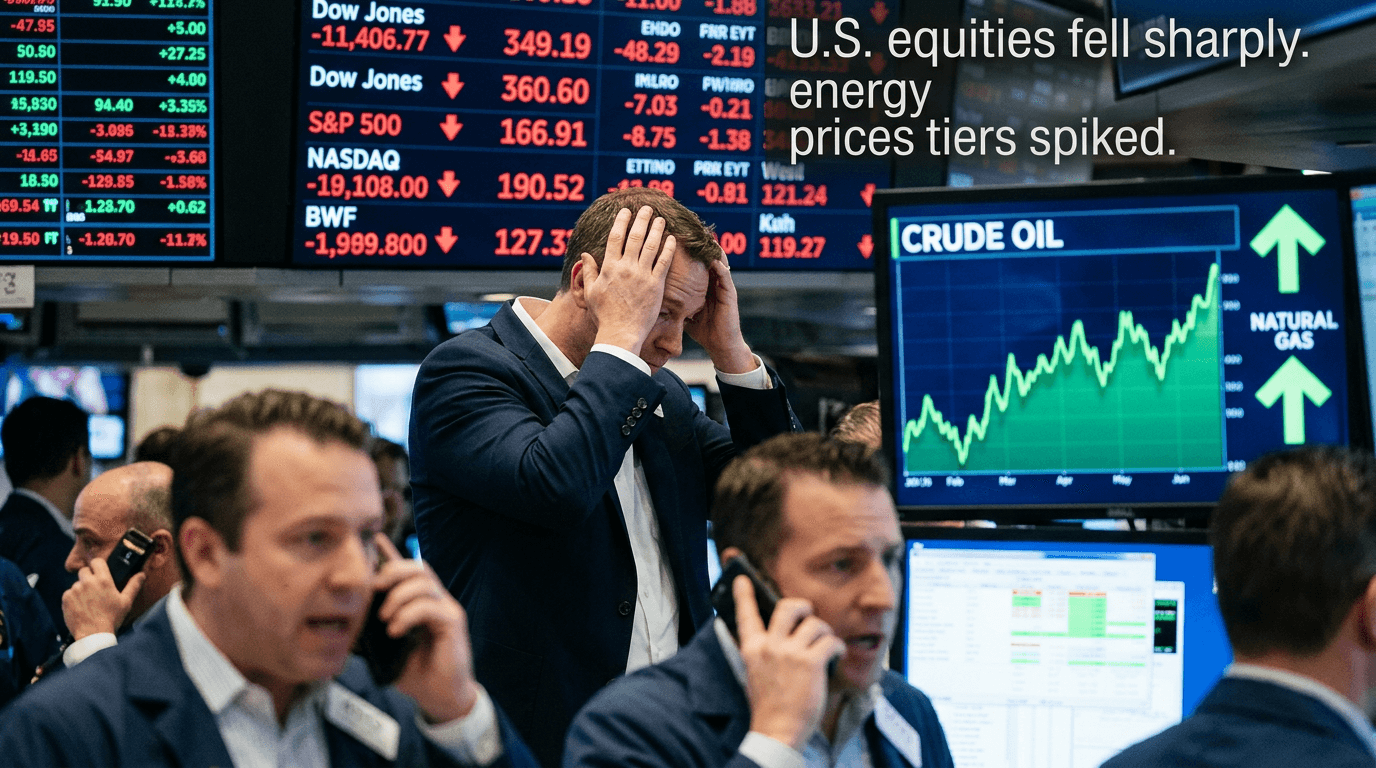
U.S. equity markets experienced a significant pullback as investors grappled with surging energy costs and a broader shift away from risk assets. The retreat underscores a critical intersection between commodity volatility, inflation concerns, and changing investor sentiment that has become increasingly important for traders navigating the current market environment.
The Market Selloff In Numbers
The numbers tell a stark story. Early trading saw the Dow Jones Industrial Average decline 0.7 percent to 45,909.86, while the broader S&P 500 fell 0.9 percent to 6,565.60. The technology-heavy Nasdaq Composite Index bore the brunt of the selling pressure, tumbling 1.3 percent to 21,872.69. These moves, while not catastrophic on their surface, reflect a coordinated rotation out of equities driven by specific macroeconomic concerns rather than company-specific weakness.
Perhaps most striking was the performance of semiconductor stocks, which fell despite strong earnings reports. Micron Technology, for example, dropped 7.3 percent despite reporting quarterly records for revenues and other key financial benchmarks. This disconnect between fundamental performance and stock price movement illustrates how macro factors like energy inflation can override positive earnings surprises and reshape portfolio allocation decisions.
The Energy Shock
At the heart of this volatility sits the energy market. International benchmark Brent crude surged as much as 10 percent before pulling back, while European natural gas prices exploded upward by 35 percent. These spikes were directly tied to attacks on energy infrastructure in the Middle Eastern conflict, which has already strained global supply chains and driven significant price increases across energy markets.
The implications are profound. When energy prices spike suddenly, it creates ripple effects throughout the broader economy. Transportation costs increase. Manufacturing expenses rise. Consumer purchasing power faces pressure from higher gas prices at the pump. For markets already grappling with inflation concerns, these shocks raise legitimate questions about whether central banks will maintain their current policy stance or face pressure to adjust course.
Central Banks Hold Steady
Adding to the market tension, leading central banks decided to hold interest rates steady despite inflation risks. This measured approach reflects the difficult balancing act policymakers face. Raising rates too aggressively could choke off economic growth, while holding too long risks allowing inflation to become embedded in expectations. Markets have become increasingly sensitive to this messaging, and the perceived hawkishness of maintaining steady rates in the face of energy inflation contributed to the risk-off sentiment.
What Risk Aversion Means For Your Portfolio
Risk aversion is not simply about stock prices going down. It represents a fundamental shift in how investors allocate capital. When risk appetite wanes, capital flows out of equities and into bonds and other defensive assets. Growth stocks and cyclical sectors—which typically benefit from expanding economic conditions—face particular pressure. Meanwhile, defensive stocks, utilities, and dividend-paying companies often hold up relatively better.
This dynamic was evident in the relative weakness of technology and chipmaker stocks. These sectors tend to be leveraged to economic growth and often have higher valuations that are more sensitive to changes in interest rates and risk sentiment. When investors become defensive, they tend to exit these positions first and move into less volatile alternatives.
The Interconnected Market Environment
What makes this market environment particularly complex is the interconnectedness of different asset classes. Energy prices affect inflation expectations, which influence bond yields and currency valuations. A higher dollar, driven by "safe haven" demand during periods of uncertainty, can affect multinational corporate earnings. Lower bond yields reduce mortgage costs but also squeeze net interest margins for banks.
Traders monitoring multiple asset classes simultaneously gain crucial insights that single-market specialists might miss. Understanding that energy shocks can cascade through equities, bonds, currencies, and commodities simultaneously allows for more sophisticated risk management and positioning.
Looking Ahead
The current market environment highlights the importance of staying informed about geopolitical developments, energy markets, and central bank communications. These factors have become as important as traditional earnings analysis for many trading decisions. Additionally, upcoming economic data—particularly employment numbers and inflation readings—will be critical for determining whether current energy shocks represent temporary disruptions or harbingers of broader economic slowdown.
Traders should consider how concentrated their portfolios are in sectors most vulnerable to energy inflation and risk aversion. Diversification across asset classes and sectors becomes increasingly valuable during periods of heightened volatility and changing risk sentiment.
The current selloff serves as a reminder that financial markets operate within a complex web of global factors. Energy supply constraints, geopolitical tensions, inflation dynamics, and monetary policy decisions all intersect to create trading opportunities and risks. Success in this environment requires staying attuned to multiple information streams and understanding how seemingly disparate news items connect to drive market movements.