
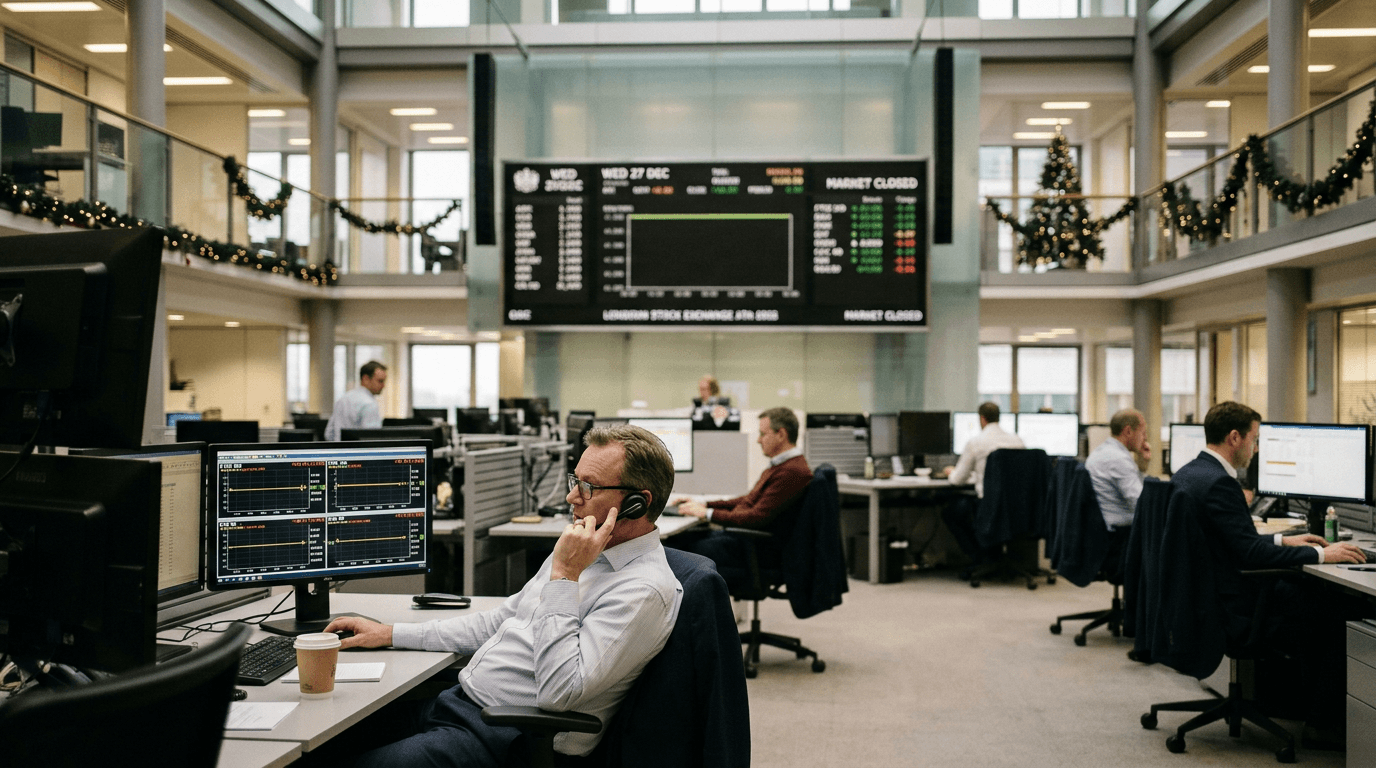
European stock markets wrapped up Wednesday's trading session without significant changes as the holiday season loomed, with notably low trading volumes highlighting the effects of the festive period on market dynamics. While this flat finish might seem uneventful, it reveals crucial insights into how market behaviors shift during holiday periods and the structural changes that arise when exchanges adopt shortened trading schedules.
Insights Into Holiday Trading Patterns
The lack of movement in Wednesday’s market was expected, given the proximity to Christmas. As year-end holidays approach, European markets typically see a drop in trading activity. Institutional investors often close positions, retail traders take breaks, and many financial professionals wrap up their tasks for the year. This dip in participation alters market dynamics, making price shifts less indicative of overall sentiment and more influenced by isolated corporate news rather than broad economic trends.
During the holiday period, European markets operate on a reduced schedule, with many indexes observing shortened trading hours. Despite positive economic signals like the Netherlands' impressive Q3 GDP growth, the market failed to show significant gains, underscoring how thin volumes can stifle price discovery during these times.
Impact Of Partial Trading And Operational Adjustments
A key element of holiday trading is the transition to partial trading schedules, which many investors may not fully appreciate. On Christmas Eve, major exchanges like the London Stock Exchange operate on a partial basis, closing from 12:30 p.m. London time. This structural adjustment compresses the timeframe for executing trades before the holiday break, introducing different dynamics compared to regular trading days.
Traders needing to offload securities before the holidays face a time crunch to do so before the early close, which can create pressure and potential volatility during specific times, despite the overall low volume. Understanding these operational shifts is vital for active traders, affecting execution quality, liquidity availability, and the risk of order slippage during these limited trading hours.
Influences On Markets In Thin Trading Conditions
In low participation periods, individual corporate events and company-specific news often overshadow broader macroeconomic developments. Instead of market-wide movements driven by economic data, thinly traded markets tend to reflect repositioning by active participants and responses to specific company news. This scenario favors investors focused on fundamental company analysis and challenges those relying on technical momentum or broad market trends.
Wednesday's flat closure exemplifies this dynamic. The absence of major price changes suggests that the market is in a holding pattern, with investors absorbing available information and deferring significant portfolio actions until after the holidays. This reflects rational decision-making in a period where market structure and participation deviate from the norm.
Effects On Short-term And Long-term Investors
Holiday trading environments impact various investor types differently. Long-term investors are generally unaffected by market holidays, as they focus on fundamental value over multiple years. Temporary price stability during the holidays is seen as insignificant noise. These investors can largely disregard the structural and operational shifts of holiday trading.
In contrast, short-term traders face unique challenges. While they can't initiate new positions during market closures, monitoring economic developments and news during breaks is crucial. Markets often react sharply to overnight news during extended holidays, posing volatility and gap risks when trading resumes. Short-term traders must manage positions carefully before holiday breaks, ensuring they only hold positions they are comfortable carrying through extended closures with no trading volume.
Strategizing For Holiday Market Conditions
Traders and investors should approach holiday market periods with adapted expectations and strategies. Knowing specific trading hours and partial schedules for each market can prevent costly execution mistakes. Reviewing positions before partial trading days can prevent unwanted holdings from extending into holiday periods. Keeping an eye on economic calendars and news, even during closures, helps traders prepare for potential market movements once trading resumes.
The flat close on Wednesday does not indicate a market malfunction or stagnation but rather reflects typical market behavior during transition periods. As institutional participation wanes and trading hours shorten, price stability often rises while trading volume and volatility decrease. Understanding these patterns enables market participants to make informed decisions on positioning, execution timing, and risk management during the holiday season.