
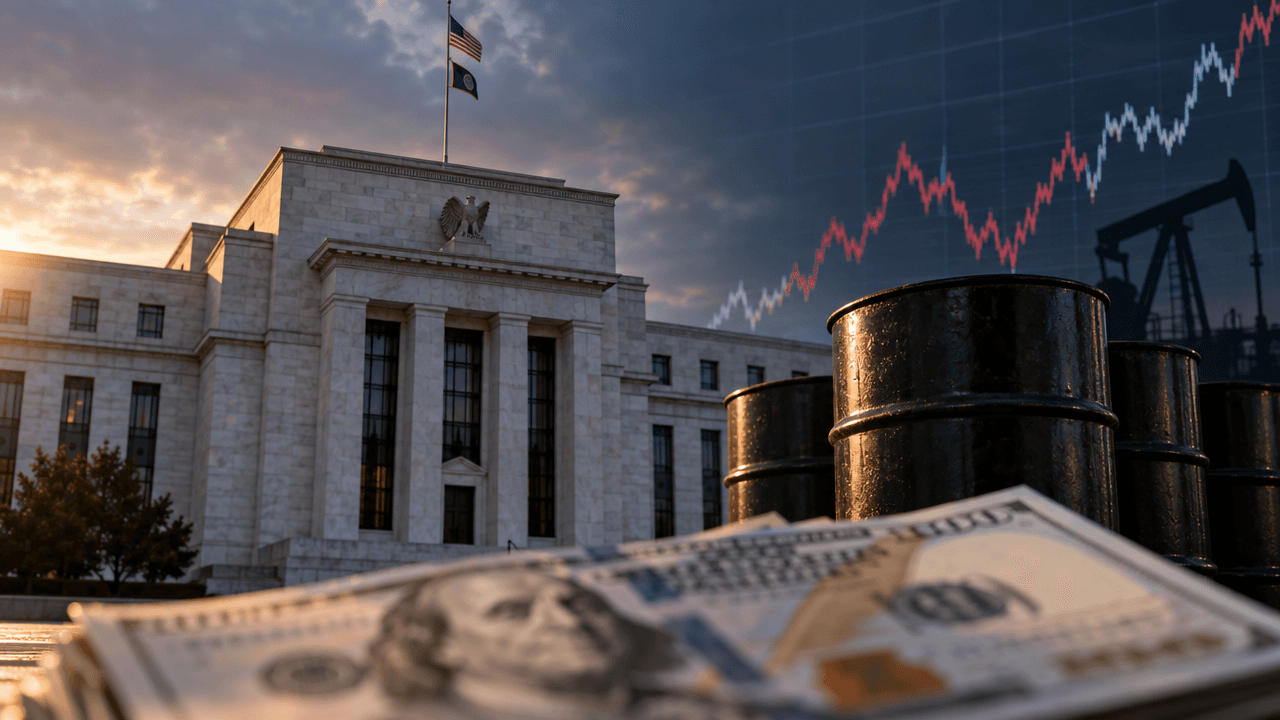
For financial markets, the Federal Reserve’s next policy decision is less about whether interest rates change and more about what policymakers signal for the months ahead. The Federal Open Market Committee is scheduled to announce its decision on October 28, and markets broadly expect it to leave the federal funds target range unchanged at 3.75% to 4.00%. [3][11]
That apparent pause does not mean uncertainty has disappeared. U.S. economic growth remains firm, inflation pressures are persistent, and rising energy prices are complicating the outlook. Investors are therefore focused on the Fed’s statement, its assessment of inflation and employment, and Chair Jerome Powell’s comments about whether another rate increase could arrive before the end of the year.
Why Markets Expect A Hold
The case for holding rates is straightforward. Monetary policy has already become restrictive, borrowing costs remain elevated, and longer-term Treasury yields have risen substantially. The 10-year Treasury yield recently approached 5%, increasing financing costs for households, companies and investors even without an immediate change in the Fed’s policy rate. [10]
A pause allows policymakers to observe how previous rate increases are affecting demand. Higher rates typically work with a delay. They can gradually slow consumer spending, business investment, housing activity and hiring. Moving too aggressively could weaken the economy more than intended, particularly if signs of labor-market cooling become more pronounced.
At the same time, a hold should not be interpreted as a declaration that the inflation battle is over. A Reuters survey found that 94 of 100 economists expected the Fed to keep rates unchanged at the October meeting, while many still anticipated another increase later in the year. [11] This combination—an October pause followed by a possible December hike—has become a central scenario for markets.
Inflation And Oil Keep The Pressure On
Inflation remains the most important reason investors are reluctant to assume that rate cuts are coming soon. Economists expect the upcoming personal consumption expenditures report to show inflation accelerating to a 3.7% annual rate in September, up from 3.4% in August. [1] The PCE price index is closely watched by the Fed because it captures changing consumer spending patterns and provides a broad measure of price pressures.
Oil prices add another layer of risk. Energy costs have risen sharply amid concerns about global supply disruptions, with crude trading near four-month highs and above $100 per barrel in recent reports. [6] Higher gasoline, transportation and production costs can feed into headline inflation. They can also reduce household purchasing power, creating a difficult situation in which prices rise while real consumer demand weakens.
For the Fed, the challenge is distinguishing a temporary energy shock from broader, persistent inflation. If higher oil prices begin influencing wages, services and inflation expectations, policymakers may need to maintain restrictive policy for longer. If the effect remains concentrated in energy markets, the central bank may be able to proceed more cautiously.
What The Decision Could Mean For Markets
The dollar is one of the clearest beneficiaries of the current environment. High U.S. yields attract capital from investors seeking income, while expectations of additional Fed tightening provide further support. Stronger U.S. demand and concerns about overseas growth can reinforce that trend by increasing demand for dollar-denominated assets.
The outlook is less favorable for rate-sensitive assets. Higher Treasury yields raise the discount rate used to value future corporate earnings, which can pressure growth-oriented equities, technology shares and speculative investments. Companies that depend heavily on refinancing may also face greater interest expenses.
Housing and credit markets are similarly exposed. Mortgage rates, corporate borrowing costs and consumer loan rates often respond to movements in longer-term yields rather than solely to the Fed’s overnight policy rate. Even if the central bank holds steady, financial conditions can tighten if bond yields continue to rise.
Equity markets may therefore react more to the Fed’s tone than to the decision itself. A cautious statement could support risk assets if investors interpret it as evidence that no further hikes are necessary. A firm inflation-focused message could have the opposite effect, especially if policymakers emphasize that rates may need to remain high for an extended period.
Practical Takeaways For Traders
First, avoid treating a widely expected decision as a risk-free event. When markets are positioned for a hold, the largest price movements can come from unexpected language in the statement or press conference.
Second, watch the interaction between Treasury yields and the dollar. A rising dollar combined with higher yields generally indicates that markets are pricing tighter financial conditions. A falling dollar and declining yields may suggest that investors are shifting toward expectations of slower growth or eventual easing.
Third, monitor oil prices alongside inflation data. Energy markets can change the policy outlook quickly, particularly if supply disruptions appear likely to persist.
For SimFi traders, this event offers a useful exercise in scenario planning. Before the announcement, define separate outcomes for a neutral Fed, a hawkish pause and a surprisingly dovish message. Identify likely reactions in currency pairs, Treasury instruments, equity indices and commodities. Then set risk limits before volatility increases rather than making decisions after prices have already moved.
Most importantly, focus on process instead of prediction. A disciplined trader does not need to guess every word of the statement. The objective is to understand which market expectations are already priced in, identify what would invalidate the trading thesis and manage exposure accordingly.
Conclusion
The Federal Reserve’s October decision is expected to produce no change in interest rates, but the pause could still be highly consequential. Persistent inflation, elevated oil prices and strong demand are keeping the possibility of another hike alive, while high bond yields are already tightening financial conditions.
Markets will be listening for clues about December and beyond. For traders, the central lesson is clear: policy decisions matter, but expectations and communication often matter just as much. Careful scenario analysis, disciplined position sizing and attention to cross-market signals can help turn a major news event into a structured learning opportunity rather than an impulsive trade.