
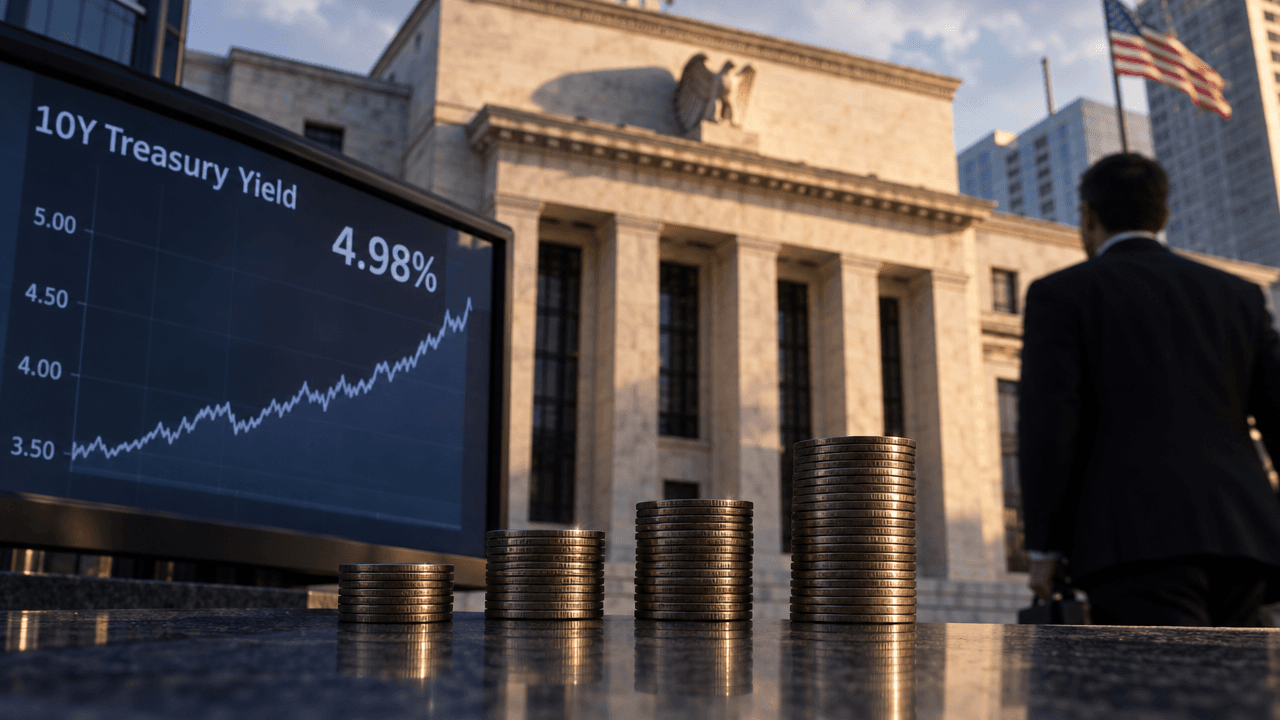
The Federal Reserve’s rate decision is hours away, and markets are treating a 25 basis point hike as almost a foregone conclusion, with implied probabilities hovering around 90% or more in major futures and prediction markets[1][7][11]. This marks a sharp shift from expectations earlier in the year, when many participants still saw room for cuts as inflation cooled and growth looked more fragile[12][13]. For traders, the story today is less about the direction of the next move and more about how “higher for longer” reshapes the landscape across bonds, FX, equities and futures[8][11][13].
Market Odds: A Near-certain 25 Bp Hike
Money markets and prediction platforms now price the 25 bp hike as the dominant outcome, with probabilities close to 90% in several major venues tracking the FOMC decision[1][4][13]. Alternative scenarios like “no change” or a larger move have been heavily discounted, each typically sitting in the single digits or low double digits, reflecting the consensus that the Fed will nudge policy tighter but not shock the system[4][7][12]. This repricing followed hotter-than-expected inflation and producer price data, which reinforced the case for additional tightening to keep price pressures in check[8][12][13].
For traders, these odds matter because they shape volatility around the announcement: when the base case is overwhelmingly priced in, the surprise risk shifts from the decision itself to the tone of the statement, projections and press conference[7][11][13]. Key takeaway: focus not only on whether the Fed hikes, but on any signals around the future path of rates, inflation tolerance and growth.
BOND YIELDS NEAR 5%: WHY IT MATTERS
The US 10-year Treasury yield has pushed up to the 5% area, touching its highest levels since 2023 and breaking a key psychological threshold for global markets[2][8][11]. This move reflects a combination of factors: persistent inflation concerns, heavier government borrowing, and the growing belief that policy will remain restrictive for an extended period rather than quickly reverting to near-zero rates[3][6][13]. When the 10-year sits near 5%, it raises the “risk-free” hurdle rate used to evaluate everything from corporate investment projects to equity valuations[2][8][13].
Higher long-term yields can pressure growth stocks and speculative assets, as investors compare expected returns to a safer 5% benchmark[2][8][14]. They also translate into more expensive funding for mortgages, autos and corporate debt, with knock-on effects for consumption and capex[2][3][11]. Key takeaway: a 5% 10-year is not just a bond story—it’s a structural shift in the cost of capital that can ripple across portfolios and trading strategies.
Dollar Strength And Fx Volatility
As Fed hike odds have climbed, the US dollar has firmed against major peers, with EUR/USD trading on the back foot and USD/JPY holding near multi-decade highs above 155, reflecting persistent yen weakness[9][11]. A higher expected US policy rate widens rate differentials versus economies where central banks are closer to neutral or even contemplating easing, making dollar-denominated assets more attractive on a carry and relative yield basis[8][9][11]. In the case of the yen, ultra-loose policy and limited tightening have left the currency vulnerable whenever US yields spike, encouraging carry trades that sell JPY to buy higher-yielding assets[9][11].
For FX traders, the immediate risk around the Fed announcement is a sharp adjustment in rate expectations that could trigger abrupt moves in pairs like EUR/USD and USD/JPY, especially if the Fed’s guidance diverges from the current “higher for longer” narrative[8][9][11]. Key takeaway: treat the dollar path as a function of both the headline decision and the relative policy stance across regions; watch rate differentials, not just spot prices.
Risk Assets, Futures And Positioning
Equity markets and risk assets are caught between supportive growth data and the drag from higher yields and tighter financial conditions[2][8][13]. When bonds offer 5% and cash rates rise, some investors rotate toward safer instruments, raising the bar for equities to deliver excess returns[2][8]. At the same time, stronger nominal yields can signal confidence in growth and earnings, creating a tug-of-war that often expresses itself as sector rotation rather than outright risk-off: financials and value names may benefit from higher rates, while rate-sensitive growth names face headwinds[2][8][11].
In futures markets, traders are using rate expectations to hedge or express views on indices, bonds, and FX, with implied volatility often clustering around key events like FOMC days[7][11][13]. Options positioning—especially in short-dated contracts—can amplify moves if realized volatility exceeds what was priced in before the decision. Key takeaway: think in terms of scenario analysis—how do your positions behave if the Fed is more hawkish than expected, more dovish, or simply reinforces the current consensus?
How Simulated Finance Traders Can Position
For traders using a SimFi platform like E8 Markets, this environment is an ideal laboratory to stress-test strategies against real-world macro catalysts without capital at risk. You can use simulated accounts to build playbooks for different Fed outcomes: a “base case” 25 bp hike with balanced guidance, a hawkish surprise with hints of further hikes, or a dovish tilt emphasizing downside risks. Each scenario can be mapped to expected reactions in Treasury yields, major FX pairs, equity indices, and volatility products.
Simulated trading also allows more granular experimentation with position sizing, hedging and event risk management. For example, traders can explore how reducing leverage ahead of the announcement affects drawdowns, or how options structures like straddles and spreads perform around rate decisions when implied volatility is elevated. Over time, this type of systematic practice builds discipline around risk limits, entry and exit rules, and the psychological side of trading high-impact events. Key takeaway: use today’s Fed decision as a structured exercise—define scenarios, design trades, and review outcomes, all within a simulated environment before deploying similar ideas with real capital.
Conclusion
With markets pricing very high odds of a 25 bp Fed hike and the 10-year Treasury yield hovering near 5%, the immediate question is not whether policy is tight, but how long it stays that way[2][8][11][13]. The combination of elevated yields, a firm dollar and heightened event risk around the FOMC puts macro drivers front and center across bonds, FX, equities and futures[8][9][11][13]. For both live and simulated traders, the edge comes from preparation: understanding how rate expectations shape asset prices, planning for multiple policy paths, and treating each major decision as an opportunity to refine process rather than chase headlines.