
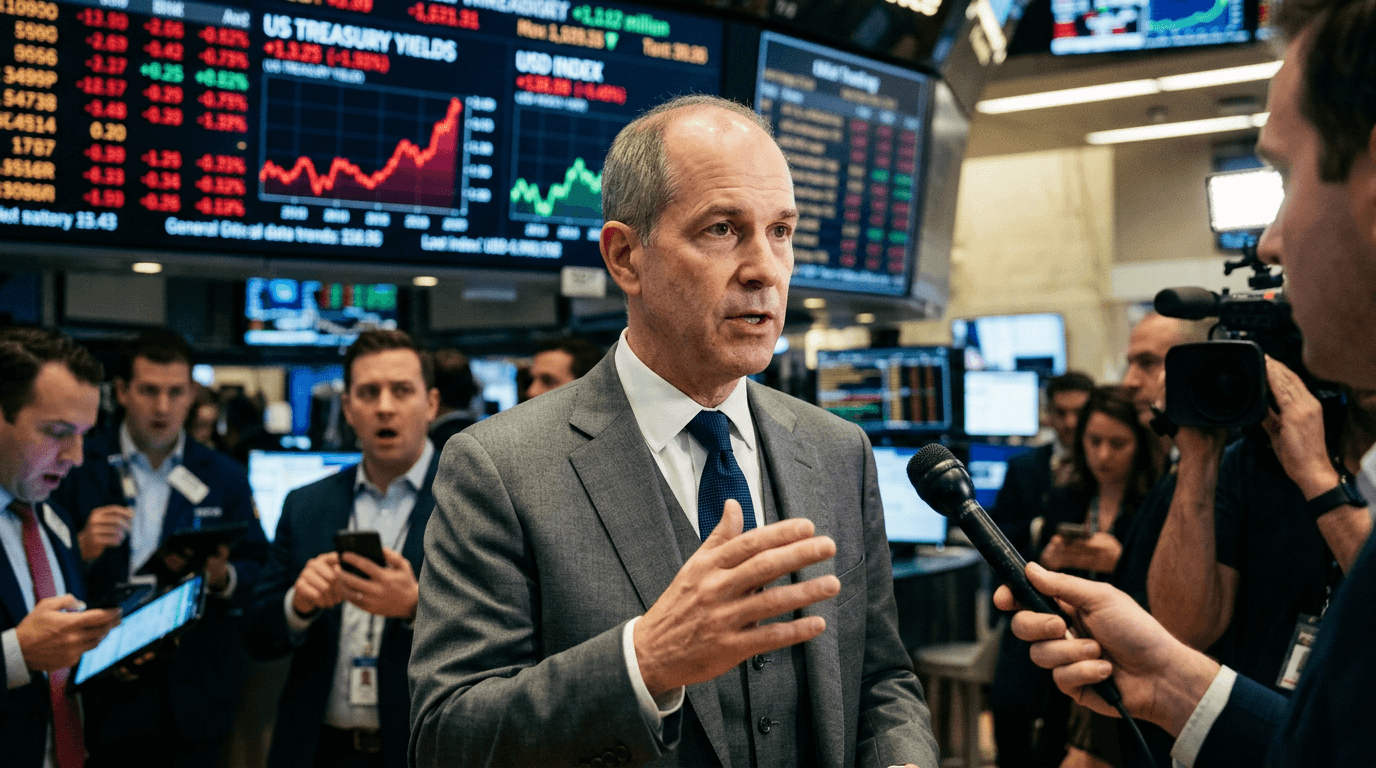
Markets were reminded on Friday that the Federal Reserve can still surprise them—and not always in a dovish direction. Fed Chair Kevin Warsh’s latest speech was interpreted as notably more hawkish, pushing Treasury yields higher, lifting the dollar, and sharply reducing expectations for near-term rate cuts[1][2][7][13]. For traders, this kind of sudden repricing in rates and FX is exactly the type of regime shift that can define performance over the next quarter.
WHY WARSH’S SPEECH MATTERED
Kevin Warsh used his Jackson Hole remarks to reaffirm the Fed’s strict commitment to its 2% inflation target and to warn that elevated prices remain the central bank’s primary focus[1][3][8]. Rather than emphasizing progress already made, he highlighted that recent inflation readings, while “better than expected,” have not clearly shown that underlying trends have improved[8][9]. That choice of framing matters because it signals that the Fed sees inflation risks as still tilted to the upside, not safely contained[4][11].
Crucially, Warsh stated that if policymakers are not confident inflation is heading back toward 2%, the Fed will “have work to do”[7][13]. In the language of central banking, that is a clear hint that further tightening—either deferring cuts or even hiking—remains on the table[7][9][11]. For markets that had grown comfortable with a “cuts soon” narrative, this was a direct challenge to prevailing expectations.
Bonds And Futures Price In Higher Rates
The most immediate reaction came in the front end of the Treasury curve, where yields jumped as traders marked up the probability of a near-term hike. Two-year Treasury yields, which are highly sensitive to Fed policy expectations, rose nearly 12 basis points to around 4.35%, their highest level in more than a month[13]. That move is consistent with a rapid repricing of the path of policy, not just a minor sentiment shift.
Fed funds futures reflected the same story. Before Warsh spoke, markets were assigning roughly a one-third chance to a September rate hike; after the speech, those odds jumped to about 57%[13]. In futures markets, that kind of abrupt change is more than noise—it redefines the “central scenario” that many strategies are built around.
For traders, the takeaway is straightforward: when the Fed pivots hawkishly, the short end of the curve often moves first and fastest. Duration risk becomes more acute, carry trades built on shallow rate expectations can be challenged, and options markets may see a spike in implied volatility as participants scramble to hedge the new policy path.
Dollar Surge Rewires The Fx Landscape
Hawkish Fed shifts rarely stay confined to bond markets, and this episode is no exception. The dollar index—measuring the greenback against a basket of major currencies—logged its largest daily gain in roughly two and a half months, climbing about 0.6% and touching its highest level since mid-August[7]. In intraday trading, the ICE U.S. Dollar Index moved from almost flat to up around 0.3% shortly after the speech, underscoring how central bank communication can flip market direction in minutes[14].
The underlying logic is simple but powerful: higher expected U.S. rates increase the relative yield on dollar assets, making the currency more attractive versus peers[2][7]. That can pressure lower-yielding currencies and challenge popular carry trades that rely on borrowing in dollars to invest in higher-yielding markets.
For FX traders, the lesson is to watch not only formal policy decisions but also speeches and symposium remarks. When a Fed chair with a reputation for toughness on inflation reiterates a willingness to lift rates “if necessary,” the dollar can reprice quickly across major pairs[2][7][12]. Stop placement, position sizing, and scenario planning all need to account for these communication-driven shocks.
Cross-asset Ripple Effects
Beyond bonds and FX, Warsh’s hawkish tone weighed on risk assets as investors reassessed the trade-off between growth and tighter financial conditions[2][4]. Higher discount rates typically compress equity valuations, particularly in rate-sensitive sectors such as utilities, REITs, and high-growth names that rely heavily on future cash flows. At the same time, financials can see relative support as higher yields improve net interest margins, though that benefit can be offset if the market starts to fear a policy overshoot.
Credit markets may feel a double squeeze: higher Treasury yields raise funding costs, and tighter policy expectations can lead to wider spreads if investors demand more compensation for risk. Commodity markets, especially gold and other “store of value” assets, often weaken when real yields rise and the dollar strengthens, though the net impact depends on how hawkish signals intersect with growth and geopolitical narratives.
For multi-asset traders, the key insight is that a hawkish communication is not a single-asset story. It can trigger synchronized moves across rates, FX, equities, credit, and commodities, reshaping correlations and potentially breaking patterns that looked stable only days earlier.
How Traders Can Practice Responding In A Simulated Environment
Events like Warsh’s speech are ideal case studies for traders using simulated finance platforms such as E8 Markets, where strategies can be tested without capital at risk. By replaying the tape of the move in Treasuries, Fed funds futures, and dollar pairs, traders can explore how different approaches would have performed during the hawkish shock[7][13][14].
For example, one scenario might involve entering short-duration positions ahead of a major Fed speech when inflation data has been sticky and market pricing looks complacent. Another could test dynamic risk management rules—such as tightening stops or reducing leverage—when Fed-implied probabilities in futures shift abruptly by 20 percentage points or more[13].
Simulated environments allow traders to build playbooks for communication-driven events: how to structure trades around potential hawkish surprises, when to fade moves versus when to respect them, and how to manage cross-asset exposures as correlations temporarily spike. Over time, this practice can help traders respond more systematically when real-world policy signals hit the tape.
Conclusion
Kevin Warsh’s hawkish turn is a reminder that the Fed’s fight against inflation is not over, and that markets remain highly sensitive to any suggestion that rate cuts might be delayed—or replaced by hikes altogether[1][7][11][13]. The resulting jump in Treasury yields, repricing of September hike odds, and surge in the dollar show how quickly expectations can reset when central bank communication shifts tone[7][13][14].
For traders, the opportunity lies in understanding the mechanics of that repricing across bonds, FX, and equities, and in building robust frameworks for reacting to similar events in the future. Whether in live markets or a simulated environment like E8 Markets, the ability to navigate hawkish shocks can be a meaningful edge in an era where monetary policy remains the dominant driver of cross-asset dynamics.