
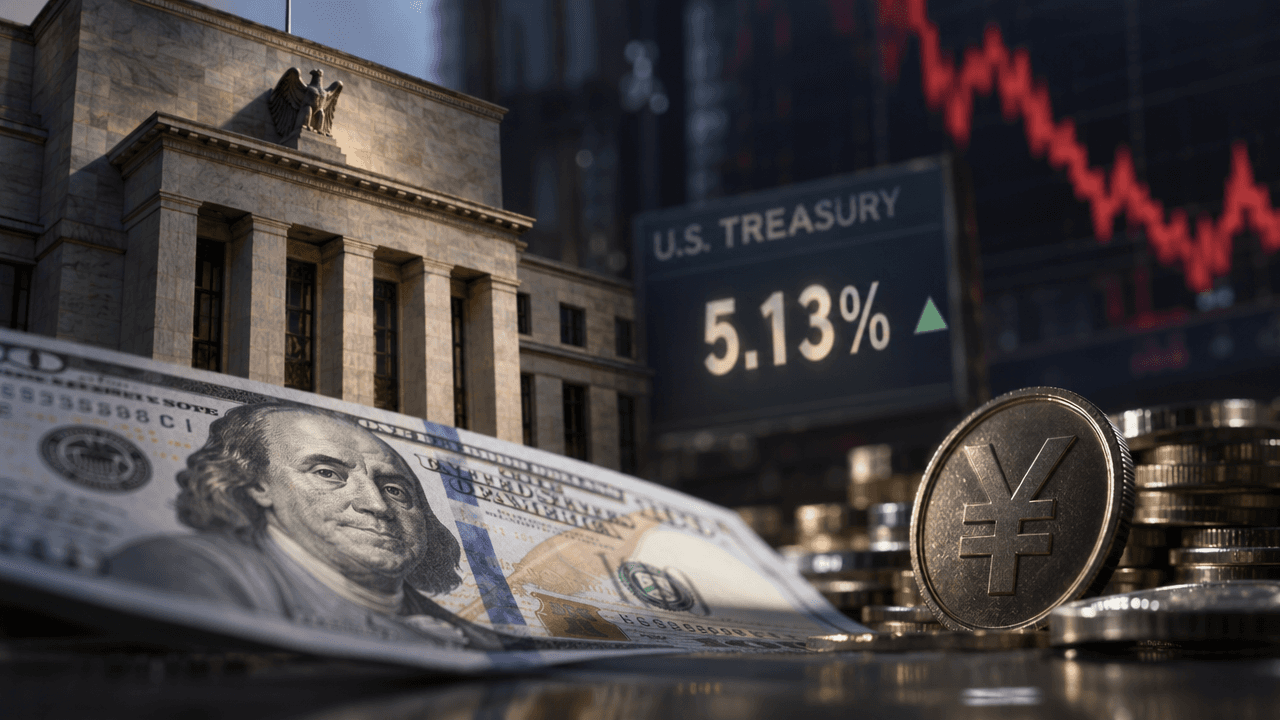
Markets are repricing the path of U.S. interest rates, and the adjustment is being felt across currencies, government bonds and risk assets. The U.S. dollar has climbed to roughly a 19-month high as traders increase their expectations for additional Federal Reserve tightening, while the benchmark 10-year Treasury yield has approached 5.13%. [1][2]
This combination matters because it changes the cost of money worldwide. Higher Treasury yields make dollar-denominated assets more attractive, while tighter financial conditions can pressure stocks, emerging-market currencies and other risk-sensitive trades. For traders, the latest move is a reminder that interest-rate expectations often matter more than the current policy rate itself.
Why Fed Expectations Are Shifting
The market’s reassessment has been driven by a combination of firm inflation signals, hawkish comments from Federal Reserve officials and concerns that economic pressures could remain persistent. Traders are now assigning a meaningful probability to a larger-than-usual rate increase at the Fed’s next meeting. Reuters reported that markets were pricing a 14.5% chance of a large hike, up from zero the previous week. [3]
Even when a large hike is not the base case, the possibility can move markets sharply. Interest-rate futures immediately adjust to reflect the perceived risk, and those adjustments influence bond yields, currency valuations and equity prices.
The two-year Treasury yield is particularly sensitive because it reflects expectations for near-term Federal Reserve policy. It rose sharply during the latest repricing, gaining 34 basis points over two sessions, the largest two-day increase in roughly three and a half years. [1] The 10-year yield also moved above 5%, reaching levels that can materially affect borrowing costs throughout the economy.
Why The Dollar Is Benefiting
Higher U.S. yields increase the potential return available from holding dollar assets. International investors may shift capital toward Treasury bills, notes and other U.S. investments, creating additional demand for the dollar. This is one reason the currency has strengthened against a broad group of major peers.
The dollar’s rally is also being supported by relative expectations. Currency markets do not evaluate the Federal Reserve in isolation; they compare U.S. policy with the expected actions of other central banks. If traders believe U.S. rates will rise while other central banks remain cautious, the interest-rate gap can widen in favor of the dollar.
For forex traders, this can produce sustained momentum rather than a one-day reaction. However, strong trends can become crowded. When positioning becomes heavily concentrated in the dollar, even a softer inflation report or less hawkish Fed communication can trigger a sharp reversal.
THE YEN’S 160 WARNING
The Japanese yen has weakened toward the psychologically important 160-per-dollar level as the widening U.S.-Japan rate gap favors the dollar. Japanese officials have warned that currency volatility is being monitored, and traders remain alert to the possibility of intervention if the yen weakens further. [3][7]
The 160 level is important for more than technical reasons. It represents a visible threshold that can influence government decisions, corporate hedging and trader positioning. A break above the level could attract momentum buyers, but it could also increase the risk of an official response from Tokyo.
This creates an unusually unstable environment for USD/JPY. The pair may continue higher if Treasury yields rise, yet intervention concerns can make long positions vulnerable to sudden declines. Traders should therefore consider position size, stop placement and event risk rather than relying solely on trend direction.
Pressure On Risk Assets
Rising yields affect markets through several channels. First, higher bond yields increase the discount rate used to value future corporate earnings. That can weigh particularly heavily on growth stocks and other assets whose valuations depend on profits expected far in the future.
Second, higher borrowing costs can reduce household and business demand. Mortgages, corporate loans and government financing all become more expensive when benchmark yields rise. Third, a stronger dollar can create difficulties for emerging markets with dollar-denominated debt and can reduce the translated value of overseas earnings for U.S. multinational companies.
Oil prices and geopolitical developments can reinforce the move. Recent concerns about Middle East supply helped lift oil prices and inflation expectations, adding to pressure on yields. [5] If energy costs remain elevated, traders may assume the Federal Reserve will need to keep policy restrictive for longer.
Practical Takeaways For Traders
First, monitor the two-year Treasury yield as a real-time gauge of Fed expectations. A rising two-year yield often supports the dollar, while a sudden decline can signal that traders are reducing rate-hike bets.
Second, distinguish between a genuine trend and a headline-driven spike. Inflation data, Fed speeches, employment reports and geopolitical developments can all reverse the market’s direction quickly.
Third, treat USD/JPY as a high-risk instrument near 160. The pair may offer strong momentum, but intervention headlines can produce rapid moves that overwhelm poorly sized positions.
Finally, watch the relationship between yields and equities. If yields rise because of stronger growth, stocks may initially absorb the pressure. If they rise because of persistent inflation and tighter policy expectations, the effect on risk assets is generally more negative.
Conclusion
The dollar’s 19-month high and the 10-year Treasury yield’s approach toward 5.13% reflect a broad repricing of monetary policy, not simply an isolated currency move. As traders increase the odds of further Federal Reserve tightening, the dollar gains support, borrowing costs rise and risk assets face a more demanding environment.
The central question now is whether incoming inflation and economic data will validate the market’s hawkish expectations. Until that answer becomes clearer, volatility is likely to remain elevated. Traders who track yields, central-bank communication and currency-intervention risk together will be better prepared than those who watch any single market in isolation.