
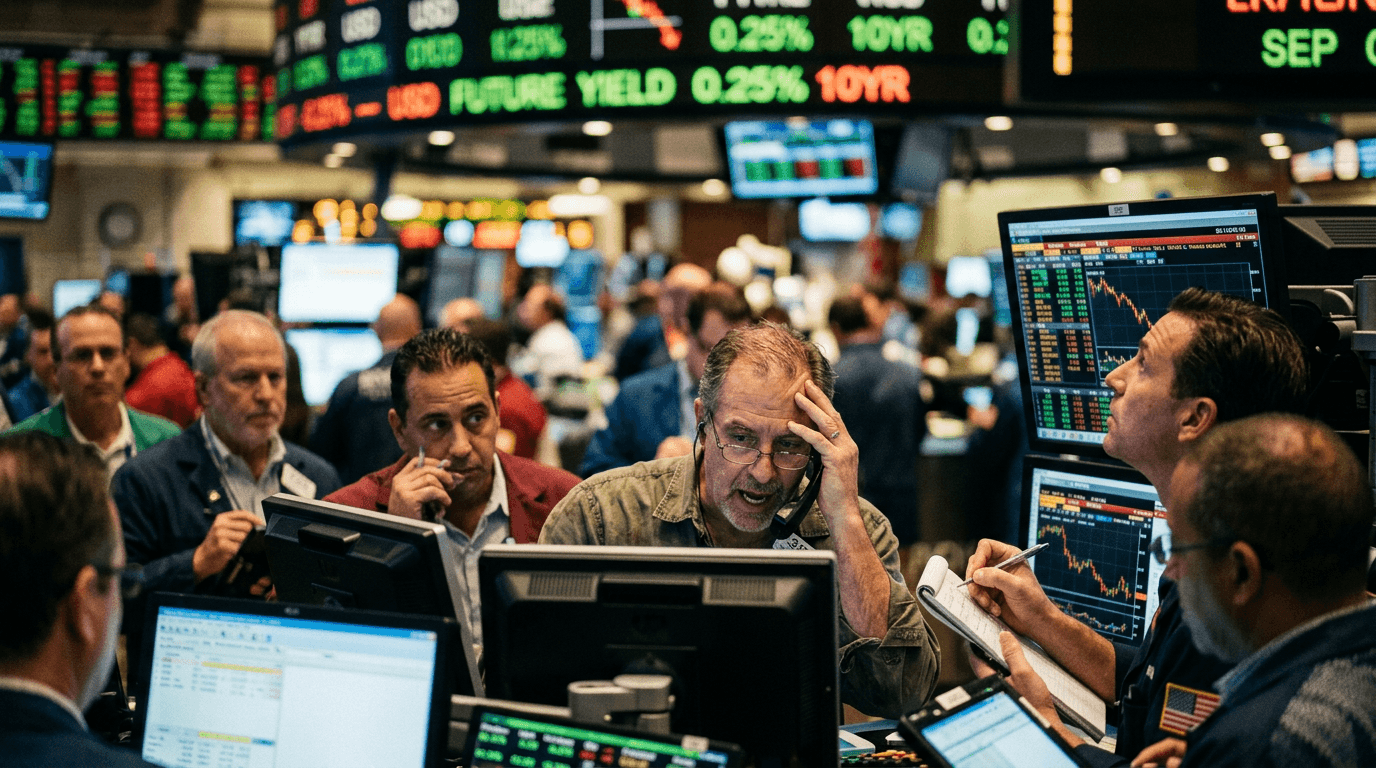
Traders are waking up to a very different Fed landscape: the market is increasingly betting that the next move in September is no move at all, and the dollar is starting to show it. Futures and prediction markets now price roughly two-thirds odds that the Fed leaves rates unchanged at the upcoming meeting, a dramatic swing from only a few weeks ago.[4][5][10][14] As pause odds climb, the Dollar Index has slipped toward a well-watched support zone, injecting fresh two-way volatility into major FX pairs like EUR/USD and USD/JPY.[1][2][6][13]
Macro Backdrop: Why Pause Odds Are Rising
The shift in expectations is rooted in data, not guesswork. Recent US releases have pointed to a cooler labor market, with slower hiring and wage growth starting to temper the outlook for household spending.[12] Because consumer spending makes up more than two-thirds of US economic activity, even modest cracks in the jobs-consumption nexus can quickly reshape the Fed narrative.[12]
Inflation has also shown signs of cooling, giving policymakers marginally more room to wait and reassess. July consumer price data running near the mid-3% annual pace helped push the probability of a September pause toward the high 60% range on some market measures, outpacing the odds of another rate hike by a wide margin.[4][14] Prediction platforms and the CME-style probability tools now broadly cluster around a roughly 60–65% chance that rates remain unchanged, with only a minority still betting on another quarter-point move.[5][10][11][14]
For traders, the message is clear: the “higher for longer, then higher again” narrative is giving way to “higher for longer, then wait and see.” That nuance matters because the dollar tends to trade not on the level of rates alone, but on surprises versus what the market has already priced in.
Dollar Index At Critical Support
The US Dollar Index has spent August grinding lower and is now testing a key band of technical support near the mid-99s.[1][2][6][13] Repeated failures to break higher have left price action leaning bearish, with intraday charts showing consolidation just above roughly 99.30–99.60, an area analysts describe as a “line in the sand” for the current trend.[1][2][6][13]
If that support holds, a corrective bounce toward the psychological 100 level and above is plausible, especially if incoming data challenge the soft-landing narrative.[1][2][6] A hotter inflation print or a surprisingly strong jobs report could nudge September hike odds back up, giving dollar bulls a reason to re-engage and forcing stretched short-dollar positions to cover.
If it breaks decisively, however, the move could accelerate as systematic and trend-following strategies chase momentum lower. Technical roadmaps highlight downside targets in the high-98s and potentially the 97–98 zone if selling intensifies.[2][6][8] That type of break would typically align with further repricing toward an extended pause or even early discussions of rate cuts down the line.
For EUR/USD and USD/JPY traders, the Dollar Index level is a crucial cross-check. A sustained break below support would normally favor higher EUR/USD and lower USD/JPY, while a bounce could cap euro strength and reintroduce upside risk for dollar-yen.
What This Means For Fx Traders
When the market shifts from debating “how many hikes” to “whether there is a hike at all,” FX volatility often becomes more two-sided. Rate expectations can swing quickly with each data release, creating sharp intraday moves in dollar pairs as traders reprice the path of policy. That is exactly what is unfolding now: softer jobs and demand data tug odds toward a pause, only for any upside surprise to yank them back again.[10][12][14]
In EUR/USD, the macro tug-of-war pits a potentially pausing Fed against a European Central Bank that is also close to its own terminal rate. This environment tends to favor range trading strategies, where traders fade extremes rather than chase breakouts, especially when the broader Dollar Index is pinned near major support.
USD/JPY, by contrast, remains highly sensitive to rate differentials and risk sentiment. As US yields back off their peaks on rising pause odds, the carry advantage that has supported long dollar-yen trades can narrow, making the pair vulnerable to pullbacks. At the same time, any renewed spike in Treasury yields on hawkish data can quickly reignite buying interest, creating fast, directional moves in both spot and futures.
For simulated traders on platforms like E8 Markets, this backdrop is ideal training ground. It allows traders to practice reading macro catalysts, mapping them into rate expectations, and then expressing those views through FX majors and dollar baskets without the pressure of real capital at risk.
Implications For Rates Futures And Simulated Strategies
US rates futures sit at the heart of this repricing story. Fed funds and short-end Treasury futures embed the market’s collective view on where policy will be at upcoming meetings, making them a powerful barometer of sentiment.[3][5][10] As pause odds climb into the two-thirds range, these contracts have rallied, reflecting expectations that policy rates are close to a peak.[3][5][10]
Because pricing is now finely balanced between “one more hike” and “extended hold,” even routine data has the power to move contracts meaningfully. That dynamic often produces a regime of choppy, two-way trade where both bulls and bears get opportunities—if they manage risk well.
In a SimFi environment, traders can use this period to stress-test different playbooks. One approach is to build scenarios around key data points: for example, plan trades for a weaker-than-expected jobs print that pushes pause odds above 70%, versus a strong report that knocks them back toward 50%. Another is to practice cross-market thinking by linking a move in short-dated futures to corresponding reactions in EUR/USD, USD/JPY, and the Dollar Index.
Position sizing and risk management are critical lessons here. When markets hang on every data point, stop placement and trade duration matter as much as direction. Simulated trading lets market participants experiment with tighter versus wider stops, event risk hedges, and scaling in or out of positions as probabilities evolve.
Practical Playbook: Navigating A Fed Pause Narrative
First, anchor dollar and FX views in probabilities, not headlines. Watching how implied odds for a September pause shift day by day provides a quantitative framework for understanding why the dollar is firming or softening.[5][10][11][14] When odds move sharply, expect FX and rates futures to react.
Second, respect the Dollar Index support zone. If price holds above the mid-99s and begins to turn higher, traders should be cautious about aggressively shorting the dollar, especially into key events.[1][2][6][13] If it slices through support on heavy volume, the bias shifts toward a broader dollar down-leg, with implications for EUR/USD, GBP/USD, AUD/USD, and emerging-market FX.
Third, treat upcoming data releases as volatility opportunities rather than coin flips. Building pre-defined playbooks—what to do if data is strong, weak, or mixed—can reduce emotional decision-making in fast markets. Simulated environments are well suited for rehearsing those responses and reviewing outcomes in detail.
Finally, combine macro and technicals. The macro narrative explains why the dollar is leaning one way or another; technical levels tell you where the market is likely to react. Using both together can improve timing and help avoid chasing moves that are already priced in.
Conclusion
Rising odds of a September Fed pause have pushed the dollar to a critical juncture, with the Dollar Index hovering near key support and FX markets adjusting to a softer tightening narrative.[1][2][6][10][13][14] While the baseline now favors a hold, the decision is far from locked in, leaving traders with a landscape defined by shifting probabilities and data-dependent swings.[5][10][11][12][14]
For active and simulated traders alike, this is less a time to predict the Fed’s next move with certainty and more a chance to practice disciplined, probability-driven trading. By watching how odds evolve, respecting key technical levels, and preparing for multiple macro scenarios, traders can turn this phase of policy uncertainty into a valuable learning and opportunity set—before the Fed delivers its next verdict.