
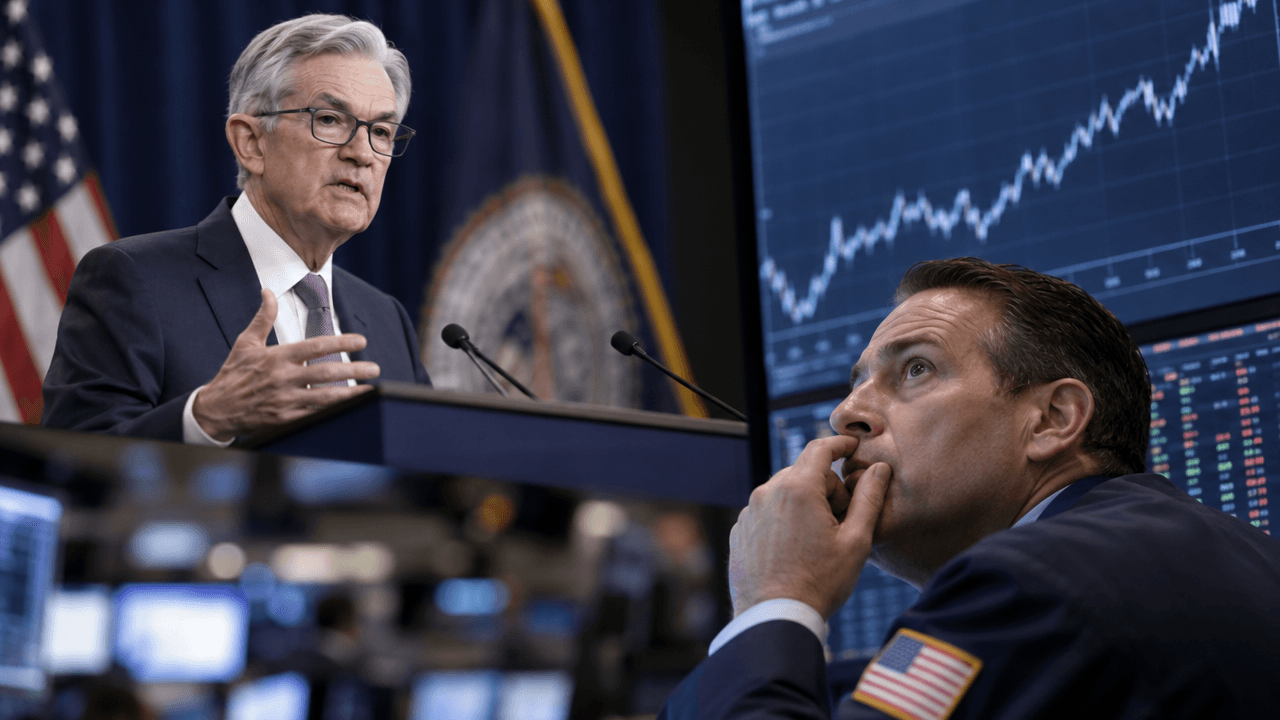
Financial markets are once again grappling with the possibility that the Federal Reserve’s historic tightening cycle may not be over yet. Recent comments from Fed officials, including indications that multiple additional rate hikes could be needed to tame inflation, have pushed Treasury yields higher and forced traders to reassess the path of policy over the coming months[2][6][11].
Fed Signals: The Fight Against Inflation Isn't Over
Fed officials have made it clear that inflation remains too high relative to their 2% target, and that policy may still not be restrictive enough to guarantee a timely return to price stability[10][11]. Minutes from recent Federal Open Market Committee (FOMC) meetings show that many policymakers believe further tightening could be necessary if inflation does not convincingly cool, underlining a willingness to raise rates again rather than risk entrenched price pressures[4][11][13].
In that context, statements that “multiple rate hikes might be required” fit the broader pattern of a central bank that prefers to err on the side of being too tight rather than too loose. After the Fed raised rates at its September meeting, bringing the policy range to roughly 3.75%–4.00%, officials framed the move as removing a “dose of accommodation” rather than a full policy pivot, signaling that further steps remain on the table[2][7][10][13]. This is important for traders: the Fed is not promising a quick end to hikes, and it is explicitly data-dependent—future decisions will hinge on upcoming inflation and labor market readings[4][11].
For both discretionary and systematic traders, this means the macro backdrop is still in flux. Rate expectations cannot simply be anchored around a “peak and pause” narrative; instead, they must incorporate the risk of a higher terminal rate and a longer period of restrictive policy[10][13][15].
Why Treasury Yields Are Reacting
Treasury yields have moved sharply in response to this evolving Fed guidance. The yield on the 10-year note has risen toward levels not seen in years, with moves of several basis points on days when data or Fed communication shift expectations about future hikes[6][8]. Shorter-maturity yields, particularly the 2-year, remain highly sensitive to changes in market-implied policy rates, spiking when traders price in higher odds of an additional hike and falling when the odds recede[6][12].
Bond yields move inversely to prices, so this repricing of risk translates into lower bond prices and tighter financial conditions[8][9]. Some of the rise in yields reflects stronger growth expectations and higher term premia, but a meaningful portion is tied to uncertainty around the Fed’s ultimate destination for rates and the duration of restrictive policy[1][8][10]. When policymakers sound hawkish—emphasizing upside risks to inflation—rate futures quickly adjust, increasing the implied probability of another hike and lifting yields across the curve[3][6][15].
Conversely, even modestly dovish remarks can trigger sharp reversals. There have already been sessions where long-dated Treasuries rallied, and yields retreated, after officials hinted at patience or suggested that the current stance is already doing meaningful work to slow the economy[5][12]. For traders, this volatility in rates markets is not noise; it is a direct readout of shifting macro probabilities that spill over into equities, FX, and commodities.
What This Means For Risk Assets
Higher yields matter because they reset the discount rate applied to virtually all risk assets. Equities tend to struggle when real yields rise and the risk-free rate becomes a more attractive alternative, especially for long-duration growth stocks whose cash flows lie far in the future[1][5][8]. Credit spreads can widen as investors demand more compensation for lending in an environment of tighter policy and slower expected growth[1][9].
Rate-sensitive sectors such as housing, utilities, and REITs are particularly exposed to the prospect of further hikes. Borrowing costs for corporates and households rise, refinancing becomes more expensive, and marginal projects that looked viable at lower rates may no longer clear the hurdle when funding costs increase[1][6][8]. At the same time, the dollar often strengthens when U.S. yields move higher relative to other major economies, pressuring emerging markets and commodities priced in dollars[8][9][15].
For traders on a platform like E8 Markets, this environment offers both risk and opportunity. Elevated cross-asset volatility can create more frequent trading setups, but it also increases the chance of sharp reversals when the macro narrative shifts. Understanding the linkage between Fed communication, yields, and asset prices is critical to building robust strategies in both live and simulated markets.
How Traders Can Position Themselves
With Fed officials signaling that additional hikes remain firmly on the table, traders can benefit from a structured framework for navigating the next phase of the cycle:
1. Track policy expectations, not just headlines. Rate futures and tools that show the market-implied probability of upcoming Fed decisions provide a quantitative gauge of how new information is being priced in[3][6][12]. When those probabilities move, expect cross-asset volatility to follow.
2. Respect the yield curve. Short-term yields tell you where the market thinks policy is headed over the next few meetings, while longer-term yields embed views on growth, inflation, and term premium[1][6][8]. Strategies that ignore this distinction risk misreading the macro signal.
3. Stress test across scenarios. In a SimFi environment, traders can model paths where the Fed delivers one, two, or more additional hikes, as well as scenarios where inflation unexpectedly cools and hikes are delayed or canceled. This kind of scenario analysis helps identify which strategies are robust to different policy outcomes.
4. Adjust position sizing for macro uncertainty. When the Fed is openly debating further hikes and markets are repricing the path of rates, volatility tends to be structurally higher[1][6][10]. Risk management—smaller position sizes, clearer stop-loss levels, and diversification across uncorrelated themes—becomes even more important.
5. Focus on catalysts. Key inflation releases, jobs reports, and Fed minutes have become primary catalysts for repricing rate expectations[4][6][10][11]. Planning trade ideas around these events, including simulated “dry runs,” can help traders avoid surprises and learn how markets behave around macro inflection points.
Conclusion: Preparing For A Longer Tightening Cycle
Fed officials’ signals that further rate increases may be needed are a reminder that the inflation fight is not yet won, and that policy could stay restrictive longer than markets once hoped[10][11][13]. Higher Treasury yields and shifting probabilities of future hikes show that investors are actively recalibrating their assumptions about growth, inflation, and the appropriate level of interest rates[1][3][6].
For traders, the message is clear: this is not a time to operate on autopilot. Strategies should be tested against multiple policy paths, risk controls must be tight, and macro awareness needs to be part of the daily routine. Simulated finance platforms like E8 Markets provide a valuable sandbox for experimenting with approaches in a high-rate, high-volatility world—before committing capital in live markets.
Those who treat Fed communication, yield movements, and macro data as an integrated signal, rather than isolated headlines, will be better positioned to navigate whatever tightening path the central bank ultimately chooses. In a cycle defined by uncertainty, preparation and disciplined adaptation are the trader’s strongest edge.