
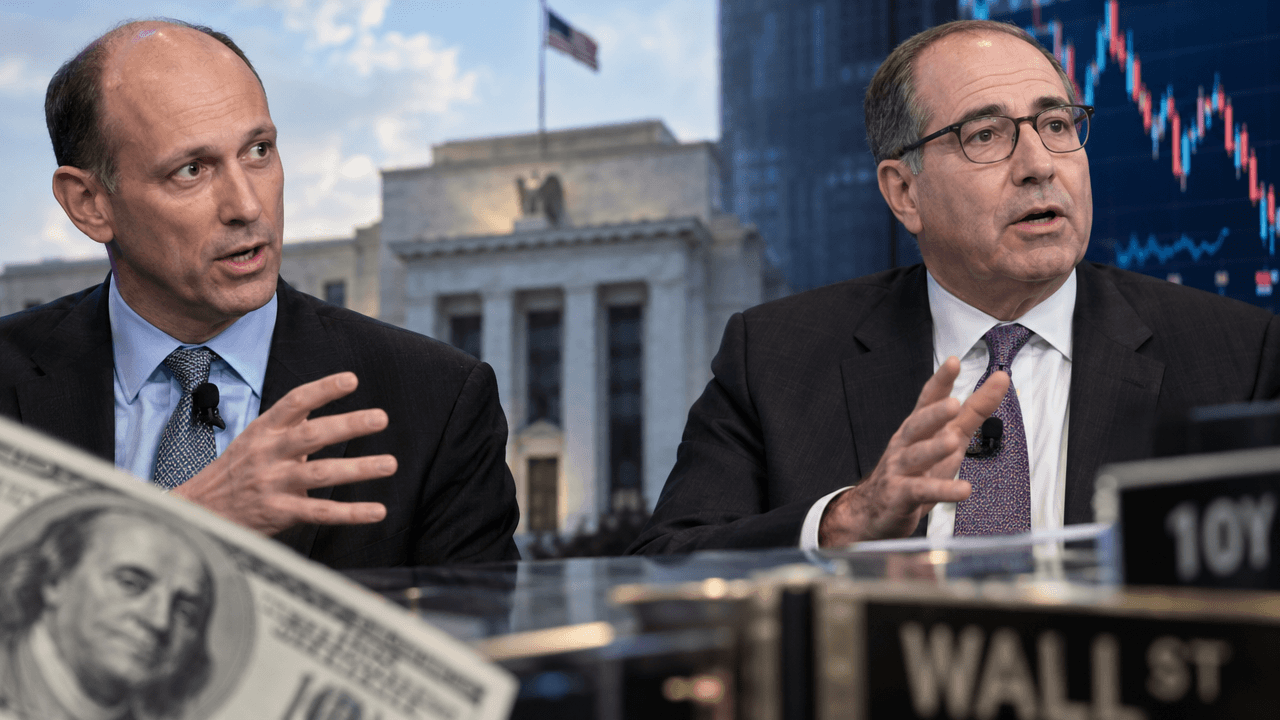
Federal Reserve speakers could add volatility to the U.S. dollar, Treasury futures and equity-index futures as traders reassess the next phase of monetary policy. Chicago Fed President Austan Goolsbee and Richmond Fed President Thomas Barkin are scheduled to speak on Monday, November 9, ahead of important inflation reports that could influence expectations for the Federal Reserve’s next interest-rate decision. [2][4]
The timing matters. October consumer-price data is scheduled for Tuesday, followed by producer-price data on Friday. Current forecasts call for headline CPI to increase 0.3% month over month, while core CPI is expected to rise 0.2%. [6] If the figures differ meaningfully from expectations, comments from Fed officials could either reinforce the market’s initial reaction or produce a second wave of volatility.
Why Fed Speeches Matter
Interest-rate markets are driven not only by policy decisions, but also by expectations about what comes next. A speech from a voting member can influence those expectations, but remarks from non-voting regional presidents still matter because they reveal how policymakers are interpreting inflation, employment and financial conditions.
Goolsbee and Barkin may offer different perspectives. Goolsbee has often emphasized the importance of allowing economic data to guide policy, while Barkin has recently expressed concern that inflation could require additional rate increases. In a recent interview, Barkin said the Federal Reserve may need to raise interest rates further, although the pace and total size of any moves remain uncertain. Markets were pricing in a greater than 80% probability of a December rate hike at the time of that report. [12]
Traders will therefore listen for changes in language. Words such as “patient,” “restrictive,” “persistent” and “balanced risks” can carry considerable weight when markets are searching for clues about policy direction.
Implications For The Dollar
The dollar may react quickly if speakers alter expectations for the path of U.S. interest rates. A more hawkish message—one that points to additional tightening or a prolonged period of elevated rates—could support the dollar by increasing the relative appeal of U.S. assets. Currency pairs such as EUR/USD, GBP/USD and USD/JPY could respond as traders adjust interest-rate differentials.
A surprisingly dovish message could have the opposite effect. If a speaker argues that inflation is cooling sufficiently or that existing policy restraint is adequate, traders may reduce expectations for future hikes. Lower expected yields can weigh on the dollar, particularly against currencies whose central banks are viewed as less likely to ease policy.
The reaction may not be uniform across currency pairs. For example, USD/JPY can also be highly sensitive to global risk sentiment and Japanese policy expectations. A stronger dollar may not automatically translate into a sustained move if Treasury yields fall or investors seek safe-haven assets elsewhere.
What To Watch In Treasury Futures
Treasury futures are likely to be the most direct expression of changing Fed expectations. Prices and yields move in opposite directions: when traders anticipate higher policy rates, Treasury futures generally decline and yields rise. When expectations shift toward lower rates, futures prices tend to rise.
Shorter-maturity contracts, including those linked to two-year Treasury yields, may react most sharply because they are closely connected to expectations for the federal funds rate. Longer-maturity contracts may be influenced by broader issues such as economic growth, government borrowing, inflation risk and the term premium.
The key question is whether officials focus on inflation risks or signs of economic cooling. A firm warning about price pressures could push front-end yields higher and flatten parts of the yield curve. A greater emphasis on weakening demand or labor-market risks could produce the reverse reaction.
Investors should also distinguish between an immediate headline move and a durable trend. A single speech can create a sharp futures adjustment, but the move may fade if subsequent inflation data fails to confirm the official’s message.
Equity-index Futures And Risk Management
Equity-index futures can respond through both interest rates and valuation. Higher Treasury yields generally increase the discount rate applied to future corporate earnings, which can pressure growth-oriented sectors and major technology stocks. Financial shares may respond differently because higher rates can support lending margins, although concerns about economic growth can offset that benefit.
A dovish interpretation may initially help equity futures by lowering yields. However, a dovish tone caused by concerns about weaker growth may limit the positive reaction. This is why traders should avoid treating every decline in yields as automatically bullish for stocks.
Volatility can also increase around the scheduled speaking times. The market may become less liquid as traders wait for remarks, then move quickly when a question-and-answer session begins. Stop orders placed too close to current prices may be triggered by temporary price swings rather than a lasting change in direction.
A Practical Trading Framework
Before the speeches, traders should identify the market consensus for December policy and compare it with current pricing in rate futures. The objective is not to predict every word, but to determine which outcomes would represent a genuine surprise.
Three scenarios are useful
A hawkish surprise could lift the dollar, push Treasury futures lower and pressure equity-index futures.
A dovish surprise could weaken the dollar, support Treasury futures and benefit rate-sensitive equities.
A balanced message could leave markets focused on Tuesday’s CPI report and Friday’s PPI data, potentially producing only temporary volatility.
Position sizing is especially important when several catalysts are close together. Traders may consider reducing leverage, waiting for the first reaction to stabilize or using predefined risk limits rather than entering during the fastest part of the move.
Conclusion
Federal Reserve speakers are unlikely to replace inflation data as the market’s primary driver, but their remarks can shape how traders interpret the data when it arrives. Goolsbee and Barkin speak at a moment when markets are weighing the possibility of further rate increases and the durability of inflation pressures. [2][12]
For dollar, Treasury and equity-index traders, the central lesson is to focus on the interaction between language, expectations and incoming data. The largest moves may occur not because officials deliver a dramatic policy announcement, but because a familiar phrase changes the perceived probability of the next rate decision. Preparation, disciplined risk management and attention to market pricing can be more valuable than trying to forecast every short-term fluctuation.