
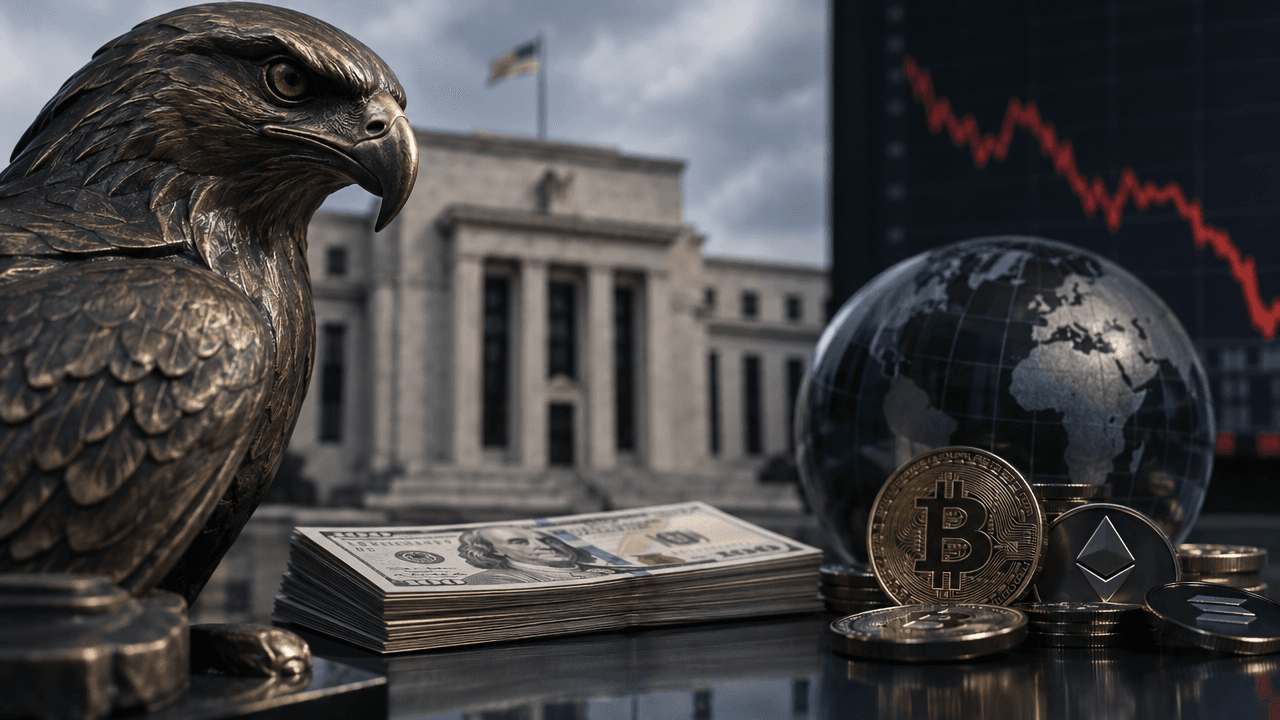
For markets, interest-rate expectations can matter as much as the decision itself. The Federal Reserve’s latest meeting minutes have shifted attention toward the possibility of further tightening, reviving concerns that borrowing costs may remain elevated for longer. That change in expectations has strengthened the U.S. dollar while putting pressure on Bitcoin, other cryptocurrencies, and risk-sensitive currencies.
The Federal Open Market Committee kept its target range unchanged at 3.75% to 4.00% at its October meeting, but the decision was not unanimous. Two voting members preferred a 25-basis-point increase, and the minutes indicated that almost all officials believed additional rate hikes could become appropriate if inflation remained persistent. [2][4]
WHY THE FED’S SIGNAL MATTERS
Financial markets are forward-looking. Traders do not wait for a rate hike to occur before adjusting positions; they reprice assets when the probability of future policy changes increases.
The latest minutes suggested that policymakers remain uncomfortable with inflation running above the Federal Reserve’s 2% objective. Several officials reportedly believed that rates were not yet restrictive enough to cool the economy, while others viewed the decision to hold rates steady as a close call. Some participants also discussed the possibility that a larger increase could be necessary if incoming inflation data deteriorated. [6][7]
That message challenges the market’s previous assumption that the Fed might soon pause or reverse course. Even without an immediate hike, the prospect of higher rates in the months ahead can tighten financial conditions. Bond yields may rise, borrowing becomes more expensive, and investors often reduce exposure to assets that depend heavily on abundant liquidity.
Why Crypto Feels The Pressure
Cryptocurrencies are particularly sensitive to changes in liquidity and risk appetite. Bitcoin and Ether do not generate traditional cash flows or interest payments, so their appeal can weaken when short-term government bonds and other relatively lower-risk assets offer higher yields.
When traders expect the Fed to maintain or increase interest rates, the opportunity cost of holding non-yielding assets rises. Investors may shift capital toward dollar-denominated cash, Treasury securities, or other instruments that benefit from higher rates. This can reduce demand for cryptocurrencies, especially after a period of strong gains or elevated leverage.
The effect can be amplified through derivatives markets. If prices begin to fall, leveraged traders may face margin calls or forced liquidations. Those liquidations can accelerate declines and spread weakness from Bitcoin to Ether, smaller digital assets, and publicly traded companies with significant crypto exposure. Bitcoin was reported to be trading below $60,000 after the latest market reaction, extending a prolonged period of weakness. [3]
This does not mean that a hawkish Fed automatically creates a long-term bear market. Crypto markets also respond to adoption, regulation, exchange-traded fund flows, institutional positioning, and technological developments. However, tighter monetary policy can create a less favorable backdrop in which positive news must compete with a stronger macroeconomic headwind.
The Dollar And Currency Markets
Higher U.S. rate expectations generally support the dollar because they can increase the return available on dollar-denominated assets. If investors believe U.S. interest rates will remain above those in other major economies, demand for dollars may rise as global capital moves toward American bonds, money-market instruments, and cash.
A stronger dollar can create additional pressure on other currencies. Emerging-market currencies are often vulnerable because a rising dollar increases the local-currency cost of servicing dollar-denominated debt and can encourage capital outflows. Importers may also face higher costs for commodities and goods priced in dollars.
Major currencies such as the euro, pound, and yen can also weaken against the dollar when their central banks are expected to maintain lower rates or ease policy sooner than the Fed. Currency traders therefore focus not only on the absolute level of U.S. rates, but also on the interest-rate gap between the United States and other economies.
For crypto traders, this relationship is important. Bitcoin is commonly priced in dollars, so a stronger dollar can create a headwind even when demand in other regions remains steady. Dollar strength can also signal broader defensive positioning across global markets.
What Traders Should Watch Next
The minutes are important, but they are not a guarantee of a rate increase. The Fed’s next decision will depend on incoming evidence, including inflation, employment, consumer spending, and financial conditions.
Traders should monitor whether inflation continues to surprise on the upside. Persistent price growth would support the case for additional tightening, while clear signs of economic cooling could reduce the pressure on policymakers to raise rates.
Market-based expectations are also essential. Futures pricing, Treasury yields, and the shape of the yield curve can reveal how investors are interpreting new economic data. A rise in the dollar alongside higher short-term Treasury yields would suggest that markets are assigning greater probability to a restrictive Fed. Conversely, falling yields and a softer dollar could indicate that traders are beginning to price weaker growth or a future policy reversal.
Position sizing and leverage deserve equal attention. In volatile conditions, even a correct market view can produce large losses if a position is too big or stops are placed too close to normal price fluctuations. Simulated trading provides a useful environment for testing strategies, comparing risk-management approaches, and observing how crypto and currency markets react to macroeconomic announcements without putting capital at risk.
The Bigger Picture
The central question is whether the Fed will need to tighten further to contain inflation or whether economic weakness will eventually make additional hikes unnecessary. Until that question becomes clearer, markets may remain sensitive to every inflation release, employment report, and public comment from Federal Reserve officials.
For crypto and currency traders, the practical lesson is straightforward: do not analyze digital assets in isolation. Interest rates, bond yields, and the dollar can shape the broader risk environment in which crypto prices move. A disciplined trader watches the macroeconomic backdrop, limits leverage, and prepares for volatility before it arrives.
Fed tightening expectations are pressuring crypto and currencies because they point to tighter liquidity, higher returns on dollar assets, and a more defensive investment climate. Whether that pressure develops into a sustained trend will depend on the data—but for now, the Federal Reserve remains one of the most important drivers of market direction.