
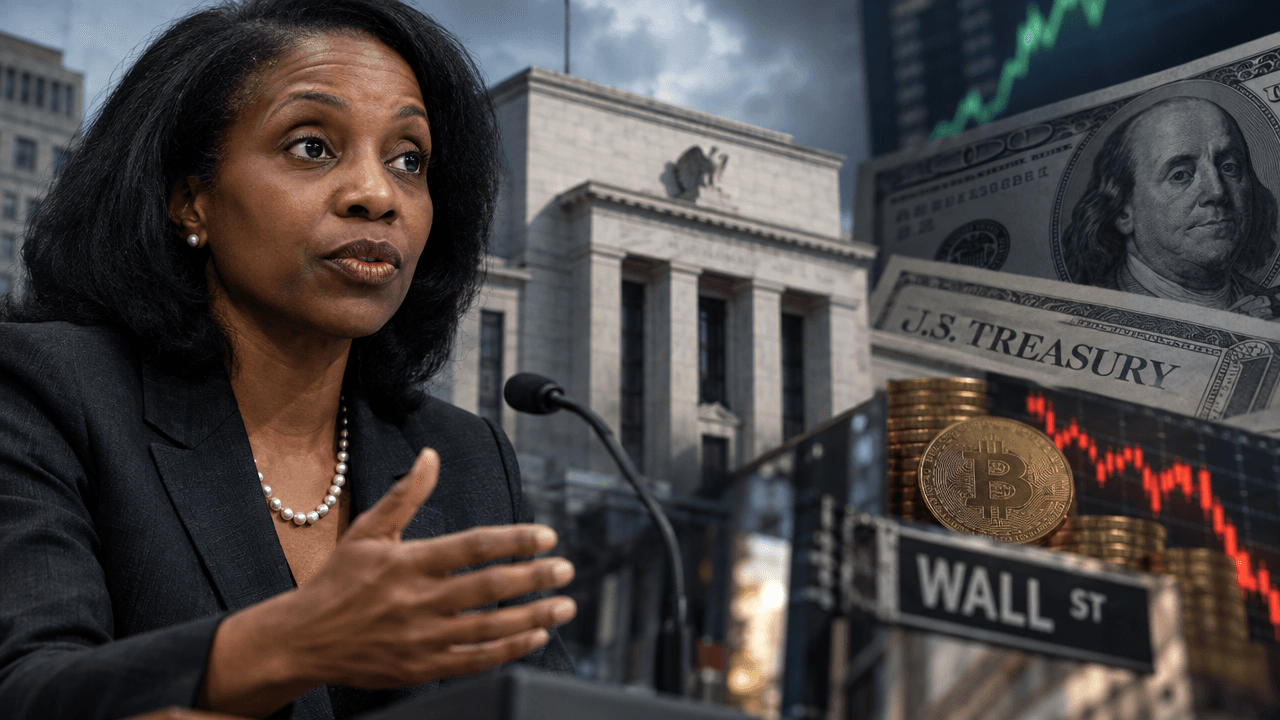
Federal Reserve Vice Chair Philip Jefferson has delivered a clear message to financial markets: inflation, not economic growth or employment, will be the decisive factor in determining the next move in interest rates. With activity and labor conditions still broadly solid, policymakers may have more room to tighten monetary policy if price pressures remain stubborn. [1]
For traders, the significance extends beyond the possibility of another rate increase. Jefferson’s comments can influence expectations across currencies, government bonds, equities, cryptocurrencies, and futures. In a market driven heavily by central-bank guidance, even a carefully worded speech can change the direction of major asset classes.
THE FED’S PRIORITY HAS SHIFTED TOWARD INFLATION
Jefferson said recent data showed economic activity and labor-market conditions remained broadly solid, while inflation readings continued to show persistent price pressures. As a result, he described the trajectory of inflation as the more important signal for setting monetary policy. [1]
That distinction matters. When growth is weakening sharply or unemployment is rising quickly, a central bank may hesitate to raise rates even when inflation is above target. But if the economy remains resilient, policymakers can focus more directly on restoring price stability.
The Federal Reserve’s inflation target is 2 percent. Recent figures cited in Jefferson’s remarks remained notably above that level, with September headline personal consumption expenditures inflation at 3.65 percent and core PCE inflation at 3.12 percent. [13] These readings suggest that the final stage of bringing inflation down could be difficult, particularly if services, wages, or energy costs remain elevated.
Jefferson did not promise a specific rate hike or provide a timetable. Instead, he emphasized that future adjustments should depend on incoming data, the economic outlook, and the balance of risks. [2] That leaves the Fed officially data-dependent, but the message is still hawkish because persistent inflation is being placed ahead of concerns about slowing growth.
Why The Comments Are Hawkish
A hawkish policy signal generally means interest rates may remain higher for longer or rise further than investors previously expected. Jefferson’s remarks fit that description because they reduce the likelihood that the Fed will quickly shift toward rate cuts while inflation remains above target.
The Federal Open Market Committee raised its target range by one-quarter percentage point in September to 3.75 percent to 4 percent, according to Jefferson’s earlier remarks. [5] If subsequent inflation data remain elevated, additional increases could become part of the policy discussion.
Higher interest rates are designed to slow demand. Borrowing becomes more expensive for households and businesses, while saving becomes relatively more attractive. Over time, weaker demand can reduce pricing power and help bring inflation closer to the central bank’s target.
However, monetary policy works with a delay. The Fed must therefore balance the risk of doing too little against the risk of overtightening. Additional hikes could eventually weaken hiring, investment, housing, and consumer spending. Jefferson’s emphasis on incoming data indicates that policymakers are trying to avoid committing to a predetermined path.
Market Impact: Dollar And Treasury Yields
The immediate market logic is straightforward. Expectations of higher U.S. interest rates can support the dollar because investors may receive greater returns from dollar-denominated assets. A stronger dollar can also affect global markets by making commodities and foreign-currency debt more expensive for international participants.
Treasury yields may rise when traders anticipate additional rate increases or a longer period of restrictive policy. Short-term yields are particularly sensitive to expectations for the federal funds rate, while longer-term yields also reflect inflation forecasts, economic growth, and the supply of government debt.
For SimFi traders, the key lesson is that the headline itself is only the first signal. The more important question is whether market pricing changes afterward. A hawkish speech may already be reflected in prices, limiting the reaction. Alternatively, if investors were positioned for rate cuts, Jefferson’s message could trigger a sharper adjustment in yields and the dollar.
Equities, Crypto, And Futures Under Pressure
Higher yields increase the opportunity cost of holding riskier assets. When government bonds offer more attractive returns, investors may demand lower prices for equities, particularly growth stocks whose valuations depend heavily on future earnings.
Technology and other long-duration sectors are often especially sensitive because a larger portion of their expected cash flows lies far in the future. Higher discount rates reduce the present value of those cash flows. Financial stocks can react differently, as higher rates may support lending margins but also increase credit and economic risks.
Cryptocurrency markets may also face pressure from a hawkish Federal Reserve. Digital assets are often treated as liquidity-sensitive instruments, meaning they can benefit when financial conditions are easy and struggle when investors reduce exposure to risk. A stronger dollar and higher real yields can further weaken demand for speculative assets.
Index futures provide an important real-time gauge of this adjustment. Traders should watch equity futures, Treasury futures, dollar indexes, and volatility measures together rather than relying on one market alone. A falling equity future alongside rising yields and a stronger dollar would generally confirm a tightening-driven risk-off response.
Practical Takeaways For Traders
First, monitor inflation data rather than focusing only on the next Fed meeting. Jefferson’s comments place particular importance on the direction and persistence of price pressures.
Second, distinguish between a possible rate hike and a change in expectations. Markets move when policy expectations change, not simply because a central-bank official repeats a known possibility.
Third, manage event risk. Speeches, inflation releases, employment reports, and policy meetings can produce rapid price swings. Traders using leverage should reduce position sizes or define stop-loss levels before volatility increases.
Fourth, consider cross-market confirmation. A hawkish interpretation is stronger when Treasury yields and the dollar rise while equity indexes, crypto assets, and rate-sensitive futures decline.
Finally, avoid assuming that every higher-rate signal produces a lasting selloff. If inflation later moderates without a major deterioration in growth or employment, markets could reverse as investors price a pause.
Conclusion
Philip Jefferson’s message reinforces an important market theme: the Federal Reserve is not finished responding to inflation simply because economic conditions remain stable. Persistent price pressures could justify further rate increases, while solid growth and labor conditions give policymakers flexibility to act.
For traders, the most useful approach is to follow the data, compare market reactions across asset classes, and remain disciplined around major announcements. In the current environment, inflation is not just an economic statistic. It is the central variable shaping the path of interest rates—and, through them, the valuation of nearly every major financial market.