
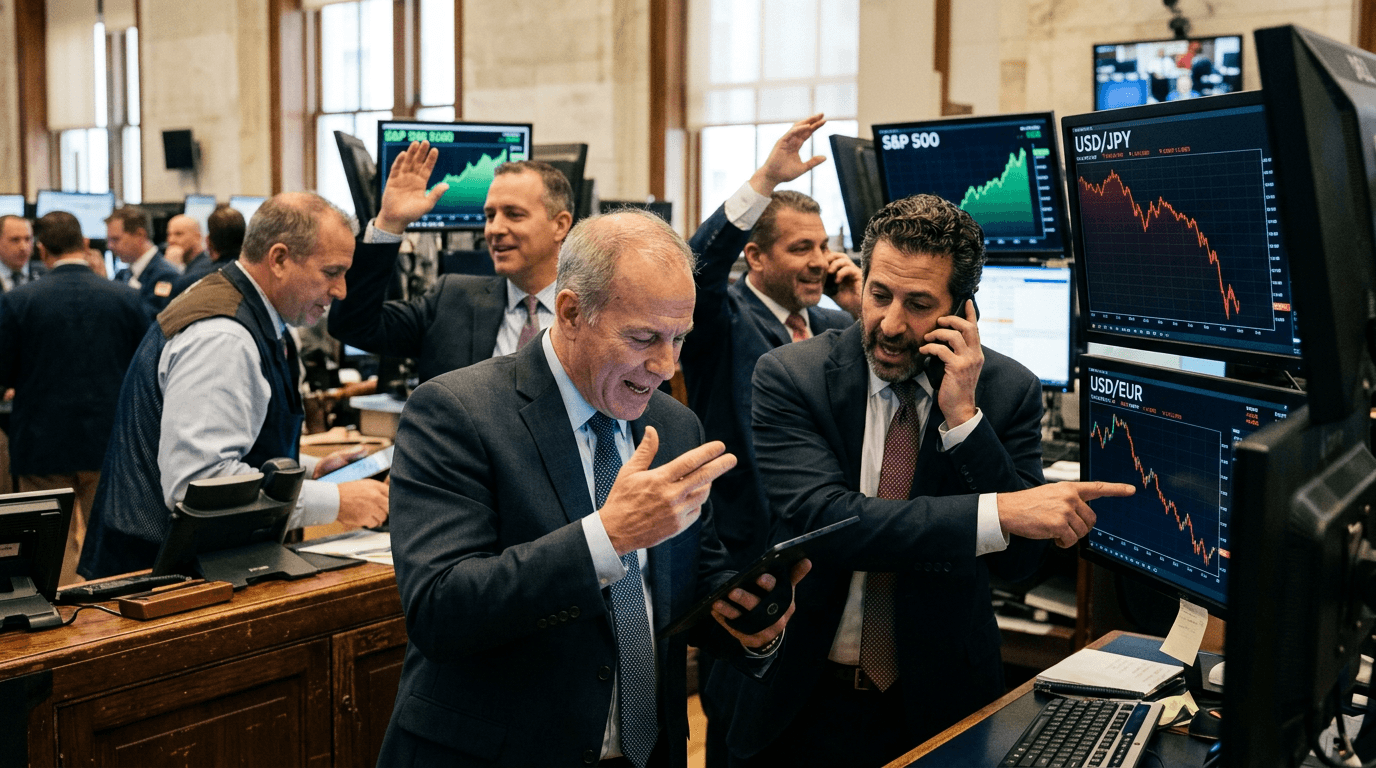
Markets got a fresh jolt of optimism after Federal Reserve Governor Christopher Waller signaled he is inclined to support holding rates steady at the next FOMC meeting, provided inflation continues to cool.[2][4][10] His conditional support for a pause pushed US Treasury yields lower, weakened the US dollar, and lifted risk assets from major FX pairs to equities and commodities.[2][11][12] For traders, this is a textbook example of how central bank communication can rapidly shift cross‑asset pricing.[2][11]
Markets React To Waller's Dovish Tilt
Waller’s latest comments emphasize that if incoming data over the next couple of weeks show further progress toward the Fed’s 2% inflation target, he would be inclined to back leaving the federal funds rate unchanged in September.[2][5][10] While not a firm promise, this “data‑dependent dovish tilt” was enough to move market expectations away from another near‑term hike.[11][12] Pricing for a September hike dropped closer to a 50/50 call from roughly a 60/40 bias toward tightening, signaling a meaningful shift in the market’s base case.[11][12]
The US Dollar Index (DXY) extended a three‑day losing streak and traded around the 99.00 area during Asian hours, reflecting broad pressure on the greenback as investors reassessed the Fed path.[12] Major counterparts seized the opportunity: EURUSD pushed above 1.1600, GBPUSD climbed above 1.3500, and commodity‑linked currencies such as AUD and NZD enjoyed tailwinds from the softer dollar backdrop.[2][12] Lower US yields and a weaker dollar also underpinned a rally across risk assets, from global equities to higher‑beta FX and credit.[2][11][12]
Why A Possible Fed Pause Matters
The Fed’s policy rate sets the tone for global financing conditions, and even a hint that the hiking cycle may pause can meaningfully alter investor behavior.[2][8] When a voting governor signals comfort with holding rates steady, markets infer a lower probability of aggressive tightening ahead, which naturally drags yields down and supports duration and growth‑sensitive assets.[2][11][12] In parallel, currencies tied to economies seen as earlier in their hiking or easing cycles can outperform as rate differentials move against the dollar.[2][11]
Waller’s stance is particularly important because it reinforces the narrative that the Fed is close to the peak of its tightening campaign, but still firmly data‑dependent.[2][4][10] His message: disinflation progress justifies patience, yet a surprise re‑acceleration in prices could still bring another hike back onto the table.[2][11][12] That tension between potential pause and residual tightening risk is precisely what keeps volatility alive across FX, rates futures, and equity indices, as traders constantly update scenarios with each data release.[2][11]
Impact Across Fx, Rates, And Equities
In FX, the dominant transmission channel is interest rate differentials: as US rate expectations ease, currencies offering relatively higher yield or more cyclical exposure become more attractive.[2][11] The move above 1.1600 in EURUSD and 1.3500 in GBPUSD reflects markets pricing fewer US hikes versus still‑restrictive stances from the European Central Bank and Bank of England.[2][12] Meanwhile, AUD and NZD benefit from improved risk sentiment and the perception that a gentler Fed reduces downside risks for global growth and commodities demand.[2][12]
In rates, Waller’s remarks contributed to a pullback in global bond yields as traders rotated into duration and scaled back expectations for near‑term Fed tightening.[2][11][12] US futures markets re‑priced the policy path, tempering the odds of another hike and nudging implied peak‑rate levels lower.[11][12] Equities responded in familiar fashion: growth and tech sectors, which are more sensitive to discount‑rate assumptions, tended to outperform as lower yield expectations support higher valuation multiples.[2][11] Credit and high‑beta assets also caught a bid as perceived policy risk eased.[2][12]
How Traders Can Position In A Pause Narrative
For both live and simulated traders, the latest Waller‑driven repricing offers several practical lessons. First, central bank communication can be as market‑moving as the actual decision; speeches and interviews often shift forward guidance before any rate change is announced.[2][4][10] Building a calendar of key Fed speakers and events—and stress‑testing positions around those dates—helps avoid being caught off‑side by sudden narrative shifts.[2][11]
Second, translating a “conditional pause” into trades means focusing on probability, not certainty. Waller explicitly tied his support for holding rates to incoming inflation data, leaving room for a hawkish swing if numbers surprise on the upside.[2][11][12] In practice, that argues for tactical positioning: favor themes that benefit from a softer dollar and lower yields, but use hedges or tight risk limits in case data resurrects hike pricing. Examples include monitoring EURUSD and GBPUSD around key US CPI prints, or using rates futures to express views on the timing of the peak rate.[2][11][12]
Third, simulated environments like E8 Markets’ SimFi framework allow traders to rehearse how portfolios behave under shifting policy probabilities without real capital at risk. By replaying scenarios where Fed speakers push odds of a hike from 60/40 to 50/50, traders can gauge how their FX, rates, and equity exposures respond, and refine strategies for live conditions. This kind of practice is especially useful in understanding cross‑asset linkages—how a move in DXY around 99 or a drop in hike odds cascades through correlations and volatility.[11][12]
What To Watch Next
The key hinge now is incoming US inflation data and broader macro releases that could either validate or challenge Waller’s inclination toward a September pause.[2][11][12] Cooler‑than‑expected inflation would likely solidify market confidence in a hold, extend dollar weakness, and continue supporting risk assets and higher‑beta FX.[2][11][12] Conversely, a hot print could quickly reprice odds back in favor of another hike, pushing yields and the dollar higher while pressuring risk sentiment.[11][12]
Traders should also track commentary from other Fed officials to see whether Waller’s conditional dovishness becomes a broader committee consensus or remains a more isolated view.[2][8][15] If multiple governors echo comfort with holding rates steady, markets may start to price not just a pause, but an earlier eventual pivot toward cuts later in the cycle.[2][15] Until then, the Waller‑driven move is best seen as a live case study in how nuanced central bank guidance can reshape FX, rates, and equity pricing in a matter of sessions—and why staying attuned to policy language is as important as tracking the data itself.[2][11][12]