
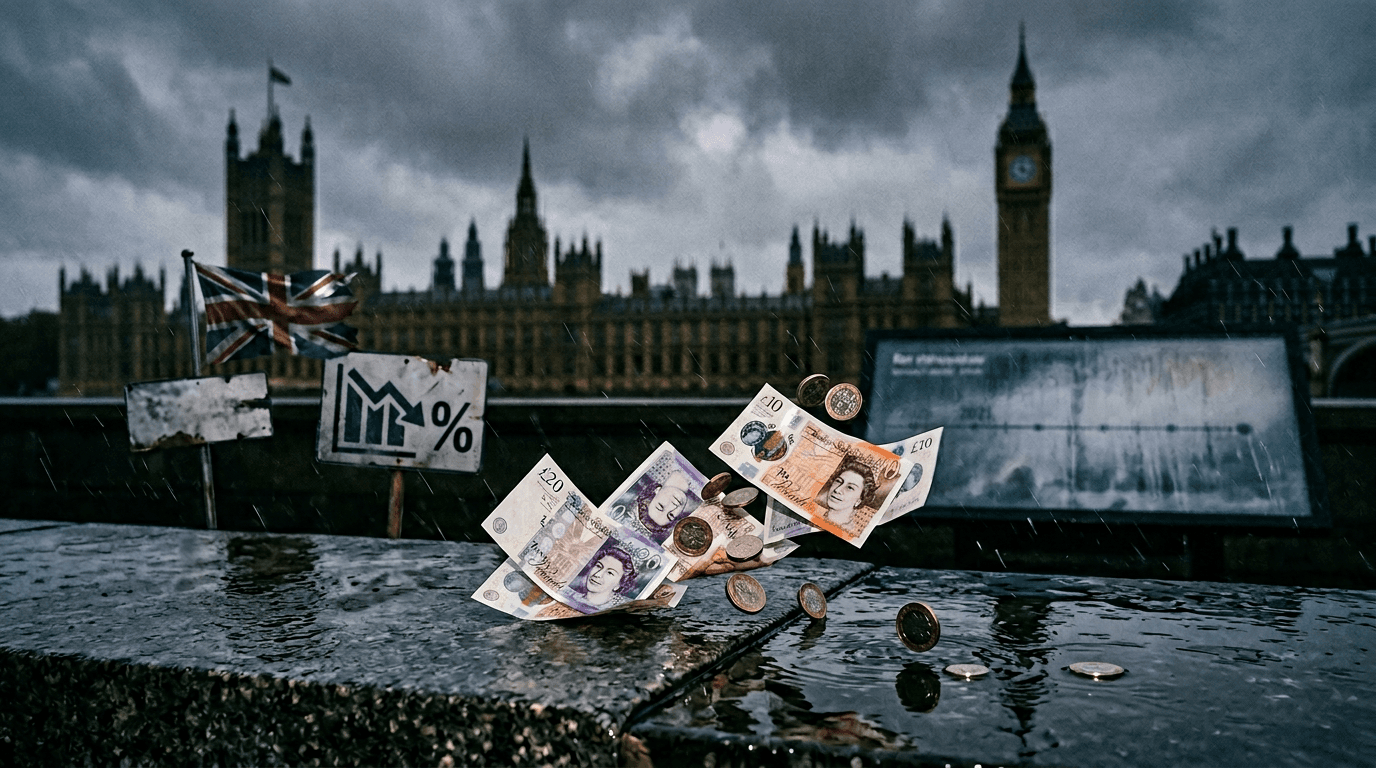
The British pound is under siege. As 2026 unfolds, sterling faces a perfect storm of political instability, monetary policy uncertainty, and slowing economic growth that shows no signs of abating. The GBP/USD pair, once poised to test higher levels, is struggling to sustain gains above the 1.37 range, a troubling sign for traders and policymakers alike. Understanding the forces at play is critical for anyone monitoring currency markets or managing UK-denominated assets.
The Political Quagmire
Political uncertainty in the United Kingdom has emerged as a primary headwind for sterling, and the outlook for 2026 appears particularly fraught. Prime Minister Keir Starmer already weathered two separate political revolts in 2025, but the real test lies ahead with May's local elections. These elections could prove to be a watershed moment for Labour's government, with a disappointing result potentially triggering a formal leadership challenge. Such an outcome would reverse the brief stabilization that followed Chancellor Rachel Reeves's bond-friendly budget in November.
The stakes matter enormously for the pound. A successful leadership challenge to Starmer would likely install a new chancellor with less commitment to fiscal consolidation, introducing significant uncertainty about the government's economic direction. Markets have learned through bitter experience that political dysfunction carries real economic consequences. The chaotic final years of the Conservative government weighed heavily on sterling, introducing fresh risk premiums into gilt markets and pressuring the pound against its major counterparts. Any repeat of this scenario in 2026 would be devastating for currency strength.
Beyond internal Labour Party politics, the broader fragmentation of the UK political landscape adds another layer of complexity. Nigel Farage's populist party has raised significantly more donations than Labour in recent quarters, signaling a potential shift in the political calculus. These dynamics create exactly the kind of uncertainty that currency markets punish relentlessly.
The Bank Of England's Impossible Task
At the heart of sterling's weakness lies a fundamental policy dilemma facing the Bank of England. Inflation has moderated considerably, declining to 3% year-over-year in January from 3.4% in December. This softening has prompted markets to price in potential rate cuts as early as March 2026, with expectations for multiple cuts throughout the year. For currency traders, lower rates are problematic. The interest rate differential between the UK and other major economies becomes less attractive, reducing the yield appeal of sterling-denominated assets.
Yet this is only part of the story. The BoE must navigate between competing risks. While inflation has cooled, geopolitical tensions and supply chain disruptions from Middle East conflict threaten to reignite price pressures. The central bank faces mounting pressure to clarify its policy framework and future intentions. Markets dislike ambiguity, and the current uncertainty about the BoE's trajectory creates continuous headwinds for the pound until clearer forward guidance emerges.
Economic Headwinds Intensifying
The UK economy presents a grim picture for sterling bulls. Reuters has downgraded its forecast for UK GDP growth in 2026 from 1.4% to 1.1%, a substantial revision that reflects deteriorating economic conditions. This stagflationary scenario undermines the fundamental case for holding sterling assets. Many economists expect the labour market to slow further while growth remains sluggish throughout the year.
The geopolitical backdrop amplifies these concerns. The UK is a net importer of oil and natural gas, making it particularly vulnerable to energy price spikes triggered by Middle East tensions. Another energy crisis hitting Europe would disproportionately impact British consumers and businesses, further pressuring growth prospects and the pound itself. Investors, understandably, are responding by reducing exposure to sterling.
Competing Scenarios For Sterling
Market observers have identified three potential scenarios for GBP in the months ahead. The bullish case would require persistent inflation forcing the BoE to maintain a hawkish stance while the government delivers growth-friendly, fiscally responsible policies. This scenario appears increasingly unlikely given current trajectories. The bearish scenario envisions earlier-than-expected rate cuts due to economic slowdown, combined with political turmoil and unfunded fiscal expansion. Given recent developments, this outcome carries elevated probability. The final range-bound scenario would see the BoE moving in sync with other major central banks while UK politics enter a period of stalemate, producing low volatility.
Implications For Traders And Investors
For portfolio managers and currency traders, the key takeaway is clear: monitor both the Bank of England's policy communications and developments in Westminster simultaneously. These two forces are inextricably linked in determining sterling's trajectory. Any movement in gilt yields following political shocks or monetary policy shifts will continue to reverberate through currency markets. Positions in GBP should account for elevated political risk premiums that are unlikely to compress meaningfully before the May local elections.
The pound's challenges are structural rather than cyclical, making near-term recovery unlikely without a material shift in either the political or economic backdrop. Until clarity emerges on both fronts, sterling will remain vulnerable to further downside pressure.