
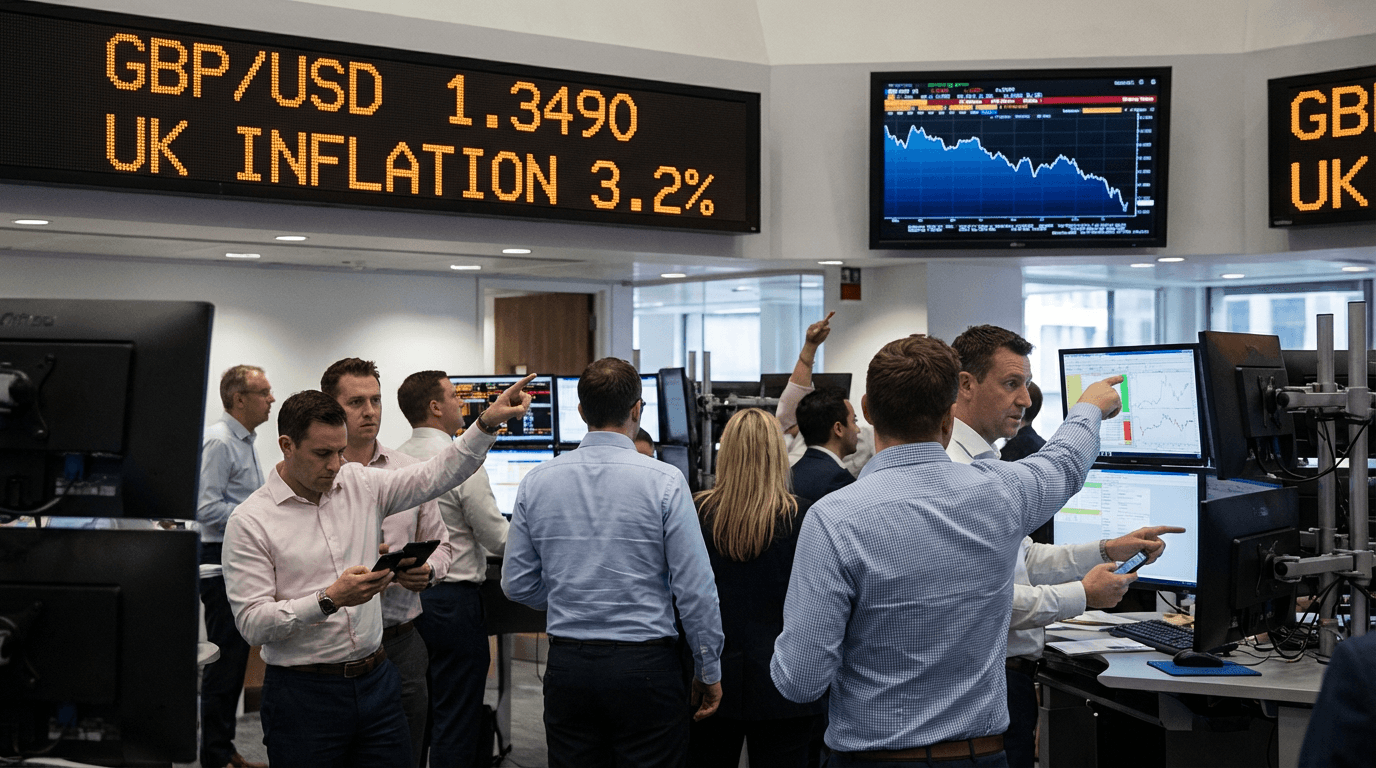
The British pound has come under notable pressure against the US dollar in recent trading sessions as fresh inflation data from the UK continues to reshape expectations around monetary policy. On February 24, 2026, the GBP/USD exchange rate traded in the vicinity of 1.349, down from highs of 1.3628 just days earlier, reflecting growing concerns about the Bank of England's policy trajectory and the broader implications for sterling's value in forex markets. The weakness follows the release of inflation data showing UK consumer prices rising at an annual rate of 3.2%, a figure that has triggered fresh debate about interest rate decisions and sparked increased volatility across currency pairs involving the pound.
The currency market's reaction to the inflation reading underscores a fundamental principle that guides forex trading: central bank policy expectations drive currency valuations over the medium to long term. When inflation exceeds expectations or remains sticky at elevated levels, traders reassess the likelihood and timing of interest rate changes, which directly impacts the attractiveness of a currency relative to its peers. In this case, the 3.2% inflation reading has created complexity for Bank of England policymakers and uncertainty for market participants, as traders grapple with questions about how aggressively monetary authorities will respond to price pressures.
What's Driving The Pound's Weakness
The decline in GBP/USD reflects a confluence of factors affecting British pound valuations. Inflation at 3.2% remains above the Bank of England's 2% target, signaling that price pressures have not dissipated as quickly as policymakers may have hoped. This persistent inflation creates a dilemma for central banks: raise rates to combat inflation, which can slow economic growth, or maintain accommodative policy to support growth while allowing inflation to linger. The uncertainty surrounding this choice generates volatility in currency markets, as traders position for different scenarios.
Against the backdrop of global monetary policy considerations, the pound faces additional headwinds. The US dollar has maintained relative strength in many currency pairs, supported by expectations around Federal Reserve policy and the broader attractiveness of US assets. When the dollar strengthens across the board, it naturally pressures sterling and other currencies. The February average exchange rate of approximately 1.3604 USD per pound represents a meaningful level in recent trading, providing context for current price action around 1.349.
The Bank Of England's Policy Puzzle
The Bank of England faces a balancing act that mirrors challenges faced by central banks worldwide. The 3.2% inflation rate sits above target, suggesting that policy may need to remain restrictive to bring prices back under control. However, economic growth considerations complicate this calculus. Tightening monetary policy too aggressively could suppress economic activity and employment, while holding rates too low could allow inflation to become further embedded in wage and pricing expectations.
This policy uncertainty translates directly into currency volatility. Traders position ahead of upcoming communications from the Bank of England, including interest rate decisions and policy guidance. Each statement or data release becomes an event that can shift market expectations and drive sharp movements in GBP/USD. The lack of clear policy direction creates an environment where volatility persists, offering both opportunities and risks for participants trading pound-dollar pairs.
Implications For Forex Traders
The current trading environment in GBP/USD offers important lessons for participants in simulated finance platforms and real forex markets alike. First, inflationary data releases represent key catalysts that can shift currency valuations substantially. Traders monitoring UK economic indicators should pay particular attention to inflation readings, employment reports, and retail sales data, as these reports inform expectations about Bank of England decisions.
Second, the interplay between the pound and dollar reflects the broader principle that currency strength correlates with relative central bank policy paths. As long as the Federal Reserve maintains higher interest rates or signals continued restrictive bias compared to the Bank of England, the dollar may retain relative strength. This relative policy dynamic will shape GBP/USD trading direction over coming weeks and months.
Third, volatility itself presents trading opportunities. The recent fluctuation between highs near 1.3628 and lows near 1.344 creates trading ranges that technical traders can exploit. Mean-reversion strategies, breakout trading, and options strategies all become viable when volatility spikes following data releases.
Key Levels And Forward Outlook
Looking ahead, traders should monitor several critical levels in GBP/USD. The 1.35 level has emerged as psychologically significant in recent trading. Above this level, the pair may test resistances toward 1.365 and higher. Below 1.35, support emerges in the 1.340-1.345 region. These levels coincide with recent trading ranges and provide useful anchors for developing trading strategies.
As the UK inflation picture evolves and the Bank of England communicates its policy intentions, further volatility is likely. Traders on simulated finance platforms can use this environment to practice risk management, position sizing, and trading discipline while monitoring how macroeconomic developments influence currency markets. The GBP/USD pair serves as an excellent learning tool for understanding how central bank policy expectations translate into real-world currency movements and trading opportunities.