
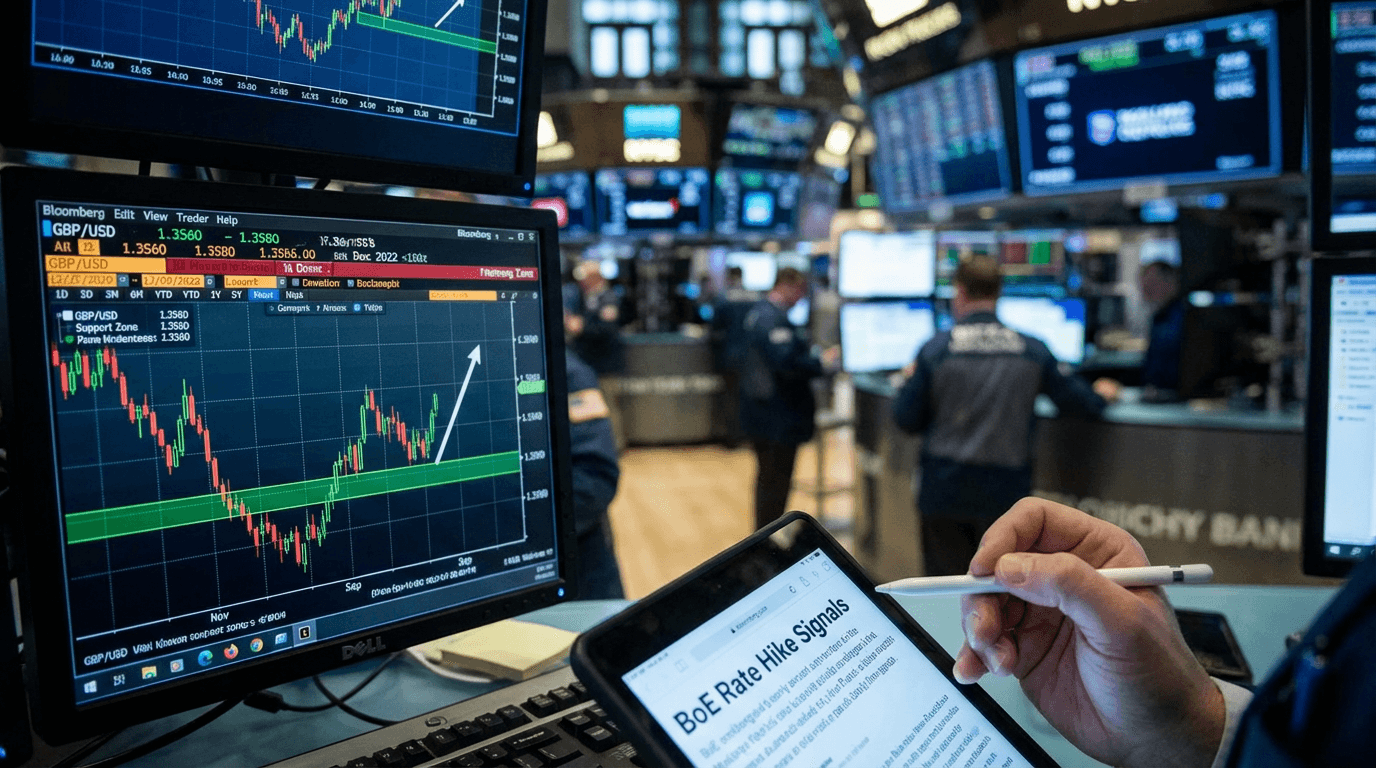
The GBP/USD pair continues to showcase the classic tension between technical resistance and fundamental drivers, with traders watching closely as rejection patterns emerge near the 1.3560–1.3580 zone on February 26, 2026. This level has become a critical flashpoint where sellers are testing the pound's resolve, yet the currency is showing resilience that suggests buyers remain committed to defending recent gains. Understanding the mechanics behind this sell rejection and the catalysts supporting sterling's strength is essential for traders navigating the current market environment.
THE SETUP: WHY 1.3560–1.3580 MATTERS
The resistance zone between 1.3560 and 1.3580 represents more than just a technical level—it is a convergence of multiple analytical frameworks that have caught the attention of institutional traders.[2] This area aligns with the 61.8% Fibonacci retracement from January's significant move, making it a natural attraction for profit-taking and systematic selling algorithms.[3] Earlier in February, GBP/USD retreated from its January peak near 1.3824, and this pullback has created an orderly correction structure.[2] The 1.3560–1.3580 band sits just above the current moving average resistance at 1.3617, which serves as another confluence point drawing selling interest.[2] When multiple technical frameworks overlap, rejection patterns become more meaningful because they indicate that buyers are willing to absorb selling pressure at those exact levels, a sign of underlying strength.
What Sell Rejection Signals
A sell rejection near this zone means that despite aggressive selling pressure, buyers stepped in to absorb the supply before the price could break decisively lower. The market has tested the level, found resistance, and pulled back—a pattern that repeats when the technical barrier aligns with a particular price expectation held by a large participant base.[2] This is not a random bounce; it reflects a deliberate re-evaluation of risk and reward. When we see GBP/USD trading near 1.3530–1.3540 with RSI momentum showing neutral readings around 45–55, the rejection pattern gains credibility because it occurs without panic selling conditions.[2][4] The pair has multiple times this week formed a "higher low" sequence just above 1.3530–1.3531 support, demonstrating that downside pressure is being met with consistent buying interest.[4]
The Boe Factor: Independent Policy Support
Fundamental drivers are now amplifying the technical rejection pattern. Bank of England officials, including Megan Greene, have signaled that UK monetary policy will remain independent from Federal Reserve considerations, reassuring markets that rate-cut expectations will reflect UK economic conditions rather than Fed pressure.[2] This commentary has provided psychological support to sterling, particularly when paired with the reality that UK inflation at 3.0% is falling, creating a case for earlier BoE cuts relative to the Fed's "hold and evaluate" stance at 2.4% CPI.[2] The March 19 BoE decision is shaping up as a high-impact catalyst that will either validate these expectations or force a repricing of rate differentials.[2] Traders positioning ahead of this decision may be more inclined to defend support levels, which explains why sell-offs near 1.3560–1.3580 are being quickly rejected rather than accelerating lower.
Technical Targets And Risk Scenarios
For traders interpreting this sell rejection, the path forward hinges on whether GBP/USD can clear the moving-average resistance zone. If the pair consolidates above the MA50 near 1.3541 on a daily close, momentum could shift from "sell rallies" to "buy pullbacks," setting up a potential advance toward 1.3650 and above.[2][5] This move would open a risk-to-reward setup with upside targets near 1.3850, delivering approximately 200 pips of potential profit with only 40 pips of risk.[5] Conversely, if selling pressure re-establishes control below the 1.3480–1.3500 support band, the January low near 1.3381 becomes the next major test, where longer-term defensive buying is more likely to emerge.[2]
Trading The Rejection: Practical Takeaways
The sell rejection near 1.3560–1.3580 offers traders a structured approach to GBP/USD positioning. A valid long setup requires confirmation that sellers cannot break the 1.3480–1.3500 support zone, coupled with evidence of daily closes above the MA50 at 1.3541.[2] This dual confirmation reduces false signals and aligns entry timing with trend-reversal mechanics rather than guesswork. Risk management should account for the possibility that the BoE signals a more dovish stance than markets currently expect, which could extend the pullback. Conversely, if inflation data or BoE rhetoric remains firmer than anticipated, the rejection pattern could accelerate upward faster than technical targets suggest. Position sizing and stop placement around 1.3480 provide a clear risk boundary for traders initiating long positions near 1.3560.
The broader context—February's orderly retracement, Fibonacci alignment, moving-average convergence, and BoE policy backdrop—suggests that the sell rejection near 1.3560–1.3580 reflects genuine conviction among longer-term holders rather than a temporary bounce. Traders who recognize this division gain an advantage by approaching pullbacks as buying opportunities within a larger uptrend, provided support levels hold and the fundamental picture remains supportive.