
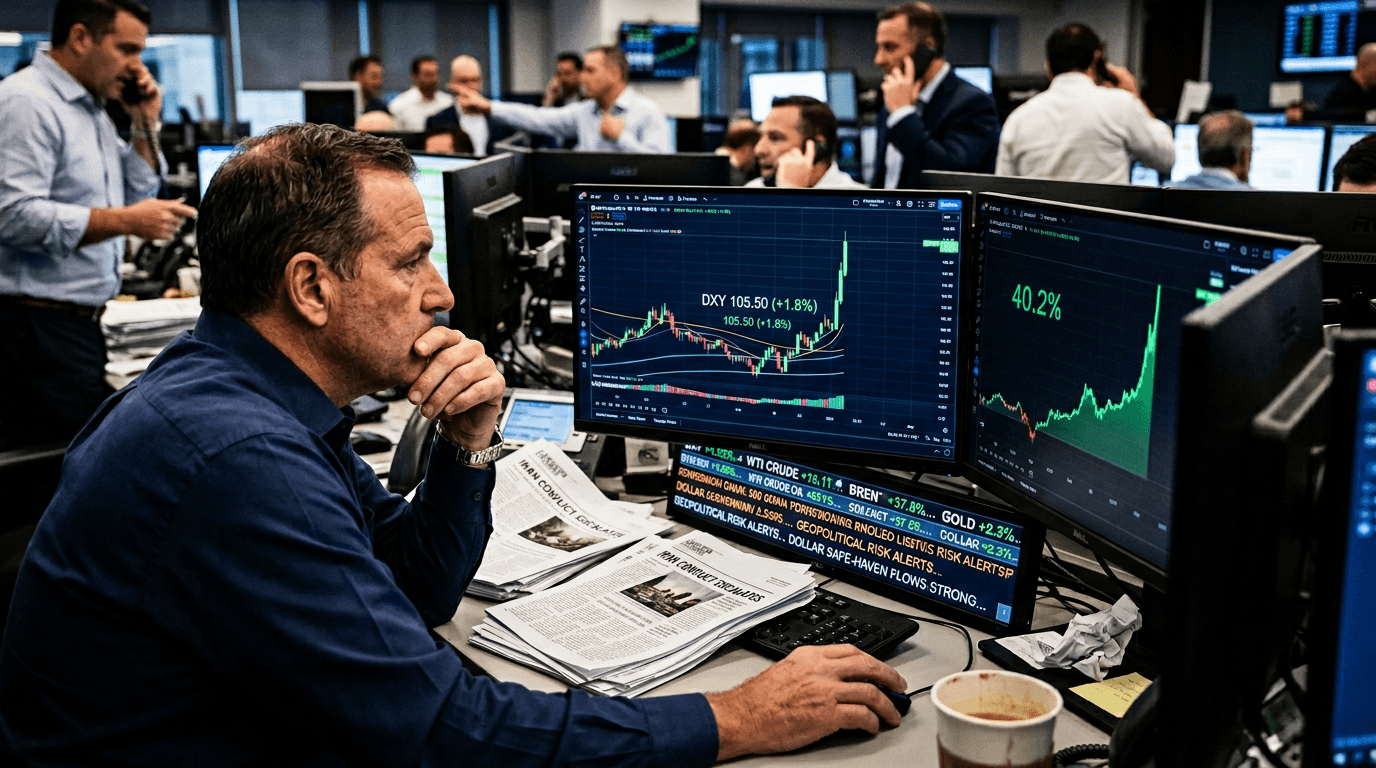
Geopolitical Chaos Propels USD to New Heights Amid Escalating US-Israel-Iran Tensions
A New Reality for Global Financial Markets
In March 2026, geopolitical tensions involving the United States, Israel, and Iran have reached a critical juncture, dramatically reshaping global financial landscapes and investor sentiment. Kicking off with unexpected coordinated airstrikes on February 28, the military campaign has surged over the past three weeks, prompting a massive flight to safety. This movement has fortified the US dollar against major currencies as volatility spikes across commodities, equities, and fixed income markets. For traders and investors keeping an eye on macro trends, comprehending the mechanics behind this conflict-driven asset reallocation is crucial for maneuvering through current market conditions and strategically positioning portfolios.
Escalation Timeline and Military Operations
On February 27, President Donald Trump greenlit Operation Epic Fury, while Israeli forces launched Operation Roaring Lion. The initial strikes on February 28 targeted numerous sites across Iran, marking the largest Israeli combat sortie in its history, with around 200 fighter jets hitting over 500 military targets in western and central Iran. These strikes coincided with active nuclear negotiations, catching markets off guard and escalating uncertainty.
Since then, the conflict has intensified significantly. By mid-March, Israeli forces expanded operations to Iran's northern theater, attacking naval assets in the Caspian Sea and executing hundreds more airstrikes. On March 18, Israel targeted the South Pars natural gas field in the Persian Gulf, a pivotal strategic energy infrastructure. Iran retaliated with missile and drone attacks against Israel and US military bases across the Middle East, including in Bahrain, Jordan, Kuwait, Qatar, Saudi Arabia, Turkey, and the United Arab Emirates. By March 19, Iran had launched its eighth significant missile barrage against Israel in a single day, deploying cluster munitions and marking unprecedented escalation intensity.
Safe-Haven Currency Flows and USD Strength
The escalating conflict has triggered classic safe-haven flows into US dollar assets, a predictable yet significant market response to heightened geopolitical uncertainty. When faced with elevated tail risks from regional conflict, investors systematically shift capital towards the most liquid and secure reserve currency— the US dollar. This reallocation has manifested in three primary channels: USD appreciation across major currency pairs, increased demand for US Treasury bonds despite current yield curves, and capital flight from emerging market currencies vulnerable to spillover effects.
The dollar's safe-haven bid reflects multiple reinforcing factors. Firstly, the United States, despite its military involvement, represents the strongest institutional framework with the lowest political risk in international capital allocation. Secondly, US dollar-denominated assets maintain unmatched depth and liquidity, enabling large institutional investors to execute defensive repositioning without significant market impact costs. Thirdly, the conflict's geographic concentration in the Middle East naturally boosts demand for geographically insulated assets like USD and US Treasuries, which are more attractive compared to the Euro or other developed market currencies more proximate to the conflict zone.
Commodity Price Implications and Oil Market Disruption
Oil prices have become the most volatile and economically significant indicator of conflict escalation. Since the initial February 28 strikes, crude oil prices have surged over 40%, reflecting justified concerns about supply disruptions from key Middle Eastern production facilities. The targeting of South Pars and surrounding Iranian oil infrastructure, combined with Iran's retaliatory strikes on Qatari LNG facilities and direct threats to Saudi Arabian energy infrastructure, has embedded genuine supply-side risk premiums in commodity prices.
For currency markets, elevated oil prices critically interact with safe-haven USD flows. While typically higher energy prices pressure the dollar as a cost headwind for global commerce, the current geopolitical risk premium dominating energy markets tilts the bias towards dollar strength. Energy-importing economies face deteriorating trade terms that necessitate currency depreciation to maintain competitiveness, while the US, as a net energy producer with strategic petroleum reserves, enjoys relatively favorable conditions. This dynamic reinforces USD strength despite traditionally inflationary implications of higher oil prices.
Trading Implications and Forward Considerations
For active traders and portfolio managers, the current environment presents both tactical opportunities and structural challenges. The sustained intensity of military operations through March 19 suggests safe-haven flows may continue, bolstering USD strength against commodity-linked and emerging market currencies in the near term. However, escalation risks remain substantial. Any direct Iranian strikes on US or Israeli critical infrastructure could sharply reprice risk premiums and accelerate capital rotation dynamics.
Oil market volatility, currently elevated, may offer hedging opportunities for traders positioned defensively in energy infrastructure plays while maintaining long USD exposure. The current conflict underscores the asymmetric risk profile favoring reserve currency strength during acute geopolitical shocks, a lesson with centuries of historical precedent that market participants appear to be pricing appropriately across major FX pairs and fixed income markets.
News Impact Score: 8