
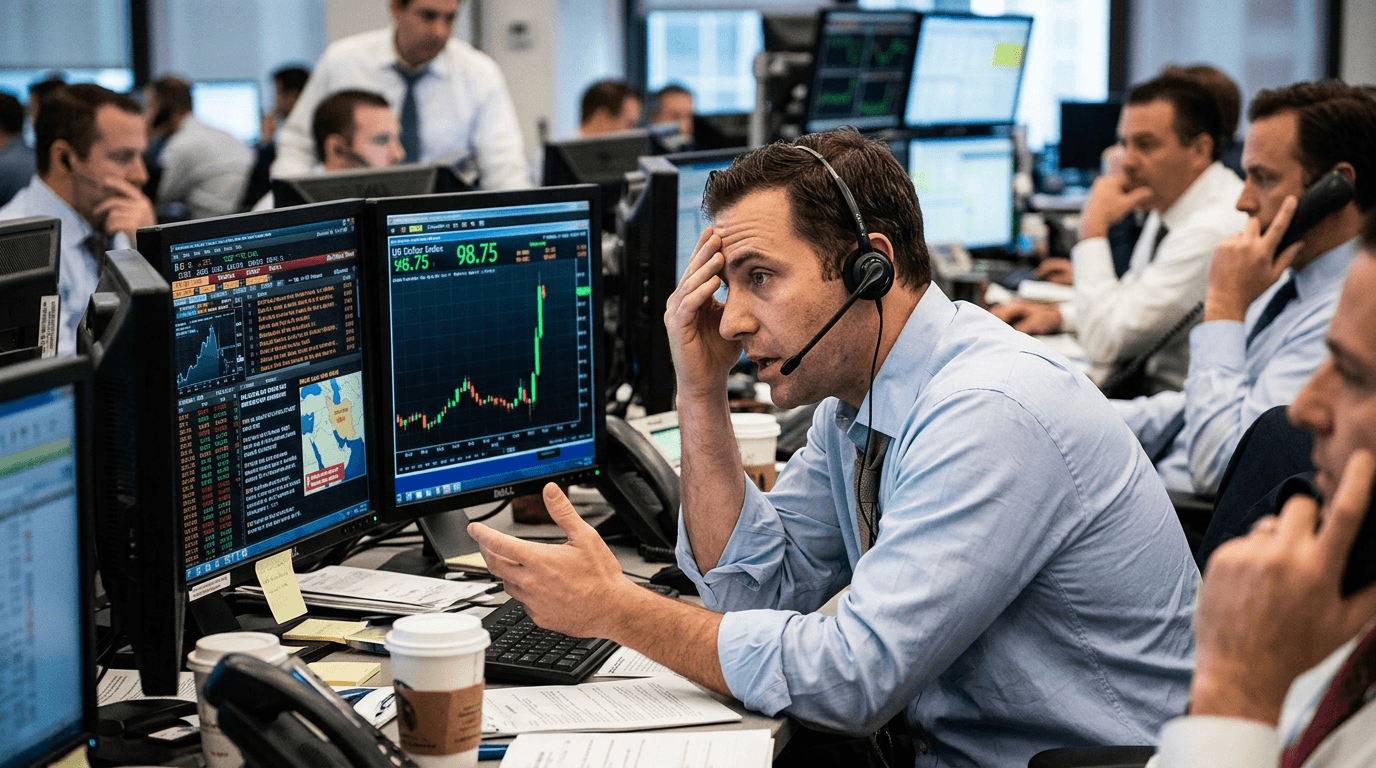
Geopolitical Risk Reignites Safe-Haven Demand: Why the USD Index Surged to 98.75
The US Dollar Index has become a barometer for global risk sentiment, and recent events in the Middle East have sent a clear signal. The DXY surged from 97.60 to 98.75 following coordinated US and Israeli military strikes on Iran beginning February 28, 2026, marking a 115-basis-point rally that underscores how quickly geopolitical uncertainty can reshape currency markets. This spike reflects a fundamental principle in foreign exchange trading: when risk aversion grips global markets, capital flows toward the safest asset available—and the US dollar remains the ultimate haven currency. For traders on SimFi platforms, understanding the mechanics behind this move offers critical insights into how macroeconomic shocks translate into trading opportunities.
Operation Epic Fury And The Escalation Of Middle East Tensions
Operation Epic Fury commenced on February 28, 2026, when the US and Israel launched nearly 900 coordinated strikes against Iranian military infrastructure within a 12-hour window. The campaign targeted missile installations, air defense systems, and Iranian leadership, including Supreme Leader Ali Khamenei. The scale and coordination of these strikes represented a significant escalation in Middle Eastern tensions, triggering an immediate regional crisis. Iran responded swiftly with hundreds of retaliatory missiles and thousands of drones directed at US and Israeli targets, as well as strikes against American military bases across the region including those in Bahrain, Kuwait, Saudi Arabia, and the UAE.
The conflict has created an environment of heightened uncertainty. News of Iranian drones continuing to strike commercial shipping in the Strait of Hormuz, one of the world's most critical shipping lanes, has added economic dimensions to the military conflict. These attacks have effectively paralyzed traffic through the vital waterway despite stern warnings from President Trump. The combination of military escalation, leadership uncertainty in Iran following Khamenei's death, and threats to global energy infrastructure has created precisely the type of geopolitical shock that drives capital toward safe havens.
Why Safe-haven Flows Benefit The Dollar
When geopolitical risk escalates, investors and institutions worldwide follow a predictable pattern: they reduce exposure to risky assets and seek safe-haven currencies. The US dollar benefits from this dynamic for several interconnected reasons. First, the dollar serves as the global reserve currency, facilitating international trade and held in central bank reserves across virtually every nation. Second, the US maintains the world's deepest and most liquid financial markets, offering immediate liquidity for investors seeking to park capital. Third, during periods of uncertainty, the Federal Reserve and US government provide confidence through institutional stability and transparent policy frameworks.
The 115-basis-point rally in the DXY from 97.60 to 98.75 represents capital flowing out of riskier assets and currencies into dollar-denominated securities and cash positions. Emerging market currencies, which typically offer higher yield but carry greater geopolitical risk, faced selling pressure as investors repositioned portfolios. Meanwhile, the yen and Swiss franc, the traditional secondary safe-haven currencies, likely benefited as well, but the dollar's dominance ensured it captured the lion's share of risk-off flows. This is precisely what traders on SimFi platforms should recognize: geopolitical events don't just move headlines—they reshape currency correlations and create directional opportunities for those positioned correctly.
Broader Fx Volatility And Market Implications
The USD spike to 98.75 occurred within the context of broader foreign exchange volatility triggered by the Middle East conflict. Commodity currencies like the Australian dollar and emerging market currencies faced headwinds as traders reassessed their risk exposure. Oil prices, typically supported by supply disruptions in the Middle East, experienced volatility as the market weighed competing factors: supply-side risks from potential Iranian infrastructure damage versus demand-side concerns from reduced global economic activity during conflict periods.
This volatility created cascading effects across financial markets. Bond yields shifted as investors reconsidered their positions relative to safe-haven assets. Equities in sectors tied to global commerce faced selling pressure. Meanwhile, options markets reflected heightened implied volatility, with traders pricing in increased probability of various conflict outcomes. For SimFi traders, this environment exemplifies why understanding geopolitical catalysts remains essential—market moves often precede official announcements or policy responses, creating alpha for those who recognize these patterns early.
Strategic Considerations For Traders
Several key takeaways emerge from this USD spike for active traders. First, geopolitical risk remains a powerful driver of currency movements, capable of overriding traditional economic fundamentals in the short term. Second, safe-haven flows can persist for extended periods when uncertainty remains elevated, meaning reversals in the USD typically require resolution of the underlying conflict. Third, correlation breakdowns during risk-off periods mean that traditional diversification strategies may fail—USD strength doesn't always align with broader equity market movements.
For traders on SimFi platforms, the USD surge from 97.60 to 98.75 offers a textbook example of how macro shocks propagate through financial markets. Positioning ahead of geopolitical events, understanding currency correlations, and recognizing when risk sentiment has truly shifted can generate substantial trading opportunities. The key is distinguishing between temporary volatility spikes and sustained directional moves, which typically requires monitoring policy responses, military developments, and market structure indicators beyond the headline move itself.
The dollar's continued strength will likely depend on the trajectory of US-Iran tensions and whether diplomatic channels can reduce escalation risks. Until then, USD strength should be expected to persist as long as geopolitical uncertainty remains elevated.