
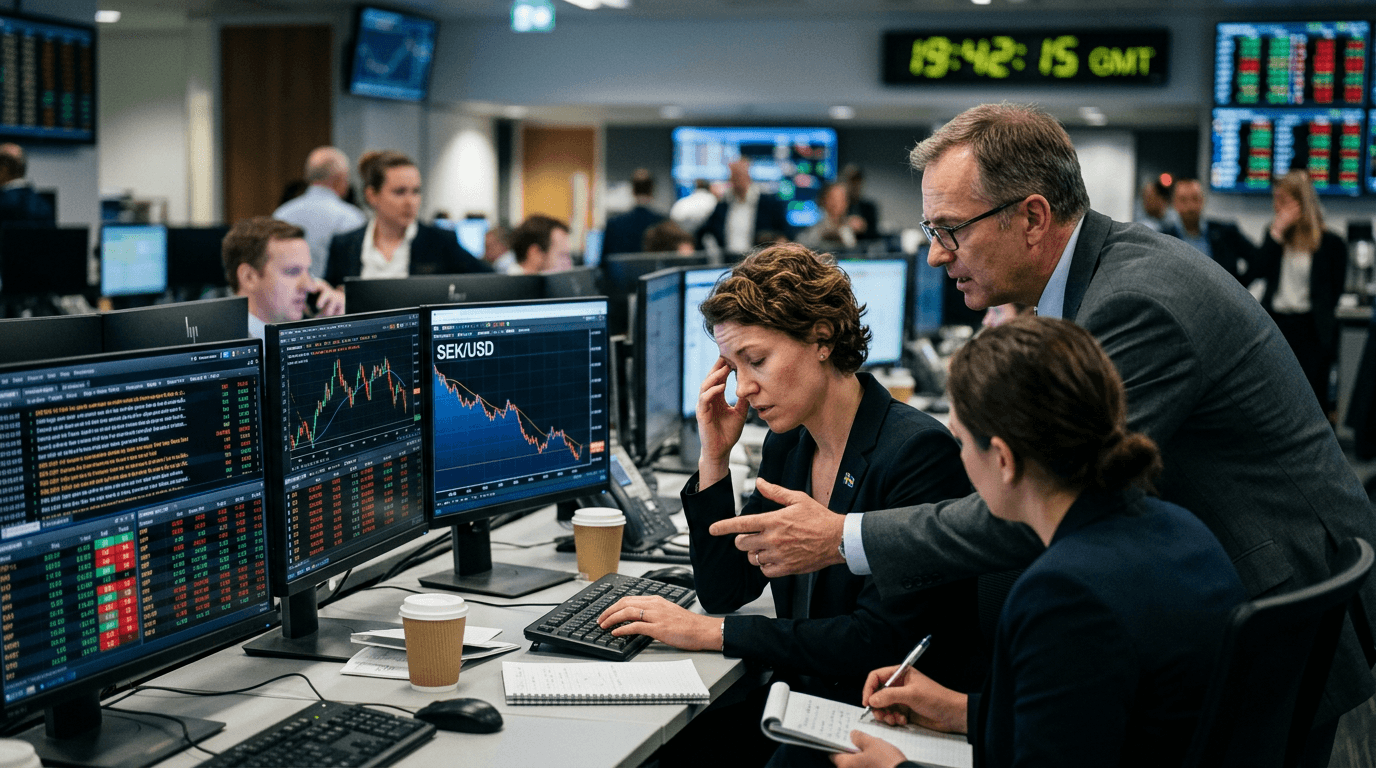
The foreign exchange market, typically characterized as one of the world's most liquid and stable financial systems, is facing unprecedented strain as geopolitical tensions escalate globally. The ongoing US-Iran conflict has sent shockwaves through forex markets worldwide, prompting central banks including the Bangladesh Bank to issue formal warnings about heightened volatility and systemic risks. For traders on platforms like E8 Markets, understanding these dynamics is essential as currencies swing unpredictably and traditional trading patterns dissolve.
Understanding The Current Forex Shock
The confluence of military escalation in the Middle East and its cascading economic effects has created a perfect storm for currency markets. When war breaks out, traders face a fundamental challenge: unprecedented uncertainty about economic outcomes. Unlike normal market conditions where analysis can be grounded in historical patterns and economic indicators, conflict introduces variables that resist traditional forecasting. How long will the conflict last? What will be the economic costs? Which nations will experience capital flight? These unanswerable questions force investors to abandon carefully constructed strategies and react to headlines in real time.
The result is exactly what we're seeing today—wild currency swings that defy conventional analysis. The Swedish krona has plummeted to yearly lows against major currency pairs, signaling that even stable, periphery-to-core European economies face pressure during global conflict. This is particularly notable because Sweden traditionally benefits from safe-haven flows, yet the broader market uncertainty is overwhelming even that protective effect.
The Energy Price Transmission Mechanism
Wars in oil-producing regions have a direct and powerful impact on forex markets through energy costs. When conflict threatens Middle Eastern oil supplies, crude prices spike, creating immediate winners and losers in the currency space. The United States, which has achieved energy independence through shale production, sees its dollar strengthen as energy-importing nations face higher import bills and weakening current accounts.
Europe and Asia, heavily dependent on energy imports, experience the opposite effect. Higher energy costs create external account deficits, putting downward pressure on the euro and other Asian currencies. The Bangladesh Bank's warning likely reflects concerns about how rising energy costs will drain foreign exchange reserves as nations import expensive oil and gas. This creates a vicious cycle: as currencies weaken, import costs rise further in local currency terms, exacerbating inflation and prompting central banks to consider rate increases that may choke economic growth.
Currency-specific Vulnerabilities
The weakness of the Swedish krona provides a concrete case study in how wars redistribute currency flows. Before the latest escalation, the krona benefited from European economic momentum and expectations of relatively hawkish Swedish central bank policy. However, the combination of Middle East uncertainty and potential energy disruptions has triggered a repricing. Investors are rotating away from growth-sensitive currencies toward true safe havens like the Swiss franc and Japanese yen, even as other major currencies struggle.
This flight to safety reveals an important truth about modern forex markets: when genuine systemic risk emerges, investors abandon all but the most trusted currency havens. The dollar benefits from its status as the global reserve currency, Swiss assets benefit from political neutrality and historical stability, and the yen benefits from Japan's current account surplus. Most other currencies face pressure simply by not being perceived as safe enough.
Central Bank Concerns And Policy Responses
Central banks are sounding alarms for good reason. The Bangladesh Bank's warning reflects concerns that sustained volatility could undermine monetary policy effectiveness and destabilize emerging market economies. When currency markets move erratically, central banks lose control over transmission mechanisms. Interest rate decisions become harder to implement effectively, and capital flows become unpredictable.
For smaller or developing economies, this creates genuine policy dilemmas. Raising interest rates to support the currency might choke growth, while intervening directly in forex markets burns through precious foreign exchange reserves. The Bangladesh Bank likely faces exactly this tension—needing to support the taka without draining reserves or raising rates so high that economic growth suffers.
Implications For Simfi Traders
For traders navigating platforms like E8 Markets, the current environment presents both risks and opportunities. The heightened volatility increases potential profits but also increases risk of catastrophic losses if positions are not properly hedged. Key strategies worth considering include:
- Safe-haven positioning in CHF and JPY pairs, accepting lower yields in exchange for stability
- Shorting energy-importing currencies that face structural headwinds from elevated crude prices
- Hedging emerging market exposure given the broader capital flow reversals
- Monitoring central bank communications closely, as policy shifts will be sudden and market-moving
Key Takeaways
The current forex market strain reflects genuine economic disruption, not irrational panic. Energy prices are genuinely higher, capital flows are genuinely shifting toward safe havens, and uncertainty is genuinely elevated. Central bank warnings are appropriate and should be taken seriously.
For traders, this environment demands careful position sizing, active hedging, and a willingness to quickly adjust strategies as new information emerges. The traders who will succeed in coming weeks are those who accept the limitations of technical analysis during conflict periods and instead focus on understanding the fundamental transmission mechanisms through which geopolitical tension affects currency values. The Swedish krona's weakness, the dollar's strength, and emerging market pressure are not random moves—they reflect rational repricing of risk in an uncertain world.