
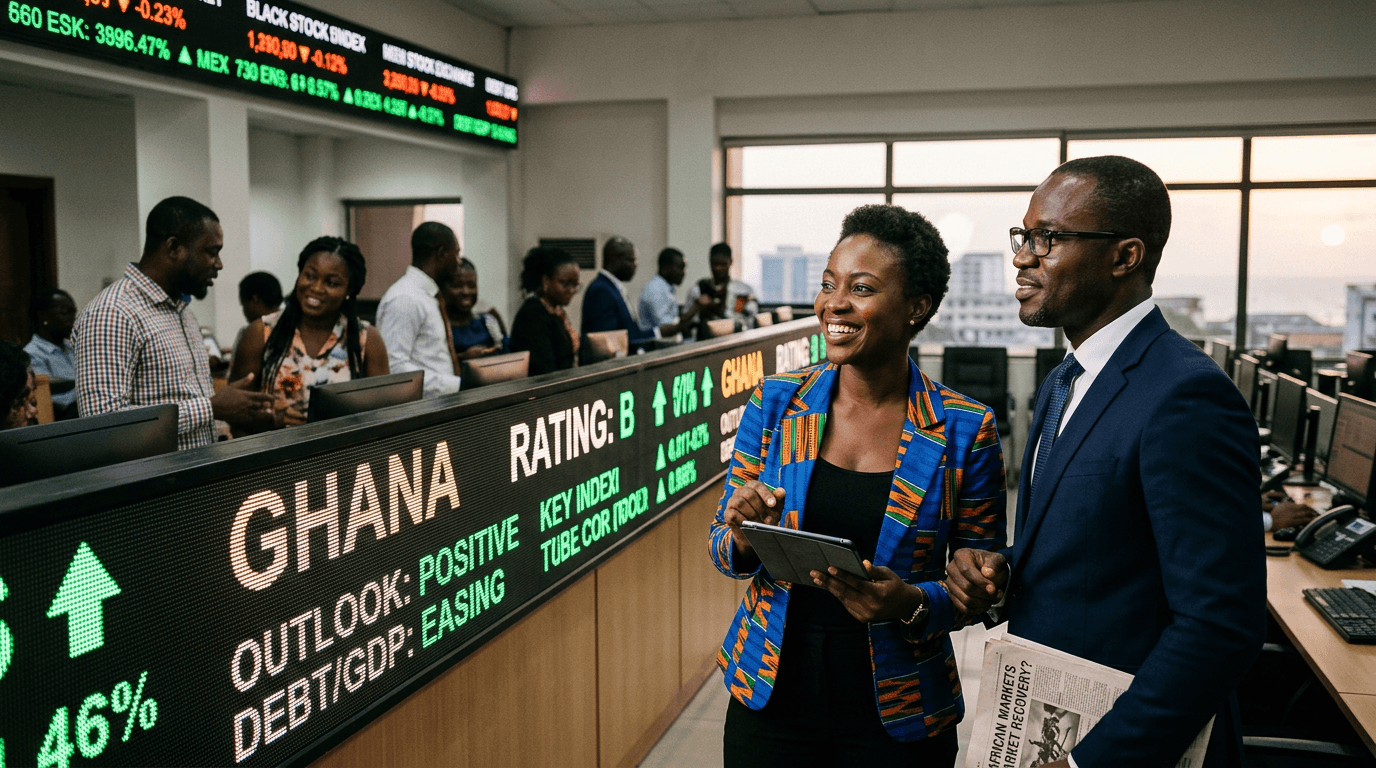
Ghana's economy just received a significant vote of confidence from one of the world's leading credit rating agencies. On May 8, 2026, Fitch Ratings upgraded Ghana's long-term foreign-currency issuer default rating from 'B-' to 'B' with a positive outlook, marking a pivotal moment for the West African nation's economic trajectory and a potential game-changer for emerging market sentiment across the continent.
This upgrade is far more than a bureaucratic shuffle. Credit rating changes carry real weight in global financial markets, influencing borrowing costs, foreign investment flows, and investor appetite for emerging market exposure. For traders and investors monitoring African economies, Ghana's upgrade signals that debt stabilization efforts are paying tangible dividends, and it raises important questions about what this development means for regional economic dynamics and investment opportunities.
What The Upgrade Actually Means
When a ratings agency upgrades a country's sovereign rating, it's essentially saying the nation poses a lower risk of default on its obligations. Moving from B- to B represents a significant improvement in Ghana's creditworthiness. The positive outlook attached to this rating is equally important—it signals that Fitch sees potential for further upgrades if current trends continue.
For emerging market investors, this matters considerably. A better sovereign rating typically leads to lower borrowing costs for governments, which cascades through the economy by reducing interest rates for businesses and consumers. Ghana's borrowing costs in international markets should see some compression, making it cheaper for the government to finance development projects or refinance existing debt.
The timing is particularly noteworthy given the backdrop of global uncertainty and economic turbulence mentioned in recent market commentary. That Fitch felt confident enough to upgrade Ghana's rating despite broader macroeconomic headwinds suggests the agency views the country's fundamentals as particularly robust.
The Drivers Behind The Upgrade
Understanding what triggered this upgrade is crucial for assessing whether it's a sustainable trend or a temporary reprieve. According to Fitch's analysis, several factors converged to justify the rating improvement.
First, Ghana has achieved a sharp decline in its public debt burden. The agency projects that public debt will fall to 46 percent of GDP by 2027, which is notably below the average for countries carrying similar credit ratings. This matters immensely because high debt levels can become self-reinforcing—they constrain fiscal flexibility, require higher interest payments, and ultimately create vulnerability to shocks.
Second, Ghana's economic growth remains strong. Fitch projects continued expansion averaging around 5 percent through 2027, supported by gold exports, moderating inflation, and improving consumer sentiment. For an emerging market economy, sustaining 5 percent growth while simultaneously reducing debt ratios demonstrates that improvements aren't coming at the cost of stagnation.
Third, the government has demonstrated improved fiscal discipline. This is the ingredient many investors watch most carefully, as policies can change with new administrations. However, consistent fiscal management suggests institutional commitment to prudent governance rather than short-term political expediency.
Fourth, Fitch highlighted a significant buildup in Ghana's international reserves, which has measurably reduced external financing risk. Stronger reserve buffers mean the country is better positioned to weather external shocks and meet its international obligations without forced asset sales or capital controls.
Implications For African Emerging Markets
Ghana's upgrade carries implications that extend beyond its own borders. The country has become something of a bellwether for West African economics and Sub-Saharan Africa more broadly. When investors see a major emerging market successfully executing debt reduction while maintaining growth, it alters the narrative around African economic prospects.
This upgrade may shift investor perception that African sovereigns face an impossible trade-off between austerity and growth. Ghana appears to be demonstrating that disciplined fiscal policy, commodity wealth management, and structural reforms can coexist with economic dynamism. That's a powerful message for other African nations working to improve their credit profiles.
For traders with emerging market exposure, this development potentially broadens the investable universe. As Ghana's rating improves, it may attract new categories of investors whose mandates restrict purchases to investment-grade or higher-beta-grade securities. This could increase liquidity in Ghanaian assets and strengthen regional financial integration.
Key Takeaways For Investors
What should SimFi traders and emerging market investors take away from this development? First, policy execution matters—Ghana's commitment to debt reduction despite growth has paid off. Second, commodity exporters with disciplined fiscal management can improve their risk profiles even in uncertain global environments. Third, watch for potential spillover benefits including lower borrowing costs for Ghanaian businesses and potentially more favorable terms for the broader West African region.
The positive outlook accompanying this upgrade suggests that Fitch sees further improvement as possible, meaning Ghana remains on an upgrade trajectory. This creates an asymmetric opportunity profile for investors positioned appropriately.
Ghana's rating upgrade is emblematic of how emerging market economies can chart positive paths through disciplined execution and structural reform. In a global environment where many economies face fiscal pressures, Ghana's example demonstrates that focused policy can generate measurable improvements in sovereign creditworthiness.