
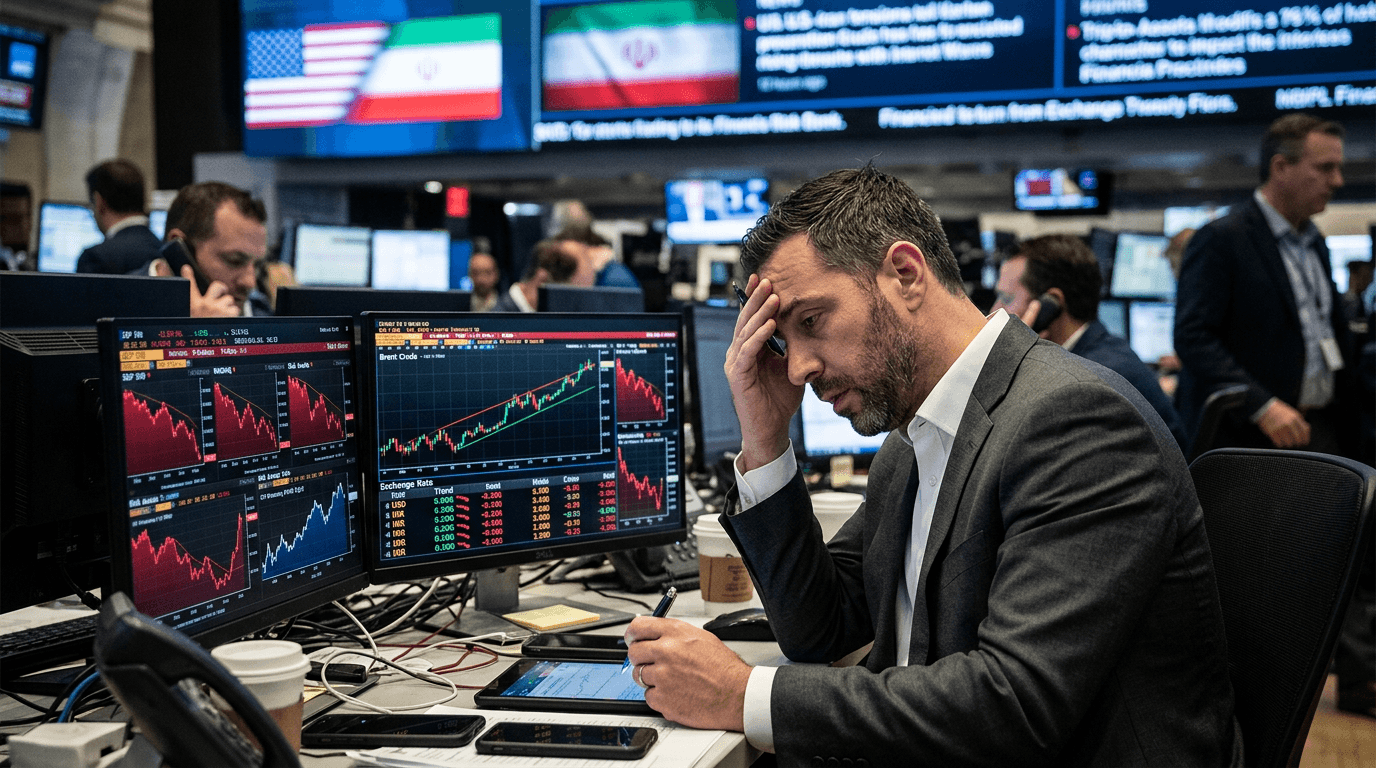
Global bond markets are once again at the center of the macro narrative, with government yields in the U.S., Europe and other major economies clinging to multi‑week peaks as U.S.–Iran tensions intensify.[11][15] The latest flare‑up in the Middle East has reinforced a risk‑off mood, supporting demand for safe‑haven currencies such as the dollar and yen, while weighing on equity index futures and propelling oil prices higher on fears of supply disruptions.[2][15]
Markets On Edge: Yields, Oil And Risk Sentiment
Benchmark U.S. Treasury yields are holding near the upper end of their recent range, with the 10‑year note anchored around the mid‑4% area after briefly pushing above 4.60%, its highest level since late May.[11] Eurozone borrowing costs have moved in tandem, with German Bund yields near month‑high levels, reflecting investors’ reassessment of geopolitical and inflation risks.[5][13]
These elevated yields are a sign that investors have been selling government bonds rather than piling into them, demanding higher compensation to hold long‑dated debt in a world where war headlines are driving oil higher and potentially keeping inflation uncomfortably sticky.[3][8] At the same time, equity index futures have softened as traders rotate away from risk assets and toward safer havens, echoing the broader risk‑off tone across global markets.[2][8]
Oil futures have been a major channel for the geopolitical shock, with prices jumping as the market prices in the possibility of disrupted flows through the Strait of Hormuz and other critical routes.[3][9][15] Higher energy costs feed directly into headline inflation and, more importantly for bond traders, into expectations that central banks will stay restrictive for longer than previously assumed.[3][6][9]
Why Geopolitics Drives Bond Yields Higher
The connection between war risk and bond yields runs primarily through inflation expectations and central bank policy. When tensions in the Middle East escalate and oil prices climb, investors worry that energy‑driven inflation will prove more persistent, eroding the real value of fixed coupon payments on long‑term bonds.[3][6] To compensate, they demand higher nominal yields, which pushes market rates up and bond prices down.[3][8]
Recent episodes have followed a similar pattern: sharp moves in oil, a sell‑off in global bonds, and a re‑pricing of the path for rate cuts.[3][6][9] In the U.S., for example, spikes in Iran‑related conflict have coincided with notable jumps in the 10‑year Treasury yield, as traders scale back expectations that the Federal Reserve will deliver aggressive easing in the near term.[9][12] In Europe, German and other eurozone yields have recorded some of their largest two‑day rises in years when tensions have suddenly worsened.[5][6]
Short‑dated yields, which are more closely tied to policy expectations, also tend to move higher as war‑driven inflation fears grow, signaling markets’ belief that central banks may keep policy rates elevated or delay cuts.[6][9] Longer‑dated yields reflect a combination of these policy expectations and an increased “term premium” — the extra compensation investors demand for holding bonds over longer horizons in a more uncertain world.[3][18]
SAFE‑HAVEN CURRENCIES AND PRESSURE ON RISK ASSETS
While government bonds have sold off, classic safe‑haven currencies have attracted renewed demand. The U.S. dollar and Japanese yen typically benefit when geopolitical risk rises, as global investors seek liquid, deep markets and assets perceived as resilient in times of stress.[2][15][16] Recent trading has seen the dollar index firm and the yen outperform against more cyclical peers as tensions between Washington and Tehran intensified.[2][16]
By contrast, risk‑sensitive currencies such as emerging‑market units or commodity‑linked FX often come under pressure in these environments, reflecting concerns about capital outflows, weaker growth or deteriorating terms of trade.[16] Equity index futures broadly mirror this rotation, with investors trimming exposure to stocks — especially in sectors most vulnerable to higher rates and energy costs — and favoring defensive sectors or cash.[2][8]
Oil’s rally completes the classic risk‑off pattern. When traders price in potential disruptions to supply from the Gulf region, crude benchmarks tend to spike, lifting breakeven inflation expectations and amplifying volatility across bond, FX and equity markets.[3][9][15] For multi‑asset traders, understanding these cross‑market linkages — bonds, currencies, equities and commodities moving together — is critical to managing portfolio risk when geopolitics dominates the tape.
What Higher Yields Mean For The Real Economy
Beyond trading screens, higher global bond yields translate directly into tighter financial conditions. The 10‑year U.S. Treasury is a key benchmark for a wide range of borrowing costs, including mortgages, auto loans and corporate debt.[4][10] When that yield rises toward multi‑week highs, the cost of financing for households and businesses tends to increase as banks and capital markets reprice lending rates.[4][10]
For corporates, particularly those with large refinancing needs, this environment can compress margins and discourage new investment, as debt issuance becomes more expensive and equity valuations fall under the weight of higher discount rates.[3][4] Governments themselves also face higher interest costs over time, raising questions about fiscal sustainability and potentially influencing policy debates.[1][3]
In emerging markets, war‑driven spikes in global yields can be doubly painful. Not only do their own local‑currency bonds often sell off in sympathy, but they may also experience capital outflows as investors retreat to core markets like U.S. Treasuries and German Bunds.[3][20] This can weaken their currencies, increase imported inflation and complicate domestic monetary policy decisions.
Implications For Traders And The Role Of Simulated Finance
For active traders, an environment where global yields cling to multi‑week peaks demands a disciplined approach to risk management and scenario analysis. Bond volatility tends to rise when geopolitical headlines drive expectations for inflation and central bank policy, creating opportunities but also significant drawdown risk for leveraged positions.[3][6][9]
Multi‑asset strategies need to recognize how quickly correlations can shift. A regime of elevated yields, stronger safe‑haven currencies and firmer oil prices typically weighs on growth stocks and high‑beta assets while favoring quality, cash‑rich firms and certain value exposures.[2][8] FX traders may look to relative rate expectations and risk sentiment to guide positioning in dollar pairs, yen crosses and selected emerging‑market currencies.[2][12][16]
Simulated finance platforms can be particularly valuable in this kind of macro‑driven landscape. By allowing traders to test strategies across asset classes without real capital at risk, SimFi environments help users explore how portfolios behave when yields spike, safe‑haven flows intensify and commodity markets re‑price geopolitical risk.[16][18] Practicing in a realistic, data‑driven simulation can sharpen execution discipline, improve understanding of cross‑market dynamics and build confidence before deploying capital in live markets.
Staying attuned to the interplay between geopolitics, inflation expectations and the bond market is likely to remain essential in the months ahead. As U.S.–Iran tensions evolve, traders and investors who can read the signals embedded in yields, currencies, equities and oil — and who have rehearsed their responses in a simulated environment — will be better positioned to navigate the next phase of volatility.