
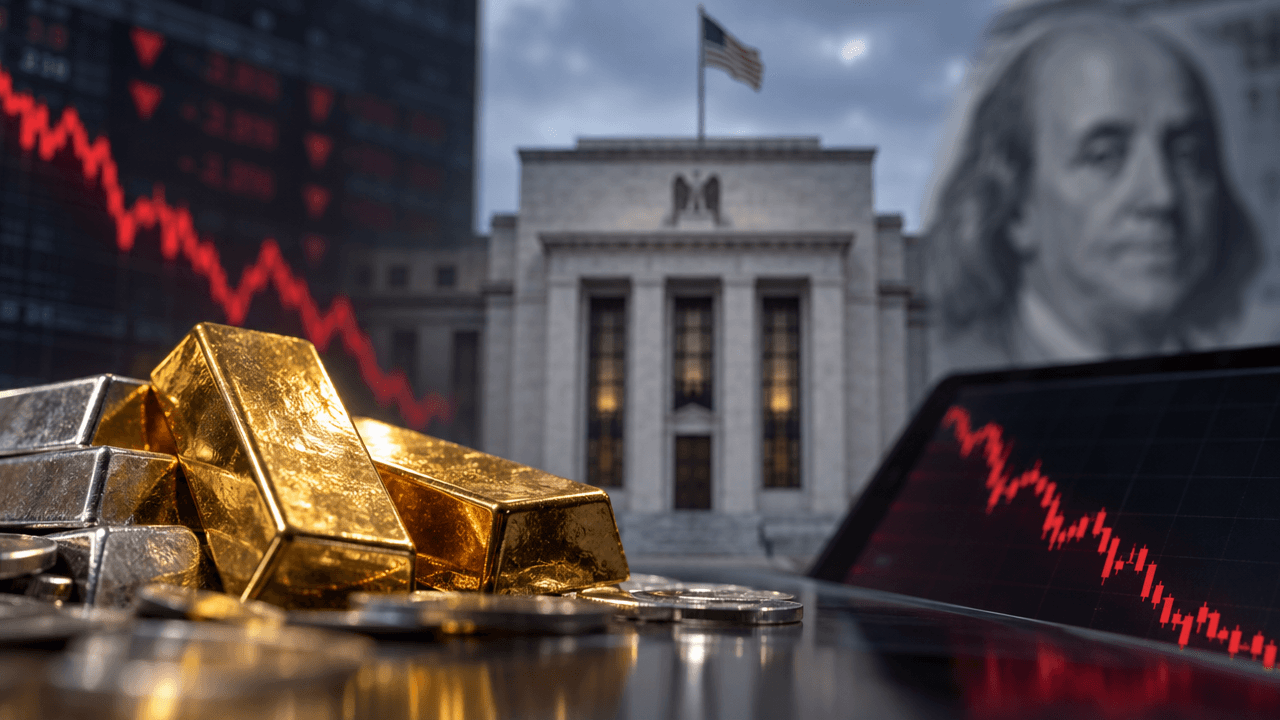
Global bonds are selling off as investors rapidly reprice the possibility of a more aggressive Federal Reserve tightening cycle in December. Hotter-than-expected U.S. inflation, combined with increasingly hawkish comments from Fed officials, has pushed Treasury yields higher and lifted borrowing costs across developed markets. The move has also pressured U.S. equities, gold and silver as traders adjust to a world where interest rates may remain elevated for longer.
The immediate question for markets is no longer whether the Fed will ease financial conditions soon. Instead, investors are debating how large the next rate increase could be and whether additional hikes may follow. That shift in expectations has transformed a familiar inflation concern into a broad repricing of risk.
What Triggered The Bond Selloff
The latest market move began with evidence that U.S. inflation remains persistent. Both headline and core consumer prices rose more than expected in October, reinforcing concerns that price pressures are not declining quickly enough toward the Federal Reserve’s target. The inflation data arrived shortly after Fed Governor Christopher Waller said he would support a December rate increase and could consider a half-point move if core inflation remained around 0.3% or higher. [6]
Other officials added to the hawkish tone. Dallas Fed President Lorie Logan indicated that at least two more rate increases may be necessary, potentially delivered at a rapid pace, while Chicago Fed President Austan Goolsbee warned that policymakers are facing a serious inflation problem. [3]
Bond markets reacted immediately. The policy-sensitive two-year Treasury yield surged nearly 19 basis points to approximately 4.736%, marking one of its largest daily increases since the market turmoil surrounding the 2025 tariff announcement. [10] The benchmark 10-year yield also moved sharply higher, briefly rising above 5% as investors demanded greater compensation for holding longer-term government debt. [14]
Why December Expectations Matter
Bond prices and yields move in opposite directions. When traders expect interest rates to rise, they typically sell existing bonds because newly issued securities will offer more attractive yields. That selling pushes bond prices down and yields up.
Short-term Treasury yields are especially sensitive to Federal Reserve expectations. Before the latest inflation report, markets already assigned a substantial probability to a quarter-point December hike. After the data and Fed commentary, traders fully priced in a 25-basis-point increase while also assigning a meaningful probability to a 50-basis-point move. [3]
A half-point increase is not the central scenario, but its appearance in market pricing is significant. It signals that investors are no longer treating the next hike as a routine adjustment. They are beginning to account for the possibility that policymakers may need to act more forcefully to prevent inflation from becoming entrenched.
This repricing also affects the expected path of rates beyond December. If inflation stays high, the Fed may need to deliver multiple increases rather than a single isolated hike. That prospect raises the cost of capital for companies, households and governments worldwide.
Global Consequences Of Higher Yields
The Treasury market is the foundation of global finance, so a sharp rise in U.S. yields tends to spread across international bond markets. Investors compare the return on government debt across countries, and higher U.S. yields can encourage capital to move toward dollar-denominated assets.
Asian bond markets reflected that pressure. Japan’s 10-year government bond yield rose seven basis points to 2.755%, while Australia’s 10-year yield increased six basis points to 5.05%. [2] Higher global yields can tighten financial conditions even when other central banks do not immediately change policy.
For businesses, the impact appears through higher borrowing costs. Companies refinancing debt may face larger interest expenses, while governments may pay more to issue new bonds. Highly leveraged businesses and speculative assets are particularly vulnerable because their valuations depend heavily on inexpensive financing.
Equities also face pressure. Higher bond yields increase the discount rate used to value future corporate earnings, which can reduce the present value of those earnings. Growth and technology stocks are often especially sensitive because a larger portion of their expected cash flow lies far in the future.
Pressure On Gold, Silver And The Dollar
Precious metals have also struggled during the repricing. Gold does not pay interest, so higher bond yields increase the opportunity cost of holding bullion. A stronger dollar adds another headwind by making gold and silver more expensive for buyers using other currencies.
Gold fell sharply before stabilizing near $4,035 to $4,050 per ounce as Treasury yields climbed and the dollar strengthened. [7] Silver faced similar pressure because it shares gold’s sensitivity to real yields while also depending on industrial demand, which can weaken if higher borrowing costs slow economic activity.
This does not mean the longer-term case for precious metals has disappeared. Investors may still seek gold as protection against inflation, geopolitical risk or financial instability. However, the short-term direction of prices can remain negative while real yields and the dollar move higher.
Practical Takeaways For Traders
First, watch the two-year Treasury yield and Fed funds futures. They provide a real-time indication of how markets are interpreting incoming inflation and employment data.
Second, distinguish between a priced-in quarter-point hike and a genuine upside surprise. If markets already expect 25 basis points, the larger reaction may come from guidance about future meetings rather than the December decision itself.
Third, manage cross-asset exposure. A long position in growth equities, precious metals and long-duration bonds can all be vulnerable to the same rise in yields. Diversification should account for shared macroeconomic risks, not simply the number of positions held.
For SimFi traders, this environment offers a useful exercise in scenario planning. Build separate plans for a standard 25-basis-point hike, a surprise 50-basis-point hike and a softer inflation report that reverses recent pricing. Define entry levels, invalidation points and maximum risk before volatility accelerates.
Conclusion
The global bond selloff is a reminder that markets price expectations, not just economic data. Hot inflation and hawkish Fed communication have changed the perceived distribution of outcomes for December, lifting yields and tightening financial conditions across major markets.
The next phase will depend on whether inflation continues to surprise higher or begins to cool. Until that question is answered, traders should expect elevated sensitivity across bonds, currencies, equities and commodities. The most valuable edge is not predicting every move; it is understanding the relationships between assets and preparing for more than one possible outcome.