
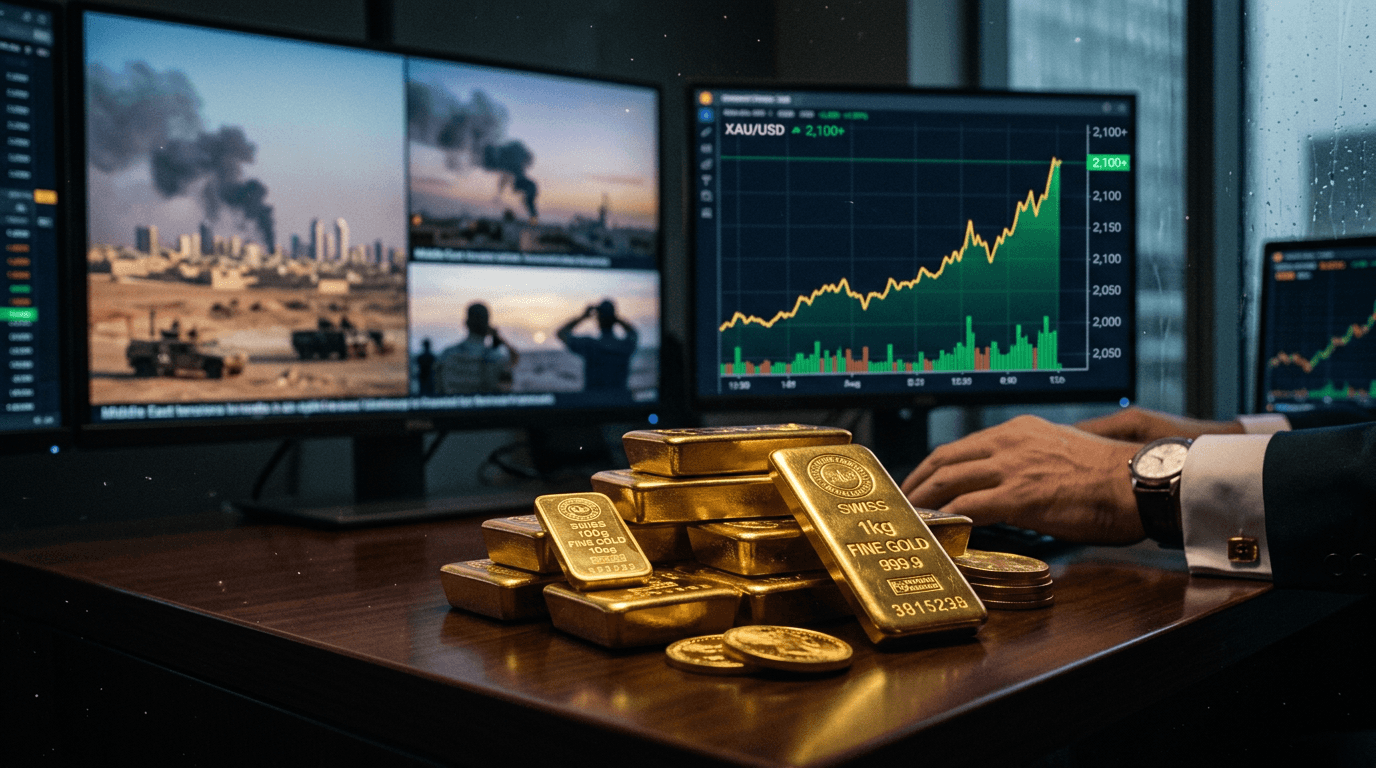
Gold's Resurgence Amid Middle Eastern Tensions: Navigating Headwinds from Oil and Inflation
Gold's Recent Rally
Gold prices have recently surged as geopolitical tensions rise in the Middle East, drawing investors to safe-haven assets amidst a weakening traditional risk appetite. This resurgence underscores a recurring market trend: global uncertainties driving capital into assets viewed as stable stores of value. However, this rally is not without its complexities. The simultaneous rise in oil prices and persistent macroeconomic concerns present conflicting forces, complicating the landscape for gold traders and investors.
Geopolitical Backdrop and Market Dynamics
The current geopolitical scenario is dominated by escalating tensions involving the United States, Israel, and Iran, now in its 31st day of conflict. This has fostered an atmosphere of heightened uncertainty extending beyond the Middle East. Despite ongoing diplomatic efforts by foreign ministers from Pakistan, Turkey, Egypt, and Saudi Arabia to de-escalate tensions, the situation remains fluid, with developments such as Yemen's Houthi forces launching missile attacks on Israel further broadening regional instability.
While these geopolitical flashpoints have broadly supported commodity markets, their impact varies across asset classes. Gold has benefited from safe-haven flows, while the surge in oil prices, now around $101.30 per barrel for Brent crude, introduces a competing dynamic affecting market sentiment and inflation expectations.
Safe-Haven Demand Mechanics
In times of geopolitical tension, both institutional and retail investors reassess their portfolios, seeking assets that historically preserve value during uncertainty. Gold has long played this role, and recent weeks have seen a pronounced correlation between Middle Eastern headlines and gold futures movements, with military escalations and diplomatic stalemates consistently sparking buying activity.
Gold's appeal as a safe-haven asset is founded on several key characteristics. Unlike stocks or bonds, gold produces no yield, maintaining its value through scarcity and historical precedent. In low-interest-rate environments, the opportunity cost of holding non-yielding bullion diminishes, enhancing its attractiveness. Additionally, gold typically moves inversely to currency strength and equity market stress, offering portfolio diversification benefits during market volatility.
The physical markets further signal genuine demand. Reported premiums on retail bullion products and noticeable coin shortages suggest more than speculative trading; they indicate real demand from investors seeking tangible asset protection. This tightness in physical markets provides a support system for prices that extends beyond financial market dynamics.
Market Complications and Pressures
Despite safe-haven demand, gold faces substantial headwinds limiting its rally. The strong U.S. dollar makes gold more expensive for international buyers, curbing demand from overseas markets. Elevated bond yields also reduce the appeal of non-yielding assets, as investors can achieve meaningful returns through fixed-income investments without facing equity uncertainties.
The surge in oil prices presents a complex dynamic. While some view rising oil prices as inflationary and supportive of gold, the broader market interpretation has been more negative. Higher energy costs threaten economic growth, creating stagflationary conditions where growth stagnates despite persistent price pressures. In such environments, investors often reduce risk exposure across speculative assets, weighing on gold despite its safe-haven allure.
Recent data indicates consistent selling pressure on gold futures, suggesting macroeconomic concerns about growth and inflation may outweigh pure safe-haven demand at current price levels. Market strategists believe gold may consolidate in the $4,800 to $5,100 range in the near term, reflecting an environment characterized by uncertainty rather than clear directional conviction.
Implications for Traders
For traders in this space, several insights emerge. First, while the relationship between geopolitical events and gold prices remains strong, it is not absolute when macroeconomic forces move differently. Second, robust demand in physical markets suggests any sharp price correction could find significant support from real-world demand. Third, the broader inflation outlook will likely be decisive in determining gold's next move, as genuine deflation fears would dramatically alter the landscape.
The interplay between central bank policy, inflation trends, and physical market dynamics will ultimately shape gold's trajectory. Traders should closely monitor Federal Reserve communications, as interest rate expectations remain crucial in the gold equation. Upcoming reports on Personal Consumption Expenditures and jobless claims will provide context for understanding whether growth or inflation concerns will dominate market sentiment.
As this situation evolves, gold's ability to break decisively above current resistance levels will likely depend less on specific geopolitical headlines and more on the broader market's assessment of global economic health and inflation risk.