
1. Start DIRECTLY with the first paragraph - no intro text 2. Plain text format (no HTML, no markdown) 3. ALL CAPS for section headings on their own line 4. Separate paragraphs with blank lines 5. 3-5 main sections with clear takeaways 6. Make it engaging and educational 7. End with TITLE, EXCERPT, and NEWSIMPACTSCORE
Let me analyze the search results: - Gold is around $4,700 per ounce as of late April 2026 - It rose 0.24% on April 24, up 3.98% over the past month, up 41.85% year-to-date - Safe-haven demand is being driven by geopolitical tensions (US-Iran negotiations, Strait of Hormuz blockade) - Gold is struggling due to rising US Treasury yields - There are concerns about inflation and reduced Fed rate cut expectations - Geopolitical tensions are providing support for gold prices
I need to write this in plain text format with: - No markdown - No HTML tags - ALL CAPS headings - Line breaks between paragraphs - Professional but accessible tone - Data-driven content
Let me structure it: 1. Opening paragraph about the recovery and contradictory signals 2. Section on safe-haven dynamics 3. Section on technical challenges 4. Section on geopolitical drivers 5. Section on what traders should watch 6. Concluding thoughts
I need to make sure it's around 800 words and includes citations to the search results where appropriate.
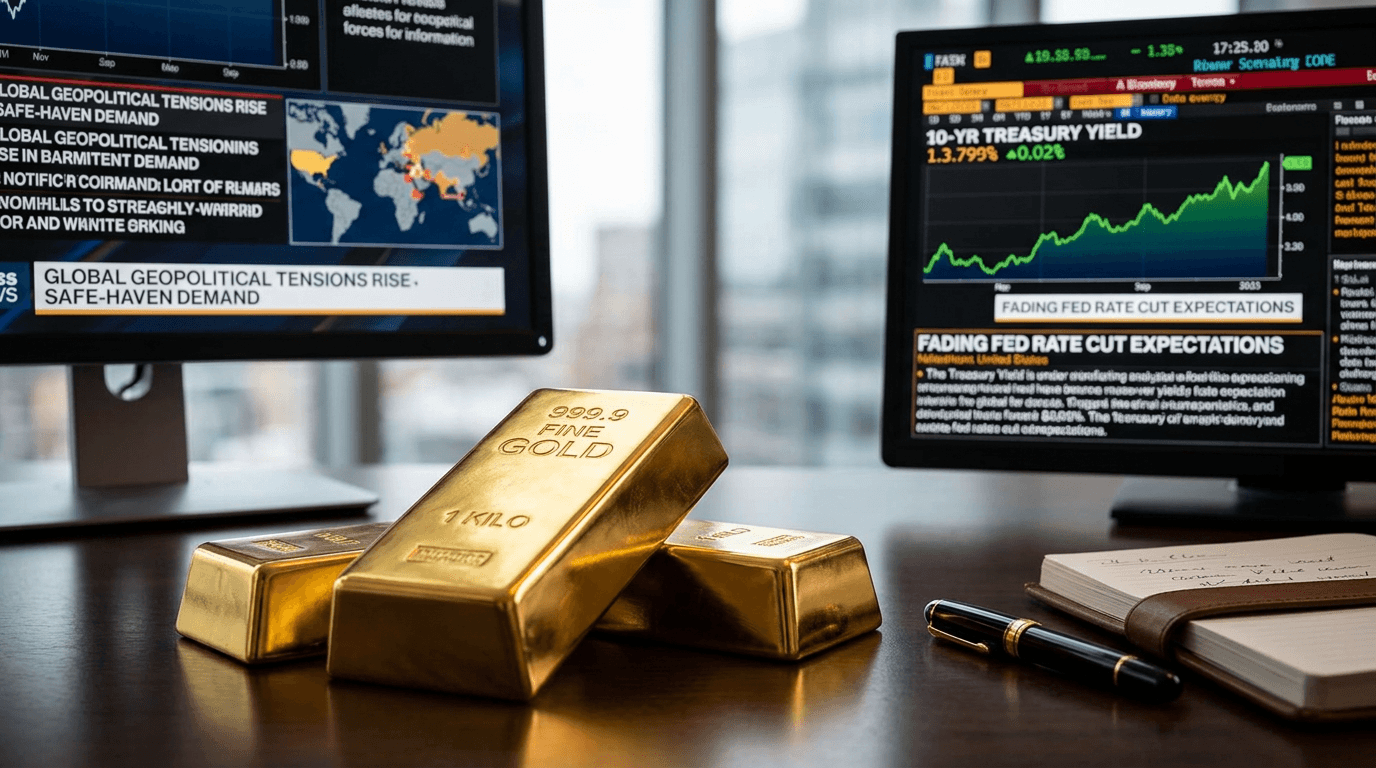
Gold prices recovered above the $4,700 per ounce mark on Friday as safe-haven demand resurged amid geopolitical tensions, yet the precious metal remains locked in a challenging technical battle that has pushed it toward its first weekly decline in five weeks. This paradox—simultaneous recovery and weakness—perfectly encapsulates the current state of the gold market, where traditional support mechanisms clash with rising Treasury yields and diminishing expectations for Federal Reserve rate cuts.
Understanding The Safe-haven Narrative
The recent bounce in gold prices reflects a fundamental shift in market psychology toward risk-aversion. On April 24, 2026, gold climbed back above $4,700 per ounce, up 0.24% from the previous trading session, driven primarily by cautious optimism surrounding potential progress in US-Iran peace negotiations.[1] According to reports from Pakistani government sources, Iranian Foreign Minister Abbas Araghchi arrived in Islamabad on Friday evening, with indicators suggesting "a high likelihood of a breakthrough" in ongoing talks between the United States and Iran.[1]
This diplomatic development matters because it directly addresses one of the most significant supply-side risks facing global energy markets and inflation expectations. The Strait of Hormuz, through which roughly one-third of the world's oil passes, remains under Iranian control and has been subject to restrictions on international traffic, with reports indicating Iranian forces firing on commercial vessels.[1] Any resolution to these tensions could theoretically alleviate energy price pressures that have kept inflation risks elevated, which paradoxically could reduce safe-haven demand for gold.
The Headwind Of Rising Yields
Despite short-term safe-haven support, gold faces a more formidable obstacle in the form of surging US Treasury yields. Rising Treasury yields create a hostile environment for non-yielding precious metals, as investors can earn risk-free returns by holding government bonds instead.[3] This dynamic has particularly constrained gold's upside potential, dragging prices to eight-day lows earlier in the week and creating technical resistance around psychological levels like $4,700.[3]
The yield pressure stems from shifting market expectations regarding Federal Reserve policy. Oil-driven inflation concerns have reduced market bets on near-term Fed rate cuts, keeping Treasury yields elevated and creating a fundamental headwind for precious metals investors who receive no yield while holding gold in their portfolios. This creates an interesting dynamic: the same geopolitical tensions that drive safe-haven demand for gold also keep energy prices elevated, which reduces the probability of accommodative monetary policy that would normally support precious metal prices.
Geopolitical Tensions As The Primary Driver
Geopolitical tensions continue to provide the primary fundamental support for gold prices across the trading week. Beyond the Middle East situation, investor demand for safe-haven assets has strengthened amid rising tensions over trade disputes, including threats of additional tariffs on European countries over disputes surrounding Greenland.[2] These diverse sources of geopolitical concern have collectively pushed gold to fresh record levels, with the precious metal posting highs near $4,690.80 in late January and maintaining momentum through April.[2]
Analyst commentary reflects confidence in this thesis. Matt Simpson, Senior Analyst at StoneX, emphasized that geopolitical tensions have given gold investors an additional tailwind, pushing the yellow metal to fresh record levels.[2] However, as markets began pricing in potential resolution to tensions—such as the possible Iran breakthrough—profit-taking emerged, with gold recording losses as correction became inevitable after substantial rallies.
Performance Context And Year-to-date Gains
Despite this week's technical weakness, it's important to contextualize gold's recent performance. Over the past month, gold prices have risen 3.98%, and year-to-date gains stand at 41.85%, reflecting the powerful combination of geopolitical support and accommodative monetary policy expectations that characterized the early months of 2026.[1] These substantial gains have positioned gold near all-time highs, even as traders navigate the current technical consolidation.
The first weekly decline in five weeks represents a necessary correction after an extended rally, rather than a fundamental shift in the longer-term uptrend. Markets that rise consistently eventually require consolidation periods, and the current technical struggle around $4,700 likely represents exactly this type of consolidation.
What Traders Should Monitor
Moving forward, several factors deserve close attention from precious metals traders. First, the outcome of US-Iran negotiations will directly impact both geopolitical risk premiums and energy price trajectories. A successful breakthrough could simultaneously reduce gold's safe-haven appeal while lowering inflation expectations—a bearish scenario for precious metals. Conversely, negotiations failing would likely reignite both safe-haven demand and energy inflation concerns.
Second, monitor US Treasury yield movements and Federal Reserve communications regarding interest rate policy. If yields recede and rate cut expectations return, gold could find renewed strength. Third, watch for technical breaks above or below key support and resistance levels, as algorithmic trading and technical funds often amplify moves around round psychological numbers like $4,700.
The current price action reflects a market in transition, caught between legitimate safe-haven demand from geopolitical tensions and fundamental headwinds from elevated yields and reduced rate cut expectations. Traders who understand this conflict will be better positioned to navigate gold's continued evolution in 2026.