
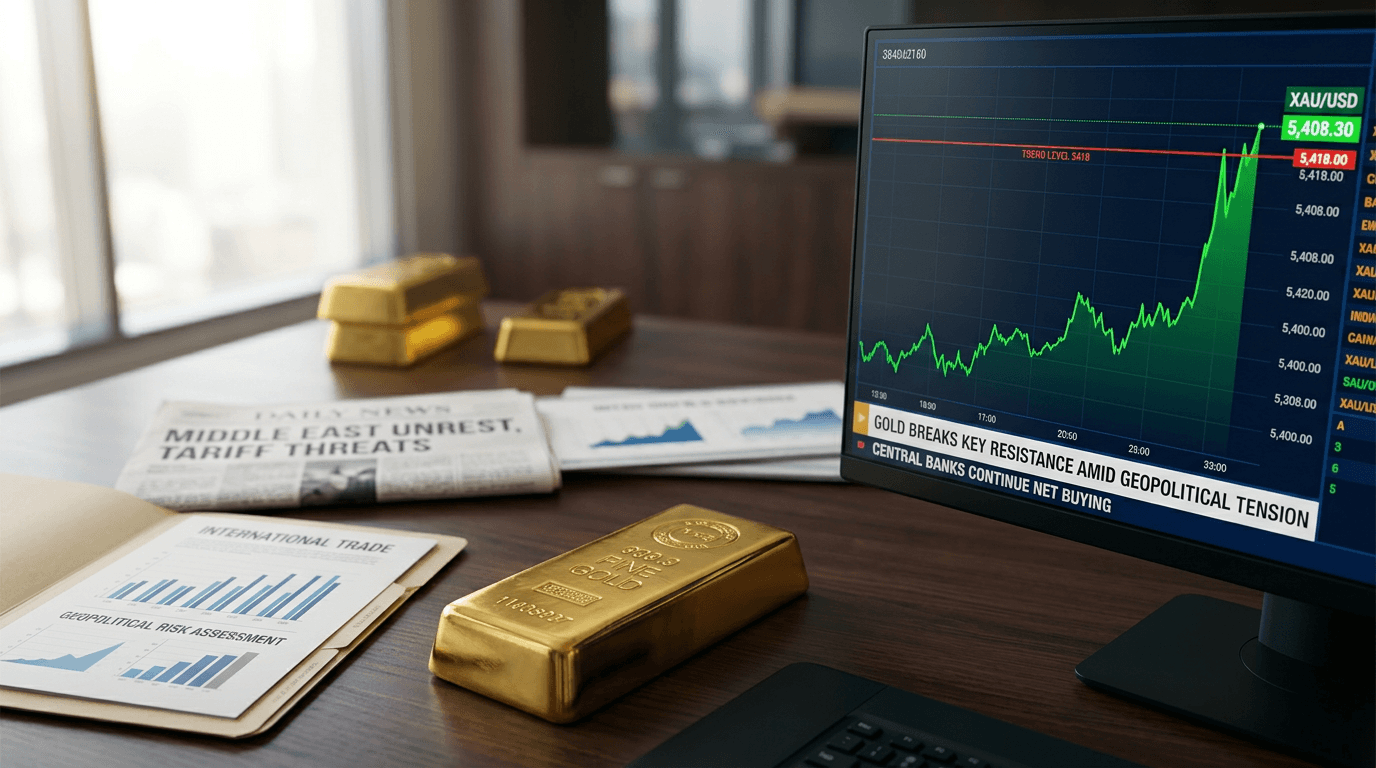
The remarkable surge in gold prices throughout 2026 has captured the global investment community's attention, as this precious metal continues to shatter psychological thresholds despite some recent volatility. After climbing past $5,400 in early March, gold experienced a notable pullback, trading around $4,643 by March 20 due to geopolitical tensions and profit-taking activities. Yet, the overarching narrative remains one of sustained strength fueled by deep-rooted macroeconomic concerns that continue to persist. For traders and investors navigating these uncertain times, unraveling the forces propelling gold's ascent is crucial for making informed portfolio choices.
Unveiling The Drivers Behind Gold's Historic Ascent
Gold's price surge is a reflection of a complex interplay of powerful market forces that extend well beyond mere speculation. At its core lies escalating geopolitical uncertainty, particularly revolving around Middle East tensions and potential blockades in the Hormuz Strait. These real-world developments have drastically reshaped risk perceptions, steering investors towards a flight-to-safety strategy that traditionally favors gold as a hedge for portfolios.
The Trump administration's unpredictable trade policies have further intensified these concerns. The threats of imposing 100% tariffs on Canada and escalating trade disputes have fostered an environment where conventional risk assets feel increasingly vulnerable. As noted by an analyst, the administration's direction has emerged as a significant catalyst for precious metals, driving sustained demand for assets uncorrelated to traditional markets. Additionally, investigations into Federal Reserve leadership have cast doubt on central bank independence, enhancing the allure of hard assets that are immune to policy risks.
Beyond geopolitical influences, institutional demand has skyrocketed to unprecedented levels. Central banks have continued their buying spree for several consecutive months, with China amassing over 2,303 tonnes of gold reserves over 14 straight months of purchases. This isn't a mere portfolio adjustment—it is a deliberate move by sovereigns to diversify away from dollar-denominated assets amid concerns over financial sanctions and currency volatility. Gold ETF inflows have remained robust, with December 2025 marking the seventh consecutive month of positive flows, primarily driven by North American institutional funds absorbing limited inventory supplies.
Technical Momentum: A Trader's Golden Opportunity
From a technical standpoint, gold's recent performance presents an intriguing opportunity for trend traders. Prior to its pullback, the metal rallied convincingly, closing at session highs with bullish momentum moving above the 50% Fibonacci retracement level. Traders are now closely monitoring entry opportunities above $5,418.55, viewing this level as crucial support that would indicate renewed strength and potential continuation toward higher targets. The recent volatility, though unsettling for some, has effectively cleared speculative excess that was building during gold's explosive 66% gain throughout 2025.
The price action indicates a structural shift is underway. Central bank demand, which forms the foundational support, remains intact despite recent weaknesses. The departure of "tourists"—generalist funds and momentum-chasing retail investors—has triggered the sharp drawdown from March's $5,321 high. While painful in the short term, this shakeout has effectively reset the market, positioning it for the durable, central-bank-driven appreciation that characterized gold's earlier gains. Understanding this distinction is vital for investors trying to differentiate between temporary volatility and meaningful trend reversal.
Implications For Your Portfolio
Gold's unprecedented price levels spark legitimate questions about timing and valuation. However, the structural drivers supporting prices—central bank diversification, geopolitical uncertainty, and currency volatility concerns—aren't fleeting. The 64% gain in 2025 wasn't merely fueled by irrational exuberance; it reflected genuine economic anxiety and reserve currency concerns among some of the world's largest financial institutions.
When constructing portfolios, gold's proven role as an uncorrelated asset continues to offer diversification benefits. Unlike stocks or bonds, which respond directly to economic data and interest rate expectations, gold strengthens during periods of geopolitical stress and policy uncertainty. The current environment checks both boxes, making the case for gold exposure arguably stronger than during more stable periods.
Investors should approach recent weaknesses with a nuanced perspective. The $600 drawdown from March highs represents the type of correction that typically occurs in strong trends as speculative positions unwind. Patient investors viewing gold as long-term portfolio insurance rather than short-term trading positions may find the recent pullback presents more attractive entry points than the extremes reached earlier in March.
Expert Forecasts And Future Outlook
Professional analysts remain surprisingly bullish despite recent volatility. Societe Generale projects that gold could reach $6,000 per ounce by year-end, suggesting the institution believes current prices may actually understate fair value. Morgan Stanley's bull-case scenario targets $5,700, indicating significant upside even from levels exceeded earlier this month. These forecasts assume that geopolitical tensions persist and central banks maintain their aggressive purchasing pace—both reasonable assumptions given current conditions.
The precious metals complex showcases broad-based strength beyond gold alone, with platinum reaching record highs above $2,900 per ounce. This multi-metal strength suggests the story extends beyond gold-specific factors, reflecting deeper concerns about fiat currency stability and traditional asset values.
NEWS IMPACT SCORE: 7