
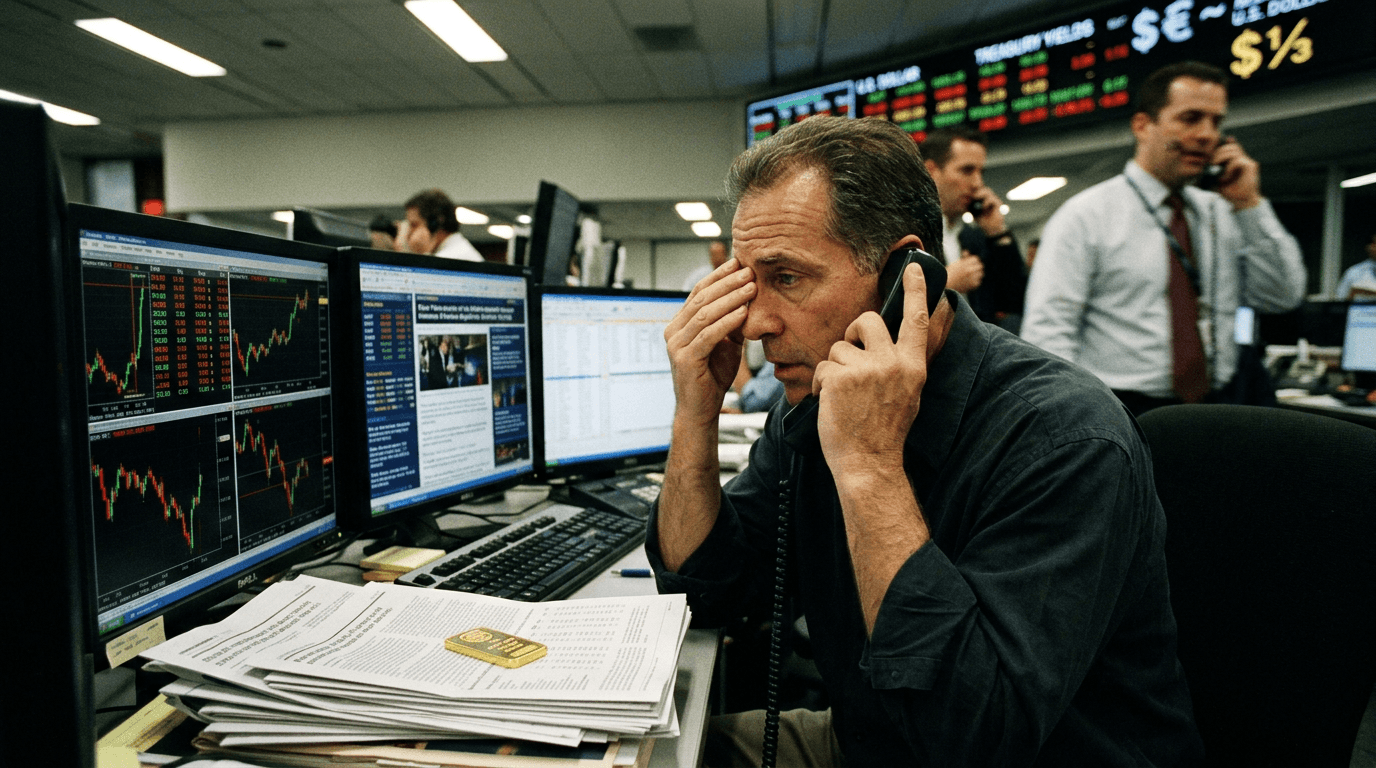
Gold prices are caught in a fascinating paradox that perfectly illustrates how modern financial markets balance competing forces. Despite escalating Middle East tensions that traditionally drive investors toward safe-haven assets, gold is on track for its first weekly decline in five weeks. This seemingly contradictory movement reveals deeper market dynamics that go beyond simple geopolitical risk assessment, offering traders valuable lessons about how multiple factors interact to determine price direction in today's complex markets.
The Paradox Explained
Safe-haven flows are genuinely robust, with institutional investors and central banks actively accumulating physical gold. Yet these supporting factors are being temporarily overwhelmed by competing forces that have proven more powerful in determining near-term price direction. The situation demonstrates that while geopolitical risk typically supports precious metals, other macroeconomic variables can exert even greater influence over short timeframes.
The fundamental drivers pushing gold higher are real and substantial. Escalating tensions in the Middle East boost safe-haven demand as investors recognize increased downside risks to equity portfolios and currency instability. Simultaneously, higher oil prices heighten inflation concerns, which historically support gold valuations as investors seek inflation hedges. These are structural factors that typically create significant tailwinds for gold prices.
The Competing Forces At Work
The primary factor overwhelming safe-haven demand is the combination of rising US Treasury yields and a stronger dollar. This powerful duo has proven capable of reversing even the most compelling geopolitical arguments for gold accumulation. Higher Treasury yields increase the opportunity cost of holding non-yielding assets like gold, while dollar strength makes gold more expensive for international buyers denominated in other currencies. These competing forces highlight how tactical price movements can temporarily override structural trends.
Perspective matters when evaluating current weakness. Gold has fallen approximately 25% from record highs near $5,500 earlier in 2026, hitting lows near $4,100 before recovering to trade between $4,500 and $4,650. While this decline appears significant in isolation, it must be contextualized within the broader annual performance. Gold has still surged over 71% compared to the same period last year, representing one of the strongest annual rallies in decades. This perspective helps traders distinguish between concerning weakness and natural profit-taking after extraordinary gains.
Institutional Conviction Remains Strong
Despite recent weakness, major financial institutions remain constructive on gold's longer-term prospects. Goldman Sachs recently raised its year-end 2026 gold price target to $5,400 per ounce, reflecting confidence among major market participants in sustained upside potential. This projection suggests that institutional sentiment remains fundamentally constructive, with analysts viewing the weekly decline as a temporary correction within a longer-term appreciation trend rather than the beginning of a major reversal.
This institutional positioning matters because it provides conviction that the underlying support structure for gold prices remains intact. Central banks worldwide continue accumulating gold as an alternative reserve asset, driven by concerns about dollar stability and the desire to diversify away from traditional currencies. Exchange-traded funds continue to attract significant inflows, while expectations of potential interest rate cuts from the US Federal Reserve add to gold's appeal. These structural factors suggest the current weakness may represent an attractive entry point for longer-term investors.
Actionable Insights For Traders
The current environment requires a nuanced approach that acknowledges both the challenges and opportunities present. Short-term volatility is likely to persist as the market debates inflation versus growth concerns, creating tactical opportunities for active traders willing to manage risk carefully. Recent trading sessions have shown some stabilization, with gold recovering slightly on bargain buying and a softer dollar tone.
Several key takeaways emerge from current market dynamics. First, temporary weakness in gold should not distract from the underlying strength of structural demand. The fundamentals supporting higher gold prices remain intact, even as short-term technical and currency factors create headwinds. Second, disciplined position management is essential when navigating this type of conflicting backdrop. Position sizing and stop-loss discipline become increasingly important when multiple competing forces are at play. Third, the convergence of geopolitical uncertainty, monetary policy dynamics, and structural institutional demand suggests the weekly pullback may ultimately represent a brief pause rather than a trend reversal.
For traders monitoring precious metals, patience is critical. The market's current indecision between competing factors creates both risk and opportunity. Safe-haven demand provides a price floor, while central bank accumulation offers structural support that should ultimately support prices over longer timeframes. Understanding these dynamics allows traders to distinguish between noise and meaningful trend changes, positioning them to capitalize on opportunities as the market ultimately resolves this temporary divergence between short-term technical factors and long-term structural support.