
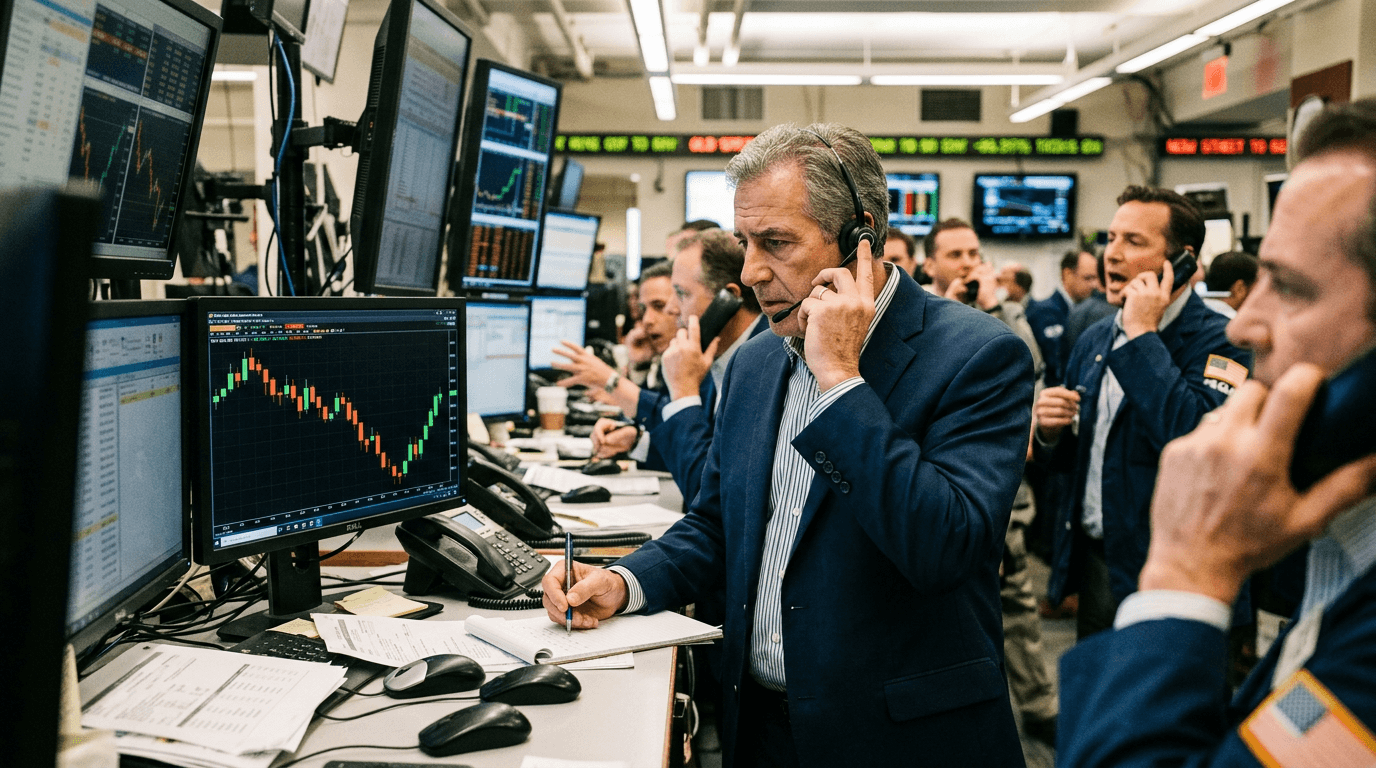
Gold is catching a bid again as traders rotate into defensive assets, with prices rebounding on safe-haven demand even though the metal remains on track for a weekly decline. The move is part of a broader flight to safety across the precious metals complex, underscoring how quickly risk sentiment can shift when geopolitical stress rises and volatility resurfaces.
Safe-haven Demand Returns To The Forefront
Gold’s recent support is a textbook example of how safe-haven flows work in real time.
When geopolitical tensions flare, or when markets struggle to price the next move in monetary policy, traders reassess their exposure to risk assets. Capital tends to rotate out of equities, high-yield credit, and more speculative plays, and into perceived stores of value. Gold, along with silver and sometimes platinum, often sits near the top of that list.
This rotation can happen even when the broader trend is still corrective or lower on the week. That’s what makes the current environment interesting: gold’s rebound is less about a full bullish reversal and more about traders using the metal as short-term insurance against headline risk.
Key takeaway: A single session of safe-haven buying does not erase an ongoing pullback, but it can mark areas where dip-buyers and hedgers are willing to step in. Those levels become important reference points for future trades.
The Macro Backdrop: Geopolitics, Dollar, And Rates
Safe-haven flows into gold rarely occur in isolation; they usually line up with a broader macro story.
First, geopolitical risk has become a persistent driver rather than an occasional shock. Conflicts and flashpoints across multiple regions, sanctions risk, and uncertainty around global trade all raise the perceived probability of “tail events.” Even if none of these risks fully materialize, the constant drumbeat of headlines keeps defensive positioning on traders’ radar.
Second, the US dollar and real yields remain central to gold’s medium-term path. A softer dollar or a stall in the rise of real yields tends to support gold, because it lowers the opportunity cost of holding a non-yielding asset. Conversely, firm yields and a strong dollar can cap rallies and pressure prices, even when safe-haven demand is present.
The current rebound fits this pattern: a pause in dollar strength and a slight pullback in yields have created space for gold to recover, while futures markets continue to price eventual central bank easing. Traders are essentially balancing two forces: risk-off flows that support gold, and rate expectations that can either amplify or limit that support.
Key takeaway: For directional gold trades, it’s not enough to watch geopolitics alone. The interaction between headlines, the dollar, and real yields often determines whether a safe-haven spike turns into a sustained move or fades quickly.
What The Price Action Is Telling Traders
From a trading standpoint, the most useful question is not “Why is gold up today?” but “What does this bounce reveal about positioning and key levels?”
Several clues stand out
1. Support zones are holding Gold’s ability to rebound while still facing a weekly decline suggests that buyers are defending specific technical regions. These may align with prior swing lows, moving averages, or psychological levels. Each successful defense strengthens the importance of that area for future entries and stop placement.
2. Volatility clusters around headlines Intraday candles often widen around geopolitical news, followed by periods of consolidation. Traders who recognize this clustering can adapt position sizing and avoid over-leveraging into the most headline-sensitive windows.
3. Precious metals are moving together The fact that silver and other metals are also drawing safe-haven flows indicates that this is more than a single-asset story. Correlated moves across the complex hint at broader risk-off behavior rather than a gold-specific idiosyncratic catalyst.
Practical action items for traders
- Map your key levels Define support and resistance zones on higher timeframes (4H, daily). Mark the levels where recent rebounds have started and where prior rallies stalled.
- Align trades with volatility Use smaller size or wider stops during periods of heightened news risk. Consider scaling into positions rather than entering all at once.
- Watch correlations Monitor how gold trades relative to the dollar index, real yields, and equity indices. Divergences (for example, gold rising even as yields tick higher) can signal shifting market narratives.
Safe-haven Flows In A Simulated Trading Environment
For traders using a simulated finance (SimFi) platform, the current gold setup is a valuable learning ground.
Because safe-haven flows are driven by both macro narratives and technical levels, they provide an ideal laboratory for testing:
- Scenario planning Create playbooks for “escalation” and “de-escalation” scenarios. How would you position if geopolitical risk intensifies versus if there’s a credible diplomatic breakthrough? Simulated trading allows you to test both paths without capital at risk.
- Risk management under stress Headlines can create gaps and rapid price spikes. Practice placing protective stops at logical technical levels and adjusting position size to reflect higher volatility. Evaluate how your P&L would behave under different gap and slippage assumptions.
- Timeframe alignment Test how the same gold move looks on intraday versus swing horizons. A rebound that seems dramatic on a 15-minute chart may be a routine retracement on the daily timeframe. Simulation helps you calibrate your strategy to the timeframe where your edge is strongest.
Key takeaway: Use current gold conditions as a sandbox to refine your approach to macro-driven markets. The goal is not just to predict direction, but to design robust processes that can handle uncertainty and fast-changing information.
How To Think About Gold From Here
With gold finding support on safe-haven demand but still facing a weekly decline, traders are effectively navigating between two narratives: a market that wants defensive hedges and a macro backdrop that still questions how far and fast central banks will ease.
For now, the base case is a market where gold retains a firm floor as long as geopolitical risks remain unresolved and volatility stays elevated. Upside, however, is likely to be capped intermittently by shifting rate expectations, dollar swings, and profit-taking after sharp spikes.
A balanced approach might include
- Treating gold as a tactical hedge rather than a one-way bullish bet
- Respecting key technical zones that have recently attracted buyers
- Remaining flexible enough to adapt if a rapid de-escalation of tensions undermines safe-haven demand
In other words, gold’s latest bounce is less about a dramatic trend reversal and more about reaffirming its role as a shock absorber in portfolios. For traders and investors alike, the message is clear: in an environment defined by persistent uncertainty, gold continues to play a critical—if nuanced—defensive role.