
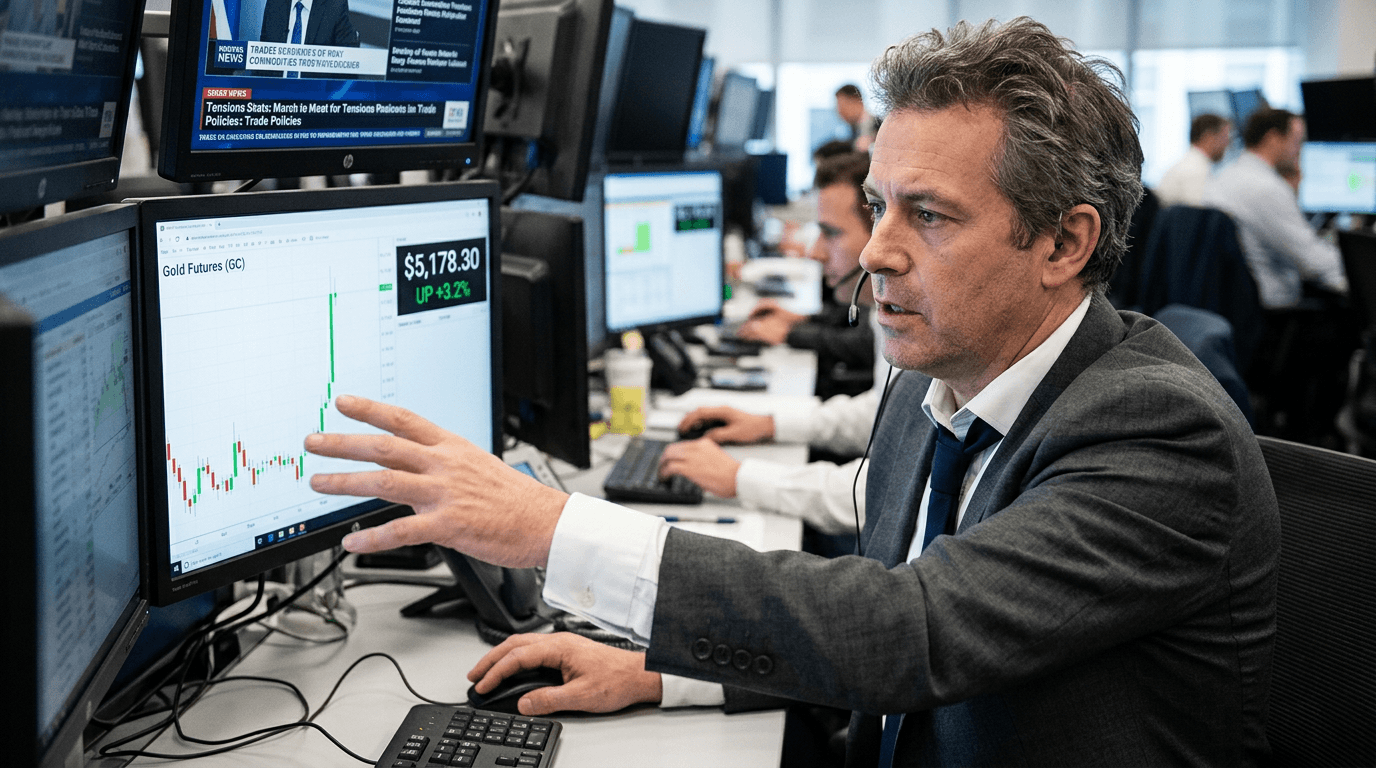
Gold prices have soared above $5,170 per ounce, marking a striking 74 percent rise from the lows of 2025. This upswing is fueled by two major forces: escalating geopolitical tensions in the Middle East and mounting uncertainty over U.S. tariff policies. As a result, investors are increasingly viewing gold as an essential component in their portfolios, attracting both cautious traditional investors and new market entrants to the bullion market.
This rally in the gold market is more than just a price hike—it's a narrative of changing market dynamics. Gold's longest monthly winning streak in over fifty years, spanning seven consecutive months, echoes back to the early 1970s. This isn't just about reaching new price levels; it highlights shifts in market strategies and investor psychology. Sustained trends like these keep momentum funds engaged, make hedgers wary of countering the movement, and turn dip-buying into a reflexive action rather than a strategic decision.
Geopolitical Shock: The Middle East Factor
The recent surge past $5,170 can be traced directly to renewed tensions in the Middle East. Following U.S. strikes on Iran, investors flocked to safe-haven assets, propelling spot gold higher. Although gold briefly touched $5,415 on March 2 before retreating, the market's reaction was a clear testament to the fear driving trading decisions. This was not a slow price discovery but an immediate reaction to geopolitical events.
The potential disruption of oil flow through the Strait of Hormuz—a vital passage for about a fifth of the world's oil—adds another layer of complexity. Any interruptions in oil supply can send ripples through energy markets, prompting a reassessment of inflation scenarios that had seemed hypothetical just a short time ago. For gold, this means a dual boost: safe-haven buying from jittery investors and increased demand as an inflation hedge if energy prices rise.
Tariff Uncertainty And Central Bank Buying
Beyond geopolitical concerns, another factor bolstering gold prices is tariff-induced economic uncertainty. The Trump administration's proposed 15 percent global import tariff has led to widespread reevaluation of the inflation-deflation debate. Could these tariffs trigger price hikes on imports or spark retaliatory trade measures? Such questions have positioned gold as a critical tool for portfolio diversification amidst economic fragmentation.
Central banks are playing a pivotal role in this trend. They are purchasing an average of 60 tonnes of gold per month, with China maintaining a 15-month buying streak. This activity signals a shift in how these institutions perceive gold's place in the global monetary system. Rather than a bygone relic, gold is being re-embraced as a viable reserve asset, offering protection against currency devaluation, geopolitical upheaval, and the enduring stability of the dollar-centric financial system.
What's Driving Traders To Act Now
For traders and hedgers, the current climate presents both risks and rewards. The dramatic 74 percent rebound from 2025 lows has drawn momentum-driven funds, but the real driver is the convergence of macroeconomic uncertainty and structural demand. When central banks are buying, tariffs threaten economic balance, and geopolitical tensions rise, both retail and institutional investors acknowledge gold's role as more than a speculative asset—it's a form of portfolio insurance.
Goldman Sachs has adjusted its year-end 2026 gold price target to $5,400, while Bank of America projects it could reach $6,000. These aren't wild guesses from gold enthusiasts but rather thoughtful recalibrations of how macroeconomic risks are being factored into commodity markets. Such significant forecast adjustments by major financial institutions indicate that the current gold rally is a rational reaction to existing market conditions.
What Traders Should Watch
Gold's path above $5,170 will depend on three crucial factors. First, U.S.-Iran nuclear talks could lower geopolitical tensions and remove the premium priced into gold. Second, the direction of U.S. monetary policy will influence real yield movements, with gold being highly sensitive to yield expectations during uncertain times. Third, upcoming U.S. labor data could sway interest rate projections, serving as a short-term market catalyst.
The seven-month winning streak and surge past $5,170 indicate a comprehensive market reassessment of risk. Whether gold continues to climb to $5,400 or higher, or whether macroeconomic influences eventually temper the rally, hinges on the persistence or resolution of these driving forces—central bank acquisitions, tariff uncertainties, and geopolitical instability.