
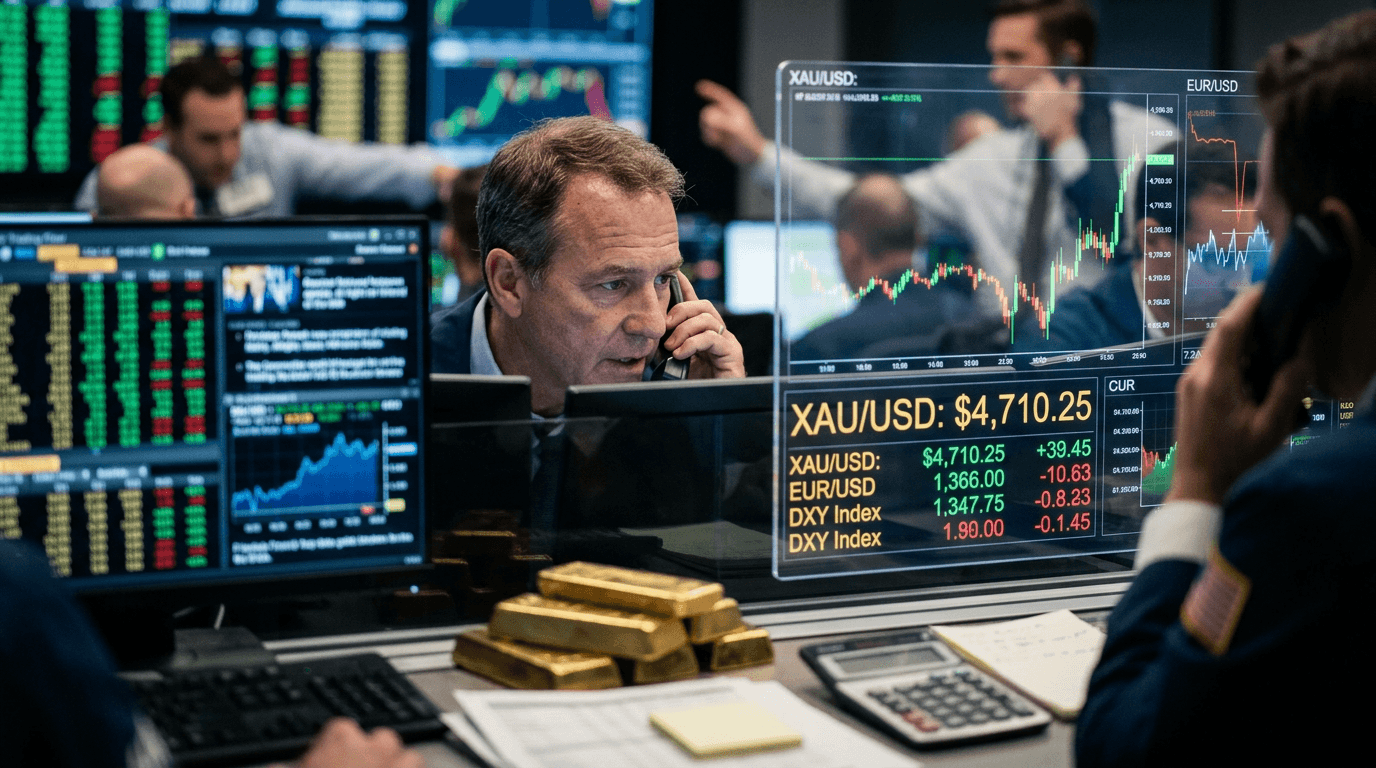
Gold has cemented its position above the $4,700 mark as investors continue to seek shelter in precious metals amid a confluence of geopolitical tensions, currency headwinds, and macroeconomic uncertainties. This milestone represents more than just a price record—it reflects a fundamental shift in how global investors are positioning their portfolios in response to escalating international disputes and weakening confidence in traditional financial assets. With gold gaining nearly 8% year-to-date and approximately 75% over the past twelve months, the precious metal has become the defining trade of this market cycle.
The Safe-haven Surge Driving Precious Metals
The primary catalyst propelling gold above $4,700 stems from intensifying geopolitical tensions, particularly the ongoing dispute between the United States and European nations over Greenland. When US President Donald Trump threatened tariffs on eight European countries opposing his territorial ambitions, markets responded swiftly by rotating into traditional safe-haven assets. This geopolitical friction has rattled investors reliant on equities and bonds, pushing them toward the perceived security of physical commodities.
Broader international tensions have also contributed to this dynamic. Middle East concerns, including Iran's rejection of ceasefire proposals, and questions surrounding NATO cohesion in light of trade disputes have all amplified demand for defensive positioning. As Ole Hansen, strategist at Saxo Bank, noted, the current environment presents a geopolitical backdrop that has become "increasingly uncomfortable for investors reliant on financial assets alone." Gold's historical role as political insurance has never been more relevant.
Central bank activity reinforces this trend. Major global central banks have maintained consistent purchasing patterns throughout 2025 and into 2026, providing structural support beneath the gold market. This institutional buying from monetary authorities represents a fundamental pillar of gold's rally, alongside retail demand from both Western ETF flows and Chinese consumers seeking tangible assets.
The Dollar's Declining Influence
A weakening US dollar has provided substantial additional support to gold prices, making the commodity more affordable for international buyers. When the dollar weakens, dollar-denominated gold becomes cheaper for holders of other currencies, naturally attracting global demand. Recent weeks have seen the dollar index decline notably, with one measure of currency strength falling by the most in over a month.
This dynamic proves particularly significant because gold prices are quoted in dollars globally. A softer greenback essentially offers a discount to non-US investors, spurring purchases across Europe, Asia, and emerging markets. The interplay between currency movements and commodity prices creates a powerful multiplier effect during periods of dollar weakness combined with safe-haven demand. When both factors align, as they currently have, gold can move decisively higher.
Beyond currency mechanics, the dollar's weakness reflects broader concerns about US fiscal sustainability. Japanese Prime Minister Sanae Takaichi's election pitch focusing on tax cuts has highlighted mounting sovereign debt concerns across developed economies. Many investors believe inflation represents the only practical path to managing these towering fiscal obligations, which supports commodities as inflation hedges alongside their safe-haven status.
Market Sentiment And Crowding Concerns
While gold's advance has been impressive, emerging signals suggest caution may be warranted. A Bank of America survey revealed that a majority of fund managers consider gold the "most crowded trade," indicating that positioning has become historically extended. This crowding creates vulnerability to unexpected reversals, particularly if geopolitical tensions ease or if macroeconomic data shifts market expectations.
Major banks have set ambitious price targets, with predictions ranging from $4,800 to $5,000 by mid-year, suggesting further upside in the base case. However, such consensus predictions often coincide with market peaks. Market participants are proceeding with increased caution as positions become ever more concentrated among the same bullish investors.
Silver's performance warrants specific attention. The white metal has tripled in value over the past year and recently hit record highs near $95.89 per ounce, notching gains of nearly 25% in 2026 alone. Silver's outperformance indicates that risk sentiment remains supported—if fear were the dominant driver, we would expect to see gold outperform the more cyclically-sensitive silver. The fact that both metals are rallying simultaneously suggests investors are hedging both systemic risks and inflation expectations.
Practical Implications For Simfi Traders
For traders monitoring this landscape, understanding the three-pronged support structure beneath gold proves essential. Geopolitical tensions provide near-term momentum, USD weakness supplies tactical tailwinds, and central bank buying furnishes structural support. However, extreme positioning and consensus crowding suggest that contrarian opportunities may emerge, particularly if tensions de-escalate or if Fed policy unexpectedly pivots.
The key question facing markets involves sustainability. Can gold maintain these elevated levels, or has the recent run exhausted near-term demand? Close monitoring of European tariff responses, Middle East developments, and currency trends will prove critical in determining whether gold consolidates above $4,700 or pulls back to test support levels.
Gold's surge above $4,700 represents a meaningful milestone, yet success in this market requires understanding the drivers behind the price action and remaining attentive to shifting sentiment. The precious metals rally remains structurally sound, but tactical positioning requires discipline and flexibility as conditions evolve.