
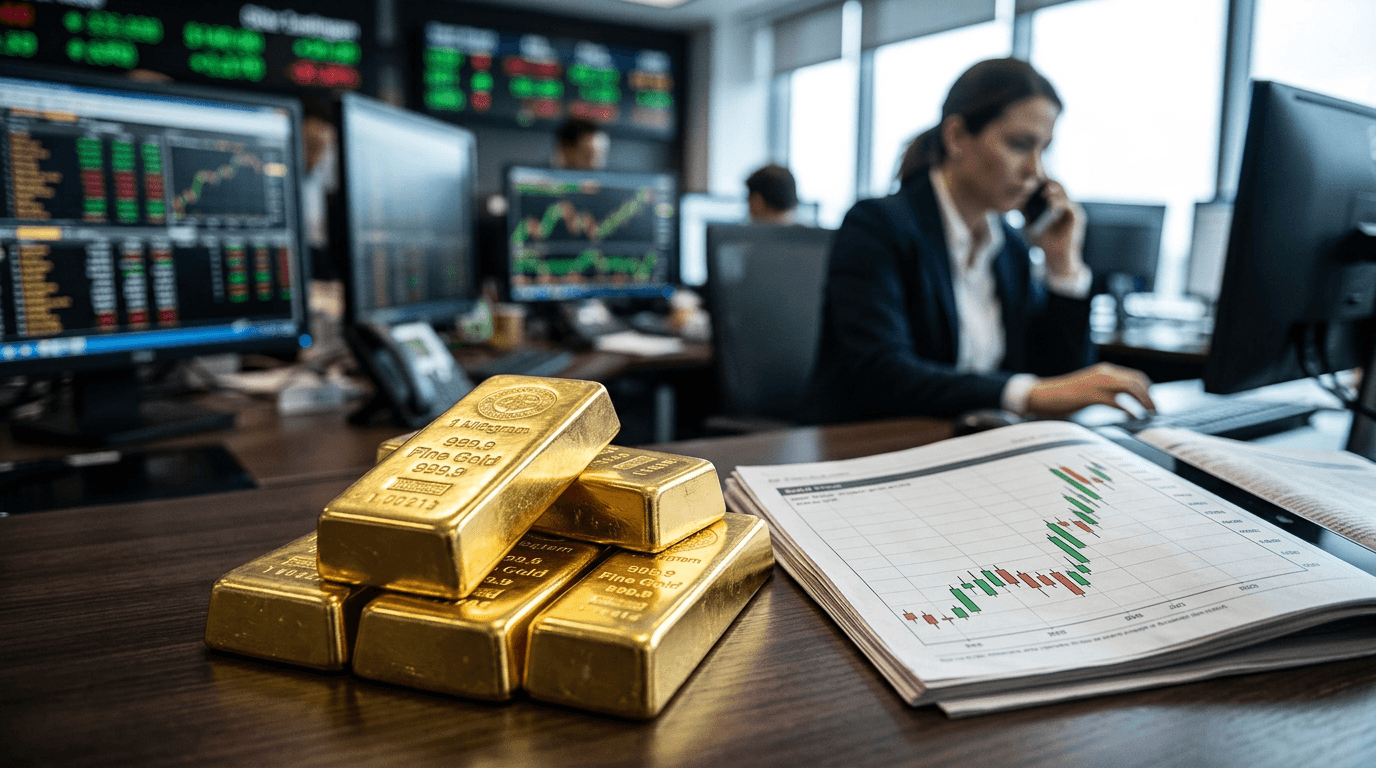
Gold's resilience at the $5,000 level represents a critical turning point in the metal's impressive 2026 rally, with geopolitical tensions and macroeconomic uncertainty reinforcing its traditional role as a safe-haven asset. After climbing from the low-$3,000s just over a year ago, gold has established itself as a compelling hedge against broader market volatility, and recent price action suggests that further upside potential remains intact despite near-term consolidation patterns.[3]
The precious metal has demonstrated remarkable strength throughout early 2026, driven largely by a combination of safe-haven flows linked to Middle East tensions and sustained central bank demand. Gold touched nearly $5,298 on March 2, 2026, marking historically elevated levels before entering a mild pullback and consolidation phase.[2][3] This pattern is entirely consistent with mature bull markets where corrections serve as opportunities for accumulation rather than signals of trend exhaustion. The fact that gold has repeatedly found buyers near the $5,000 support level underscores investor conviction in the metal's fundamental appeal during uncertain times.
Safe-haven Demand Driving The Narrative
The current geopolitical environment has emerged as a primary catalyst for gold's outperformance. When global tensions escalate and equity markets face uncertainty, investors historically rotate into defensive assets like gold, which offers liquidity and perceived stability. The escalating Middle East situation has amplified this dynamic, with gold functioning as insurance against broader geopolitical and economic shocks.[3] This safe-haven bid is complemented by the ongoing reality that gold offers protection against inflation, currency depreciation, and negative real yields.
Beyond geopolitical concerns, central bank activity continues to support gold prices at structural levels. Major institutions like JPMorgan expect strong demand from investors and central banks to continue driving the market higher, with the bank projecting gold could reach approximately $6,300 per ounce by the end of 2026.[1][3] This forecast reflects confidence in sustained central bank gold purchases, particularly from emerging market nations seeking to diversify away from dollar reserves and build foreign exchange buffers.
Technical Picture And Support Levels
From a technical perspective, gold's price structure remains constructive despite recent pullbacks. The daily chart shows gold holding above a rising cluster of moving averages, with the 20-day, 50-day, 100-day and 200-day simple moving averages providing a foundation for further upside.[3] The $5,000 support level has proven resilient, with multiple test days in early March demonstrating that buyers consistently step in near this psychological threshold.[6]
Short-term technicians identify the $5,025 level as an important near-term support zone, with potential for an upward rebound and continued growth targeting levels above $5,445.[4] On the upside, resistance appears near $5,572, with a daily close above this zone potentially bringing $5,866 into focus as the next technical reference point.[3] This constructive setup suggests that even modest breakouts above current consolidation ranges could trigger accelerating buying pressure.
Analyst Forecasts And Price Targets
The investment community remains broadly bullish on gold, though forecasts span a notable range reflecting different assumptions about inflation, interest rates and geopolitical outcomes. Goldman Sachs raised its year-end 2026 target to $5,400 per ounce, upgraded from a previous $4,900 forecast, after spot prices hit all-time highs near $5,589 in late January.[3] JPMorgan's bullish scenario extends to $6,300, while more conservative forecasts suggest gold could trade between $4,700 and $5,200 for much of 2026.[1][3] ING Think projects gold averaging approximately $5,190 for the full year 2026, with progressive quarterly increases throughout the calendar year.
Key Drivers To Monitor
Several critical factors will influence gold's trajectory over coming weeks. US inflation data and Federal Reserve policy signals remain paramount, as declining interest rates would reduce the opportunity cost of holding non-yielding gold and potentially support higher prices.[1] The strength or weakness of the US dollar also matters significantly, with a weaker dollar typically benefiting gold-denominated investors globally.[1] Additionally, ongoing geopolitical tensions, energy price movements and global stock market volatility will likely drive safe-haven rotations into precious metals.
Practical Takeaways
For investors considering gold exposure, the current environment presents interesting opportunities alongside meaningful risks. The $5,000 support level has proven durable, suggesting that tactical dips toward this zone may attract accumulation. However, traders should recognize that gold remains vulnerable to significant corrections if real yields spike upward or if broader risk sentiment improves substantially. Position sizing and clear risk management remain essential, particularly given the metal's volatility and the wide range of analyst forecasts.
The longer-term picture appears supportive, with structural drivers like central bank demand, currency diversification concerns and elevated geopolitical risks likely to maintain a bid under gold for extended periods. Success in trading or investing in gold during this cycle will depend on maintaining flexibility and respecting technical levels while monitoring macroeconomic data releases and geopolitical developments.