
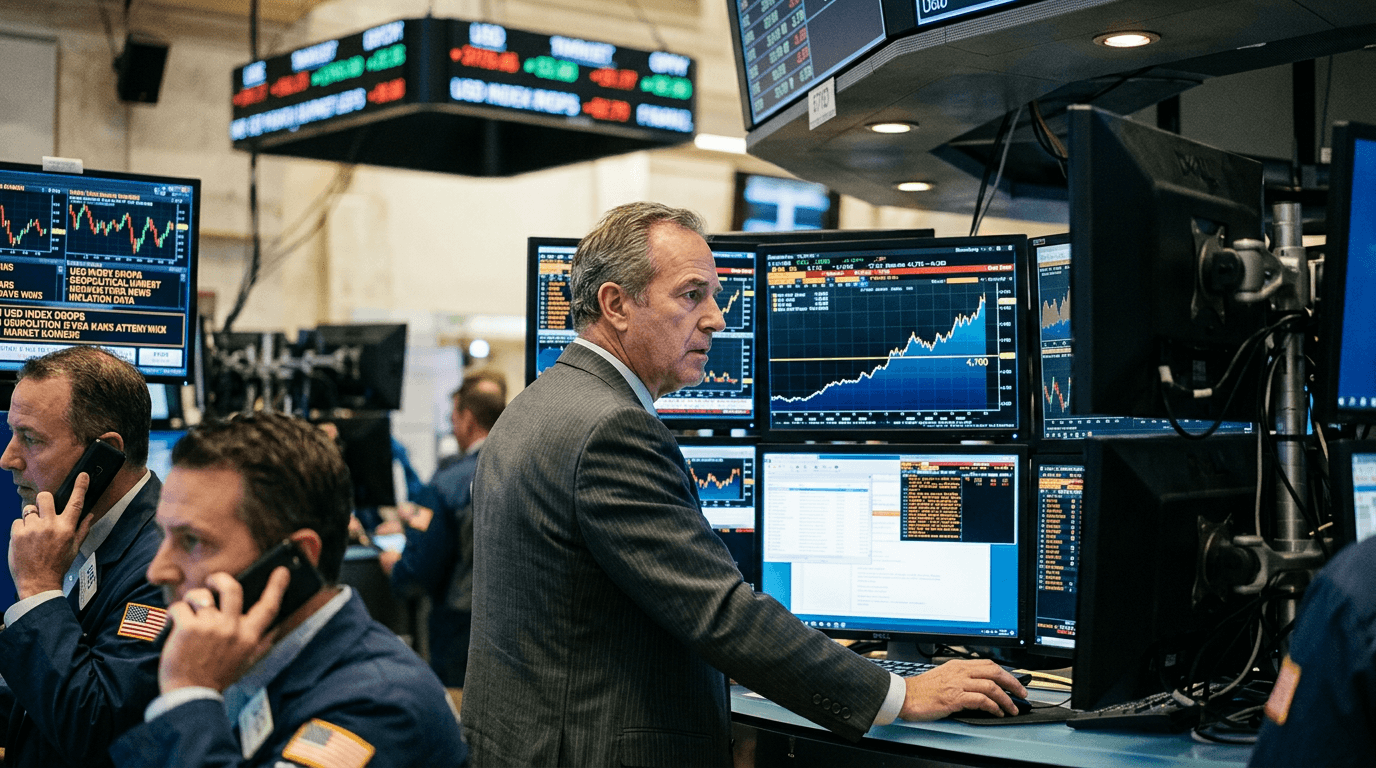
Gold continues to command investor attention as prices hold firm above the psychologically significant $4,700 per ounce level, supported by a confluence of factors that show no signs of diminishing. The yellow metal's resilience at these elevated levels represents more than just a price milestone—it reflects fundamental shifts in how investors are positioning their portfolios in response to currency weakness, geopolitical uncertainty, and persistent inflation concerns that are reshaping global financial markets.
The Dollar's Weakening Grip
The US Dollar's recent pullback has emerged as a critical tailwind for gold prices, and understanding this relationship is essential for any trader following precious metals markets. When the dollar weakens relative to other major currencies, gold becomes more affordable for international buyers, instantly expanding the pool of potential purchasers. This dynamic has been particularly pronounced over the past several weeks, as currency volatility and shifting expectations around Federal Reserve policy have prompted investors to reassess their dollar exposure.
The relationship between dollar strength and gold prices typically moves in inverse directions. A weaker dollar environment makes dollar-denominated commodities like gold more attractive to buyers holding euros, yen, pounds, and other currencies. This mechanical advantage combines with fundamental supply-demand dynamics to reinforce gold's upward trajectory. As the dollar has shown signs of weakening by the most in over a month according to recent market observations, gold has responded predictably by consolidating gains and attracting fresh buying interest above key resistance levels.
Geopolitical Tensions Fuel Safe-haven Demand
Beyond currency mechanics, geopolitical pressures are providing genuine structural support to gold demand. Escalating tensions in the Middle East, particularly surrounding US-Iran negotiations that have stalled on ceasefire discussions, have elevated risk premiums across financial markets. When investors perceive elevated geopolitical risk, their natural instinct is to rotate capital into assets perceived as stable stores of value—and gold remains the ultimate safe-haven instrument across all market environments.
The recent standoff between the United States and European allies over territorial ambitions has further rattled traditional risk assets. Threats of tariffs and trade disruptions have prompted a reassessment of portfolio positioning, with many funds recognizing that exposure to physical assets like precious metals provides genuine diversification benefits during periods of political uncertainty. This dynamic has attracted not just speculators but also institutional investors with longer time horizons who view current gold levels as attractive entry points despite recent rallies.
Inflation Pressures And Oil Market Dynamics
Oil price surges are playing a surprisingly important role in supporting gold's current strength. Higher energy prices feed directly into inflation expectations, creating renewed concern among central banks and investors alike. Central banks worldwide, particularly those in Asia and Eastern Europe, have responded to these macro concerns by aggressively accumulating gold reserves—a trend that has provided consistent bid under the market throughout this rally phase.
The Chinese retail market and Western exchange-traded funds have joined central banks as primary drivers of gold demand, collectively accounting for approximately a dozen different forces pushing prices higher. This diverse buyer base creates a more stable foundation for prices compared to rallies driven primarily by speculative positioning. The inflation dynamic is particularly concerning for investors in developed economies managing historically elevated sovereign debt levels, as gold serves as a hedge against the only realistic path to debt servicing: inflation erosion of real liabilities.
Record Levels And Market Positioning
Gold's climb to nearly $4,750 per ounce represents a nearly 75 percent gain over the past twelve months—an extraordinary return that raises natural questions about valuation and sustainability. The yellow metal's best annual performance since 1979 has understandably caught the attention of major investment banks, with several institutions now publishing price targets of $4,800 to $5,000 by mid-year. These targets are not based on speculative fervor but on fundamental analysis of macro trends and central bank policy trajectories.
However, traders should note that a Bank of America survey recently identified gold as the most crowded trade among fund managers—a warning signal that price momentum may be vulnerable to sudden reversals. While this doesn't invalidate the fundamental case for higher prices, it does suggest that recent buyers should establish clear risk management protocols and understand the vulnerability of crowded positioning to unexpected news events.
What This Means For Your Portfolio
For traders and investors, the current environment presents both opportunities and risks. The technical setup remains constructive with prices holding above key support levels, but the crowded trade positioning suggests that new entries should be carefully considered. Consider establishing positions in precious metals exposure through a combination of physical holdings, mining equities, and exchange-traded vehicles to capture upside while managing concentration risk.
Monitor currency movements and central bank policy signals as leading indicators for gold's next directional move. Watch developments in Middle East negotiations closely, as any breakthrough could trigger a sharp rotation out of safe-haven assets. The fundamental case for gold remains intact, but execution and risk management matter significantly at these elevated price levels.