
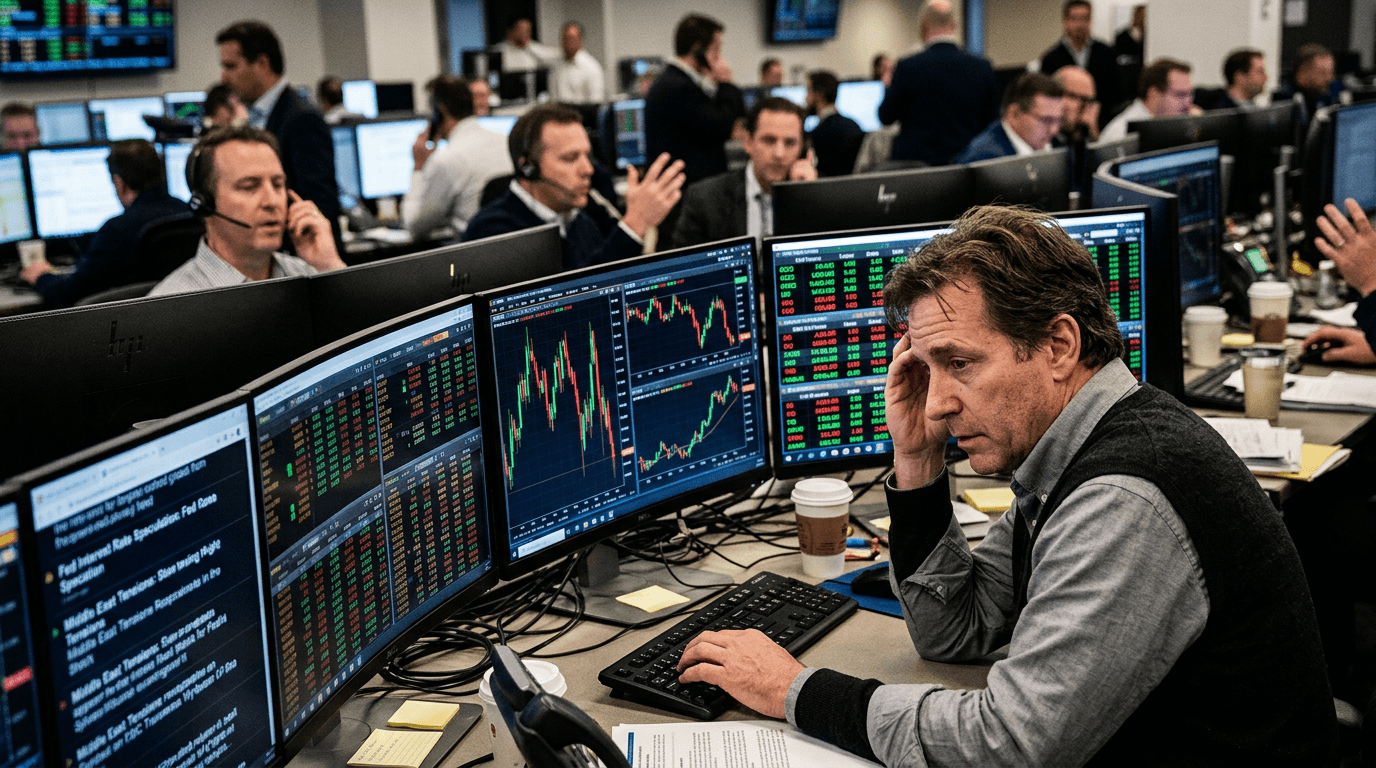
Gold and oil futures are sending a clear message: macro and geopolitical risk now travel together, amplifying volatility across asset classes from currencies to index futures.[7][8][14] Recent moves have seen gold futures come under sustained pressure as traders price in higher-for-longer interest rates, even as oil-linked risk remains highly sensitive to developments in the Middle East and U.S.–Iran relations.[1][7][8] Understanding how these forces interact is critical for modern traders, whether they are trading live capital or honing their edge in a simulated environment.
Macro Backdrop And Market Narrative
The current futures landscape is dominated by the tug-of-war between inflation data, central bank policy, and geopolitical headlines.[2][7][10] A hawkish Federal Reserve stance, supported by resilient U.S. inflation and firm economic activity, has pushed real yields higher and strengthened the dollar, creating headwinds for gold as a non-yielding asset.[1][4][5] At the same time, conflicts and supply risks in key energy regions have injected a “geopolitical risk premium” into oil markets, particularly around chokepoints like the Strait of Hormuz.[12][14]
Oil prices have swung sharply as traders weigh progress toward U.S.–Iran diplomacy against new tensions and disruptions.[9][12][14] Diplomatic signals that reduce the probability of supply interruptions have triggered heavy selling in crude futures, while renewed hostilities or blockades quickly rebuild the premium.[9][12][14] Gold, meanwhile, has responded more to the implications of that energy volatility for inflation and interest rates than to the geopolitical risk itself, reinforcing its position as a macro-sensitive asset.[2][7][11]
Gold Futures: Safe Haven With A Twist
Gold’s traditional safe-haven role has not disappeared, but it is now filtered through rate expectations and currency dynamics.[2][6][11] When Middle East tensions drive inflation fears and push bond yields higher, gold prices have often fallen rather than risen, reflecting the drag from tighter monetary policy and a stronger dollar.[1][4][7] Recent quarters have seen gold post one of its worst performances in over a decade as markets repeatedly price in the prospect of more rate hikes or delayed cuts.[7][13]
Short-term flows in gold futures illustrate this evolving behavior. Headlines about escalating regional conflicts have lifted oil and inflation expectations, but instead of rallying, gold has frequently extended declines as traders assume central banks will stay hawkish.[2][7][11] Data surprises, such as softer U.S. producer price readings, can temporarily trim losses when they hint at easing inflation pressures, but the overarching theme remains rate dominance.[10][13] For traders, the takeaway is that gold futures are best viewed as a lever on real rates and the dollar, with geopolitical stress influencing them mainly through the inflation-policy channel rather than simple “risk-on/risk-off” logic.
Oil-linked Futures And Geopolitical Risk Premium
Oil futures sit closer to the front line of geopolitical risk. Concerns over Iranian crude exports, Gulf shipping routes, or regional blockades have repeatedly driven traders to lock in prices and hedge against supply disruptions.[8][12][14] When tensions flare, risk premiums in crude benchmarks rise as markets price in potential outages or logistical bottlenecks, even if actual production remains unchanged.[8][12][14]
Conversely, credible signs of diplomatic progress can trigger sharp reversals as futures strip out some of that premium.[9][12] Recent episodes have seen oil tumble more than 5% in a single session on optimism around U.S.–Iran talks, underscoring how sensitive energy markets are to the probability of conflict versus compromise.[9] For index futures and sector rotation, these moves matter: higher oil typically supports energy equities and can pressure consumer and transport sectors, while lower prices reverse that pattern and ease some inflation concerns.[10][11] Simulated traders can use these relationships to design cross-asset strategies that link crude futures, energy stocks, and broader equity indices.
Transmission Into Inflation, Fx And Index Futures
Movements in gold and oil are not isolated; they feed into inflation expectations and, by extension, currency and equity index futures.[2][7][10] Sustained strength in oil raises headline inflation, reinforcing expectations that central banks will keep rates elevated, which tends to support the domestic currency and weigh on rate-sensitive assets like gold and certain equity sectors.[1][4][11] When oil retreats on reduced geopolitical risk, markets may relax some of those inflation fears, potentially easing pressure on gold and boosting interest in growth-oriented equities.[9][10]
Gold’s weakness in the face of hawkish policy sends its own signal about macro conditions. A soft gold market alongside firm yields and a strong dollar typically reflects limited confidence in near-term rate cuts and a preference for income-generating assets.[1][5][7] Equity index futures absorb these cross-currents: higher real yields and tighter policy often compress valuations, especially in long-duration sectors such as technology, while easing inflation and policy expectations can support risk appetite.[2][7] Traders who monitor the interaction between gold, oil, FX, and index futures can better anticipate how macro surprises or geopolitical headlines will ripple across their positions.
Practical Takeaways For Simulated Traders
For traders using SimFi platforms like E8 Markets, this environment is a laboratory for testing robust, multi-asset strategies under realistic stress.[2][7][8] One practical approach is to build scenario maps: for example, “geopolitical escalation with hawkish central banks” versus “geopolitical de-escalation with disinflation.” In the first case, oil risk premiums might rise, inflation expectations could firm, and gold might stay under pressure due to higher real yields.[7][8][11] In the second, crude could sell off, inflation fears ease, and gold might stabilize or grind higher as rate-cut hopes resurface.[9][10][13]
Simulated trading allows participants to test how these scenarios impact not just individual contracts but entire portfolios, including FX pairs, sector baskets, and index futures.[2][7] Traders can practice building cross-hedges, such as using equity index futures to offset sector exposure created by an oil move or using currency futures to manage dollar risk around gold positions.[5][7] Because capital is not at risk, SimFi environments encourage experimentation with position sizing, correlation analysis, and stress testing — skills that become invaluable when these macro-geopolitical interactions intensify in live markets.
Conclusion
Gold and futures markets currently reflect a world where macro conditions and geopolitical risk are tightly interwoven rather than separate themes.[7][8][14] Gold’s price action is increasingly governed by interest-rate expectations and the dollar, while oil futures act as a direct barometer of geopolitical tension and supply risk.[1][7][8] Together, they shape inflation expectations and influence currency and equity index futures, making cross-asset awareness essential for any serious trader.[2][7][10]
By studying these relationships and rehearsing responses in a simulated environment, traders can move beyond simple narratives and build strategies that account for the full chain of transmission from geopolitics to macro policy to market pricing.[2][7] The result is not prediction certainty, but a clearer framework for decision-making when the next headline sends gold under pressure and oil sharply higher or lower in a matter of minutes.